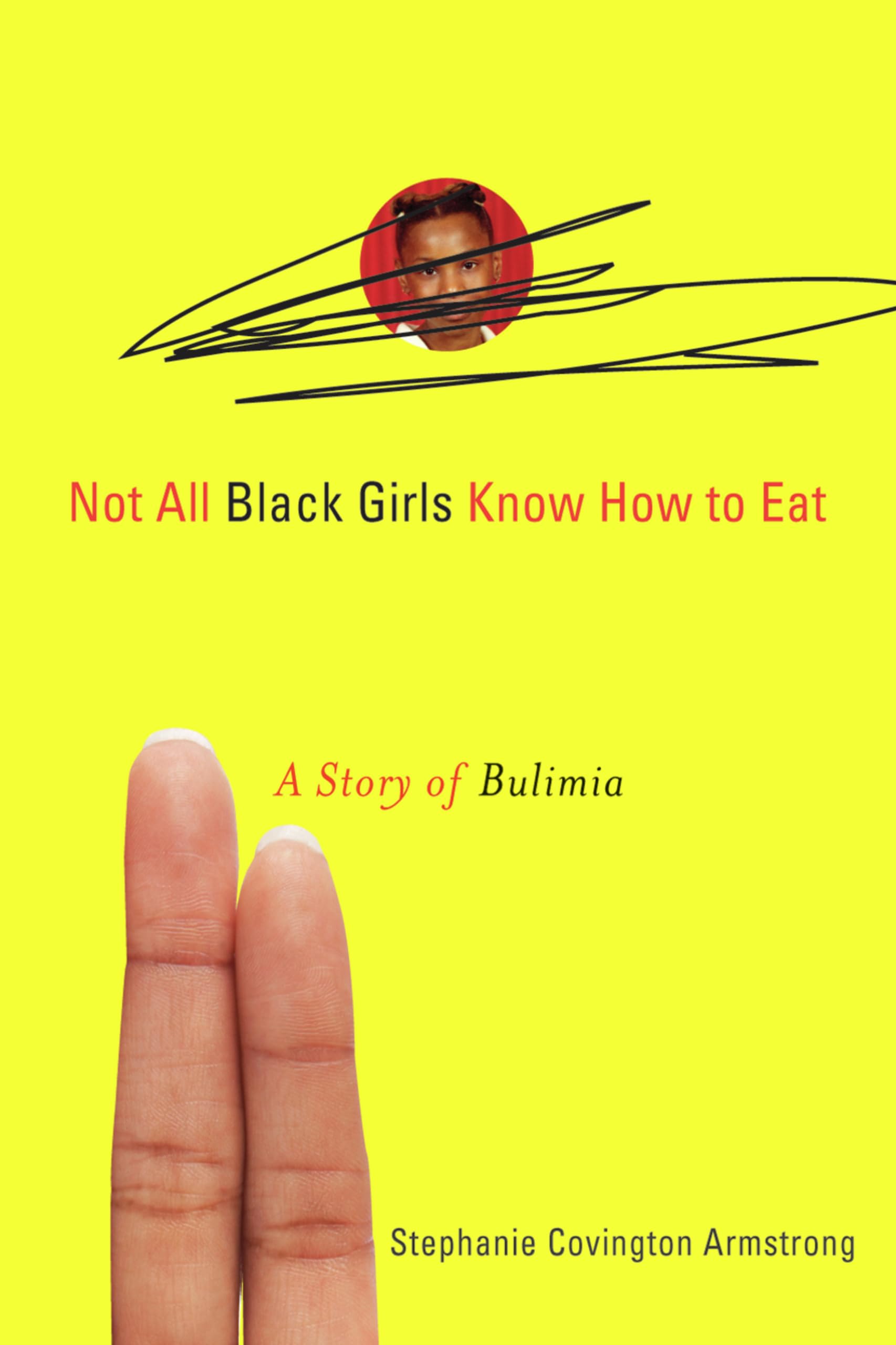
Not All Black Girls Know How to Eat: A Story of Bulimia
$16.95
by Stephanie Covington Armstrong



Stephanie Covington Armstrong does not fit the stereotype of a woman with an eating disorder. She grew up poor and hungry in the inner city. Foster care, sexual abuse, and overwhelming insecurity defined her early years. But the biggest difference is her race: Stephanie is black. In this moving first-person narrative, Armstrong describes her struggle as a black woman with a disorder consistently portrayed as a white woman’s problem. Trying to escape her selfhatred and her food obsession by never slowing down, Stephanie becomes trapped in a downward spiral. Finally, she can no longer deny that she will die if she doesn’t get help, overcome her shame, and conquer her addiction to using food as a weapon against herself. For more information about the book and eating disorders, visit www.notallblackgirls.com "Armstrong's perspective . . . will go a long way toward breaking down the myths about eating disorders that are preventing so many, many people of color from seeking the treatment they need." ―Aimee Liu, author, Gaining: The Truth About Life After Eating Disorders "Armstrong's intimate account of her battles with eating disorders shatters many longstanding myths and opens a space for those who have been silent for so long to speak . . . and be heard." ―Jaime Pressly, actress, My Name is Earl, and author, It's Not Necessarily Not the Truth: Dreaming Bigger Than the Town You're From "Hurrah for a woman bold enough to throw open the closet door and tell the truth about her relationship with food." ―Hill Harper, actor, CSI: NY, and author, Letters to a Young Brother "The sooner we . . . confront all of the issues―like food addiction, depression, and sexual abuse―that keep us hurting and hiding, the sooner we can begin to heal. Armstrong's book is an answer to millions of black women's prayers." ―Meri Nana-Ama Danquah, author, Willow Weep for Me: A Black Woman's Journey Through Depression "Harrowing and compelling . . . a long-overdue look at eating disorders among African American women . . . a gripping read [with] universal appeal." ―Stephen McCauley, author, The Object of My Affection Stephanie Covington Armstrong is a playwright and screenwriter who has written for Essence , Mademoiselle , Sassy , and Venice magazines. Her essay on bulima, "Fear and Loathing," is included in the forthcoming Norton anthology The Black Body. She lives in Los Angeles. Not All Black Girls Know How to Eat A Story of Bulimia By Stephanie Covington Armstrong Lawrence Hill Books Copyright © 2009 Stephanie Covington All right reserved. ISBN: 978-1-55652-786-9 Contents A Note from the Author...........................viiEating ..........................................ixA Hungry Childhood...............................3Returning Home...................................7Bed-Stuy, Brooklyn...............................23Monster in the Family............................39Father's Day.....................................47Missing Mommy....................................57A Communist Among Us.............................63The Trouble with Puberty.........................81Tragedies........................................93On My Own........................................107Losing It........................................115Hollywood, California............................123What Goes Down Must Come Up......................135Manorexic........................................151New York.........................................161Location, Location, Location.....................177Dating for Doughnuts.............................189Resistance Is Futile.............................195Giving Up the Fight..............................209The Inward Journey...............................225On Solid Ground..................................233Acknowledgments..................................239 Chapter One A Hungry Childhood I grew up in the Bed-Stuy section of Brooklyn, the youngest of three girls with an unwed mother barely out of her teens. My earliest memories are either too vague or those repeated to me by my older sisters. I have no memory of my own before the age of six. At age twenty-two, my mother had three girls, ages five and under, and no help from our three absentee fathers. The weight of her parental responsibility crushed her youth and threatened to destroy her future. One dreary autumn morning, we rode a crowded subway train to downtown Brooklyn, only our mother aware of our destination. Based on the early hour, coupled with my mother's somber expression, we assumed we were headed to the welfare office. My mother worked full-time but still needed food stamps in order to feed us. Because she had a job and paid taxes, she needed to have a second social security number without a job attached in order to collect benefits. On her meager income, even food was a luxury, and that's where the government's help came in handy. In order to qualify for aid you had to be living wel