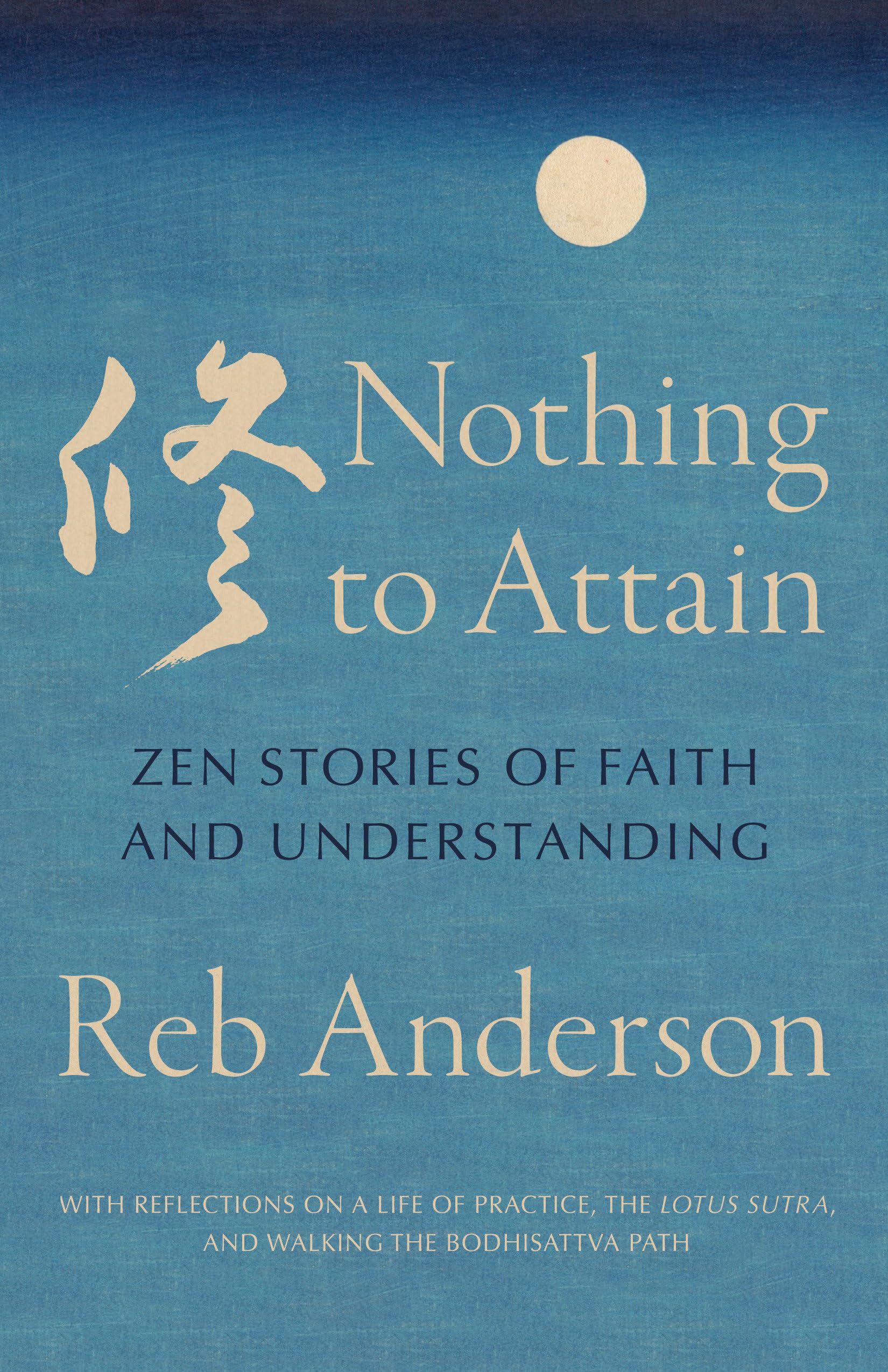



An exploration of the Zen Buddhist path through classic stories of the tradition—from the esteemed Zen teacher Reb Anderson. We all fully possess the wisdom and virtues of the buddhas. This is our original nature. It is completely pure and always accessible, but because of misconceptions and attachments we do not realize it. In the great Buddhist text the Lotus Sutra , there is a striking parable that expresses this idea. A child leaves his home village and becomes a destitute young man. Years later, he comes upon his father, who has moved to a new city and become quite wealthy—but he doesn’t recognize him. His father, however, recognizes the son, and sees his potential to become a great man. Slowly, his father trains him in the ways of maintaining the household, and slowly, the son gains confidence in himself. One day, having witnessed the son’s growth in character, his father tells him, “From now on, you and I are to be no different.” He reveals the truth of their family bond and bequeaths all his wealth to his son. We already are what we most deeply yearn for, and yet we need training to recognize this truth—such is the essence of the Zen spiritual path. Informed by a lifetime of practice, this mature reflection explores key aspects of Zen training—including the guidance of the teacher, the taking of precepts, the study of the mind, and the cultivation of compassion—through the lens of the parable of the destitute son. With insightful reflections on additional Zen stories, as well as the author’s own life stories and memories of such legendary teachers as Shunryu Suzuki Roshi and Daini Katagiri Roshi, Nothing to Attain offers readers a new way of looking at their own spiritual path—not as a journey to a foreign destination but as a homecoming to the place we’ve always belonged. “Tenshin Reb Anderson, one of the most important Zen teachers of our age, places the famous Lotus Sutra parable of the lost and destitute child at the center of a matrix of teachings that guide the reader to a realization of one’s true nature and original home. As he develops this text, he weaves in marvelous anecdotes from his own long, adventurous, and dedicated life, demonstrating how deeply he understands what it means to be a ‘destitute’ and wandering child, spiritually. His commentary is both clear and subtle, not falling into prescriptions for practice, yet lighting the way to recognizing the bodhisattva path to one’s own homecoming.” – Konjin Gaelyn Godwin , abbot of Houston Zen Center & Auspicious Cloud Temple, Director, Soto Zen Buddhism North America International Center “This powerful book is a profound and timeless offering to all practitioners of the dharma, and truly for all of us who are committed to end suffering in our world in a non-transactional way. As Tenshin Anderson shows us, ‘Bodhisattvas have nothing to attain and everything to realize.’ This is a courageous and wise call in today’s world, a call that is important for us to heed. As the author’s second dharma name, Zenki , reflects, this is ‘the whole works.’” – Roshi Joan Halifax , abbot of Upaya Zen Center, Santa Fe, NM “Reb Anderson’s beautifully written book takes perhaps the most important ‘meta-koan’ of Zen practice—that beneath all of our ardent striving there is actually nothing to attain —as a guide through a series of wonderful stories, illuminating many of the most salient dimensions of the Buddhist path. This is clearly a book arising out of decades of profound practice and insightful teaching.” – Dale Wright , professor emeritus of religious studies and Asian studies, Occidental College, author of What is Buddhist Enlightenment? “A voice of upright Zen, Tenshin Reb Anderson Roshi spectacularly reflects his life story of authentic practicing and teaching Zen meditation, which I have closely witnessed for fifty years.” – Kazuaki Tanahashi , editor of Treasury of the True Dharma Eye: Zen Master Dogen’s Shobo Genzo “By weaving together tales of his own practice in Suzuki Shunryu’s lineage with Lotus Sutra parables and reflections on a bodhisattva’s teachings and training methods offered by Dogen, Dongshan, and numerous other traditional luminaries, Reb Anderson’s new book is a fascinating and insightful account of how leading the Zen life becomes an ongoing experience of discovery about one’s true inner self or original face. Several decades in the making, Nothing to Attain unlocks the profound mystery of why Suzuki once instructed that his student’s dharma name, Tenshin, means ‘Reb is Reb,’ as well as the many intriguing ways in which Anderson rejoices today in this continuously renewed understanding.” – Steven Heine , director of the Asian studies program , Florida International University, and author of Dogen: Japan’s Original Zen Teacher “I recommend this book to all bodhisattvas practicing Soto Zen. I am glad that the dharma flower of the tree transplanted by Dogen Zenji in Japan is now blooming in the cultural