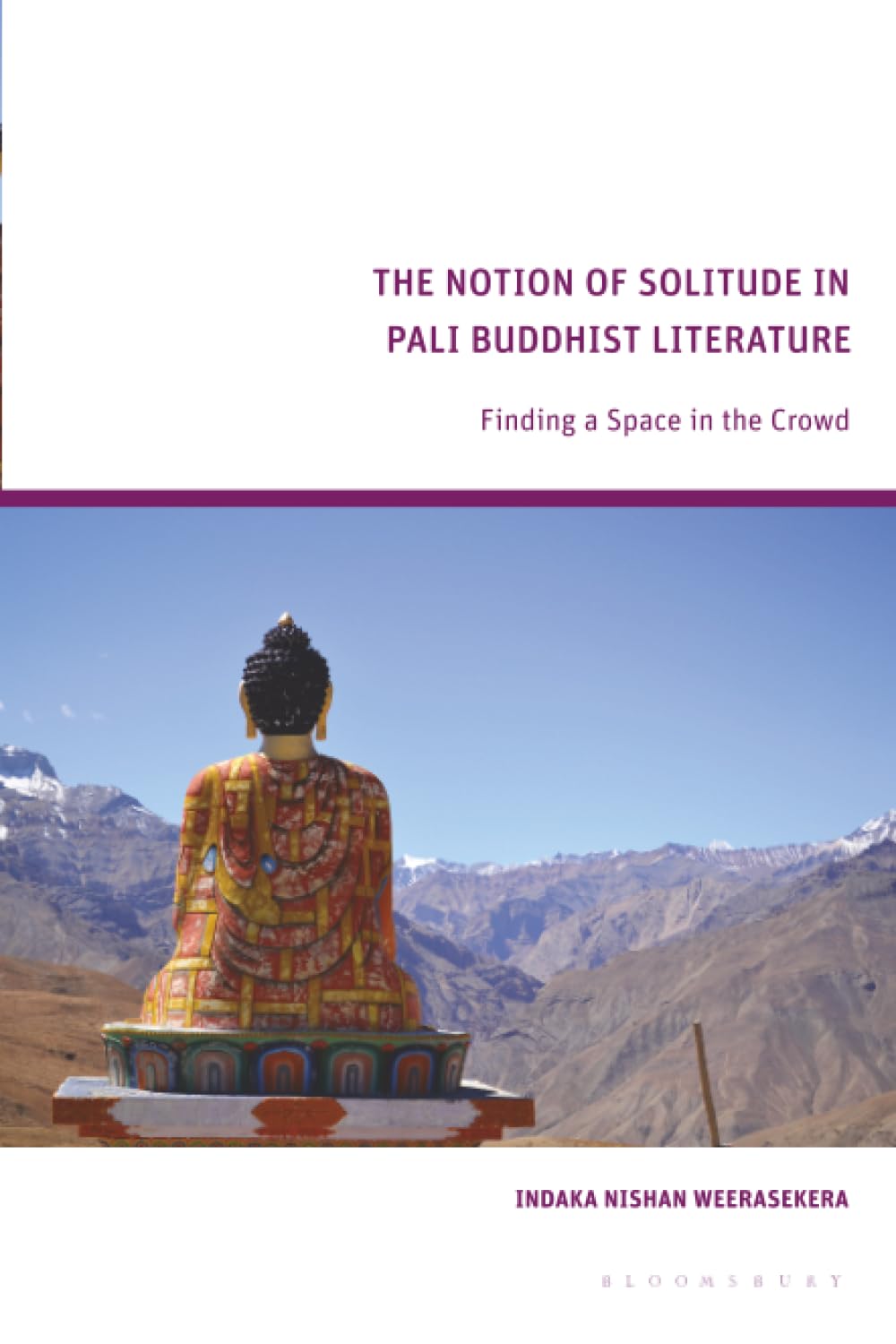
Notion of Solitude in Pali Buddhist Literature, The: Finding a Space in the Crowd
$39.51
by Indaka Weerasekera



Exploring how notions of solitude in Pali literature are encompassed in various literary forms, such as stock formulae, poetry, narrative, and imagery, this book includes close analysis of some of the most famous Buddhist verses about solitary practice. Indaka Nishan Weerasekera considers how solitude is valued as one significant aspect of the Buddhist path, including how the imagery of landscape, especially the forest, serves to both inspire solitary practice as well as functions as a metaphor for meditation. The author employs a cross-section of primary sources to explore the practical and psychological aspects of solitude in relation to Buddhist meditation, as well as relational/attitudinal concepts such as renunciation or desirelessness, independence, and self-reliance. This ‘lonely’ aspect of the Buddhist path sits alongside the ‘communal’ aspect of the Buddhist teachings. Together, they serve to maintain monastic harmony, while the ‘social’ aspect preserves monastic relations with wider society. “In this beautifully written thematic study, Weerasekera shows how solitude in Theravada Buddhism becomes a solace found in many places – even in company. The therapeutic levels of being 'alone' include physical separation, the revivifying qualities of the natural world, meditation, and liberating seclusion, from one's own past selves and hindrances. This work is both scholarly and restorative.” ― Sarah Shaw, Honorary Fellow, Oxford Centre for Buddhist Studies, UK Indaka Weerasekera is an independent scholar of Buddhist Studies, based in the UK.