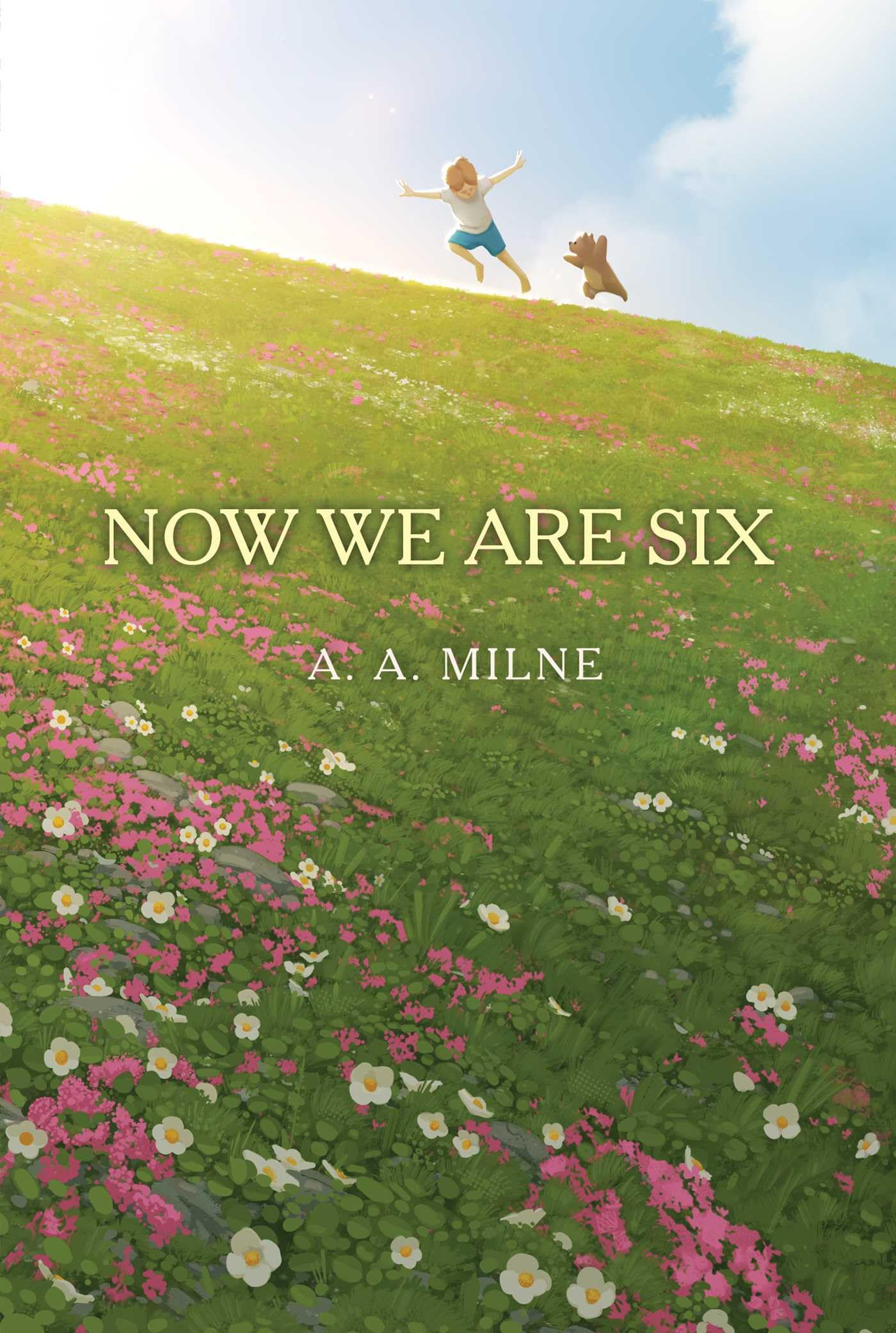



With a gorgeously redesigned cover and the original black and white interior illustrations by Ernest Shepard, this beautiful edition of the beloved classic poetry collection featuring Winnie-the-Pooh and Christopher Robin Now We Are Six by A. A. Milne is sure to delight new and old fans alike! Originally published after the novel Winnie-the-Pooh and the verse collection When We Were Very Young , A. A. Milne wrote this classic book of children’s poems about and for his son Christopher Robin when he turned six. With appearances from the beloved Winnie-the-Pooh throughout, these sweet and funny poems tell of playful adventures, the joys and pains of growing up, memorable animal friends, and more. A. A. Milne (1882–1956) was an English playwright, poet, and author. He served in both World Wars, but in peacetime devoted himself to writing. He is best known for his Winnie-the-Pooh books, which were inspired by his son, Christopher Robin Milne. Ernest Shepard (1879–1976) was an English painter and book illustrator. Encouraged by his parents to pursue art, he attended the Royal Academy Schools and began his career illustrating for Punch magazine. During the First World War, he aided the Intelligence Department by sketching combat areas, and he was later awarded the Military Cross for his service with the Royal Artillery. In addition to his work as an artist, Shepard wrote two autobiographies and two novels for children. He is best remembered for his anthropomorphic animal illustrations in The Wind and the Willows and the Winnie-the-Pooh series. Solitude I have a house where I go When there’s too many people, I have a house where I go Where no one can be; I have a house where I go Where nobody ever says “No”; Where no one says anything—so There is no one but me. King John’s Christmas King John was not a good man— He had his little ways. And sometimes no one spoke to him For days and days and days. And men who came across him, When walking in the town, Gave him a supercilious stare, Or passed with noses in the air— And bad King John stood dumbly there, Blushing beneath his crown. King John was not a good man, And no good friends had he. He stayed in every afternoon.… But no one came to tea. And, round about December, The cards upon his shelf Which wished him lots of Christmas cheer, And fortune in the coming year, Were never from his near and dear, But only from himself. King John was not a good man. Yet had his hopes and fears. They’d given him no present now For years and years and years. But every year at Christmas, While minstrels stood about, Collecting tribute from the young For all the songs they might have sung, He stole away upstairs and hung A hopeful stocking out. King John was not a good man. He lived his life aloof; Alone he thought a message out While climbing up the roof. He wrote it down and propped it Against the chimney stack: “TO ALL AND SUNDRY—NEAR AND FAR— F. CHRISTMAS IN PARTICULAR.” And signed it not “Johannes R.” But very humbly, “JACK.” “I want some crackers, And I want some candy; I think a box of chocolates Would come in handy; I don’t mind oranges, I do like nuts! And I SHOULD like a pocketknife That really cuts. And, oh! Father Christmas, if you love me at all, Bring me a big, red, india rubber ball!” King John was not a good man— He wrote this message out, And got him to his room again, Descending by the spout. And all that night he lay there, A prey to hopes and fears. “I think that’s him a-coming now.” (Anxiety bedewed his brow.) “He’ll bring one present, anyhow— The first I’ve had for years.” “Forget about the crackers, And forget about the candy; I’m sure a box of chocolates Would never come in handy; I don’t like oranges, I don’t want nuts, And I HAVE got a pocketknife That almost cuts. But, oh! Father Christmas, if you love me at all, Bring me a big, red, india rubber ball!” King John was not a good man— Next morning when the sun Rose up to tell a waiting world That Christmas had begun, And people seized their stockings, And opened them with glee, And crackers, toys, and games appeared,