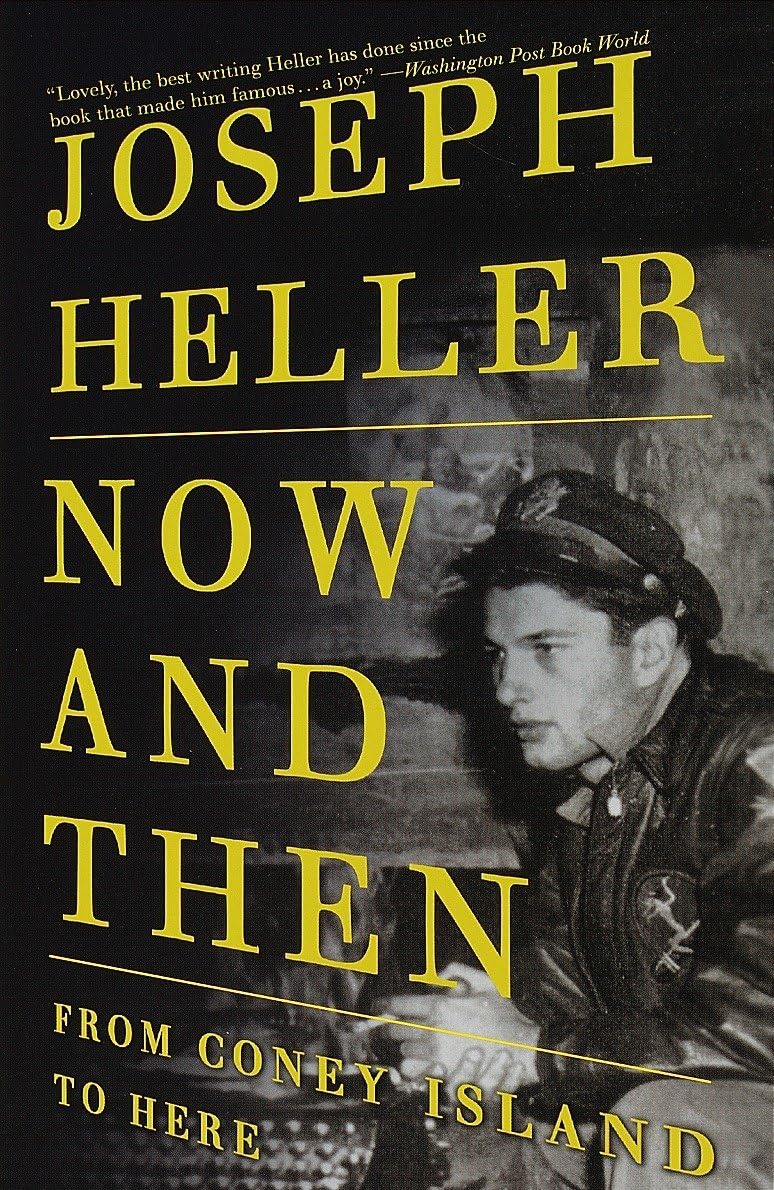



From the author of two of our most legendary novels, Catch-22 and Something Happened , comes a slyly funny, vastly revelatory memoir that is at once a loving evocation of a lost America and an exploration of the frontier where life turns into literature. Now and Then follows Joseph Heller from his fatherless childhood on the boardwalks of Depression-era Coney Island, where he grew up amid the rumble of the Cyclone and the tantalizing aroma of Mrs. Shatzkin's knishes. It offers a dizzying bombardier's-eye view of the sky over wartime Italy, where Heller encountered the characters and incidents he would later translate into Catch-22. It depicts a writer coming to terms with both rejection and celebrity. Here, in short, is a life filled with incident and insight, recollected with subversive humor, exquisite timing, and a fine appreciation for the absurd. "Lovely, the best writing Heller has done since the book that made him famous.... A joy." -- Washington Post Book World "Mouthwatering, elegantly written, lovingly detailed." -- The New York Times Book Review "A lovely, moving, affirming, celebratory work of courage, clarity, insight and joy."-- The Sun [Baltimore] hor of two of our most legendary novels, Catch-22 and Something Happened , comes a slyly funny, vastly revelatory memoir that is at once a loving evocation of a lost America and an exploration of the frontier where life turns into literature. Now and Then follows Joseph Heller from his fatherless childhood on the boardwalks of Depression-era Coney Island, where he grew up amid the rumble of the Cyclone and the tantalizing aroma of Mrs. Shatzkin's knishes. It offers a dizzying bombardier's-eye view of the sky over wartime Italy, where Heller encountered the characters and incidents he would later translate into Catch-22. It depicts a writer coming to terms with both rejection and celebrity. Here, in short, is a life filled with incident and insight, recollected with subversive humor, exquisite timing, and a fine appreciation for the absurd. The demented Army Air Force of Catch-22, the lethal business world of Something Happened, the dysfunctional family of Good as Gold - all these, we have assumed, had their roots in Joseph Heller's own past. Now, more than thirty-five years after the explosion of Catch-22 into the world's consciousness, Heller gives us his life. Here is his Coney Island childhood, down the block from the world's most famous amusement park. It was the height of the Depression, it was a fatherless family, yet little Joey Heller had a terrific time - on the boardwalk, in the ocean (dangerously out of his depth), playing follow-the-leader in and out of local bars, even in school. Then a series of jobs, from delivering telegrams (on his first bike) to working in a navy yard - until Pearl Harbor, the air force, Italy. And after the war, college (undreamed-of before the G.I. Bill), teaching, Madison Avenue, marriage, and - always - writing. And finally the spectacular success of Catch-22, launching one of the great literary careers. Joseph Heller lives in East Hampton, New York. From Chapter One The Gold Ring The gold ring on the carousels was made of brass. Even as kids in Coney Island we didn't believe it was the real thing. By the time we'd grown old enough to ride the outside horses and lunge out sideways to grasp the metal rings that swung toward us for the final few rotations, the carousel was no longer enchanting and we had no deep desire for the free ride that the last, lucky gold one awarded. By then we had nickels enough to go around again if we wanted to, but we tended to spend them on attractions that were higher and faster, more spectacular--roller coasters--and, for fun, the electric bump-cars. We were luckier with the staying power of our craving for things like pretzels, potato chips, jelly doughnuts, and chocolate bars. Mark Twain is said to have remarked that by the time we're tall enough to reach the jar of jam on the high shelf of the cupboard, we find that we've lost our taste for jam. No such rueful fate struck me or my friends or any in the small family of four of which I was the youngest, not with edibles like halvah or salted peanuts, ice cream, kosher corned beef and hot dogs, or even salami sandwiches. When we found ourselves with enough cash to obtain as much of these delicacies as we wanted, we still had a hearty appetite for them, and we tended to indulge ourselves, and still do, by eating as much as, sometimes more, much more, than we truly did, and do, want. Of late, my best defense against corpulence has been to keep out of the house supplies of things to eat that reason cautions I shouldn't be stuffing into myself. Pistachio nuts, for instance, whether in petite jars or five-pound bags, have a feeble chance of extended survival once I discover them close at hand. If there's ice cream in the freezer, I feel a commanding moral responsibility to move it out of the house as quickly as I'm ab