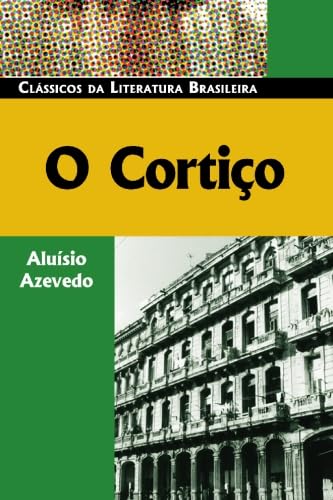
O Cortiço (Classicos da Literatura Brasileira) (Portuguese Edition)
$11.95
by Aluísio Azevedo



Representing the height of Brazilian Naturalism, O Cortiço is Aluísio Azevedo's critique of unchecked ambition in Brazilian society of his day. João Romão, an imigrant Portuguese man, builds a tenement (Cortiço) on the money and work of his mulatto lover, Bertoleza. The tenement's residents fight with those of another tenement, leading to a fire that destroys much of the building. But Romão rebuilds and is soon wealthy and looks to marry an educated woman, leaving Bertoleza, who kills herself. Known as Brazil's first professional writer, Aluísio Tancredo Gonçalves de Azevedo (1857-1913) was the talented son of a Portuguese diplomat. Azevedo enrolled in Brazil's National School of Fine Arts and drew charactures for the newspapers of the day. But his father's sudden death in 1878 forced him to support his mother and family through his writing. While his first works were formulaic works written to guarantee his family's survival, he soon turned to works that analyzed society, from the degrading conditions of the tenements to the exploitations of slavery. His best works are O Cortiço (1890), Casa de Pensão (1884) and O Mulato (1881). Despite gaining a fair living from 1882 through 1895 from his writing, he suddenly retired from writing novels in 1895 to begin a diplomatic career, rising to become Brazil's consul in Asuncion, Paraguay. He died at his last post, in Buenos Aires, Argentina, in 1913.