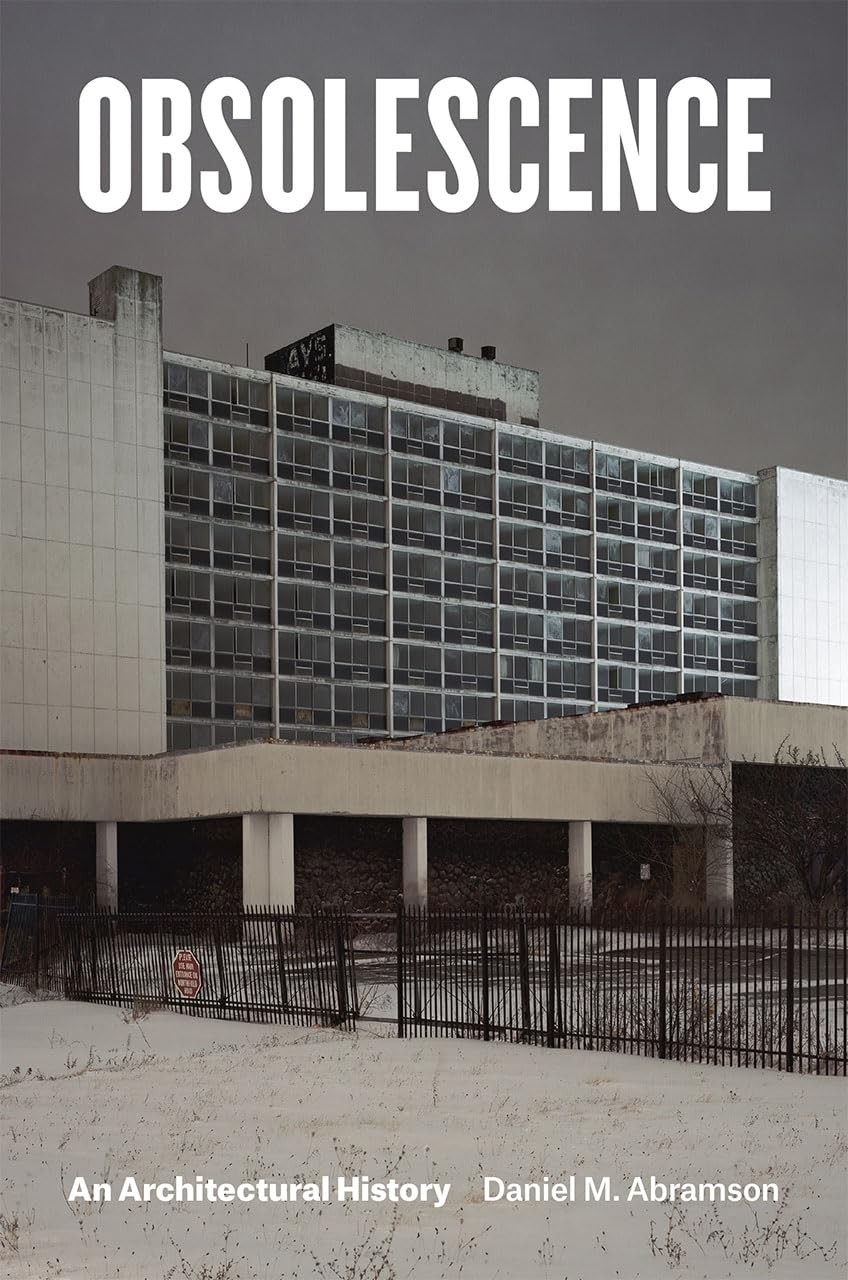



In our architectural pursuits, we often seem to be in search of something newer, grander, or more efficient—and this phenomenon is not novel. In the spring of 1910 hundreds of workers labored day and night to demolish the Gillender Building in New York, once the loftiest office tower in the world, in order to make way for a taller skyscraper. The New York Times puzzled over those who would sacrifice the thirteen-year-old structure, “as ruthlessly as though it were some ancient shack.” In New York alone, the Gillender joined the original Grand Central Terminal, the Plaza Hotel, the Western Union Building, and the Tower Building on the list of just one generation’s razed metropolitan monuments. In the innovative and wide-ranging Obsolescence , Daniel M. Abramson investigates this notion of architectural expendability and the logic by which buildings lose their value and utility. The idea that the new necessarily outperforms and makes superfluous the old, Abramson argues, helps people come to terms with modernity and capitalism’s fast-paced change. Obsolescence, then, gives an unsettling experience purpose and meaning. Belief in obsolescence, as Abramson shows, also profoundly affects architectural design. In the 1960s, many architects worldwide accepted the inevitability of obsolescence, experimenting with flexible, modular designs, from open-plan schools, offices, labs, and museums to vast megastructural frames and indeterminate building complexes. Some architects went so far as to embrace obsolescence’s liberating promise to cast aside convention and habit, envisioning expendable short-life buildings that embodied human choice and freedom. Others, we learn, were horrified by the implications of this ephemerality and waste, and their resistance eventually set the stage for our turn to sustainability—the conservation rather than disposal of resources. Abramson’s fascinating tour of our idea of obsolescence culminates in an assessment of recent manifestations of sustainability, from adaptive reuse and historic preservation to postmodernism and green design, which all struggle to comprehend and manage the changes that challenge us on all sides. “Abramson uses design as evidence to read society’s responses to the notion of obsolescence, rather than as mere illustration. And the resulting narrative is one of the most coherent and powerful explanations I’ve ever read of the seemingly disparate architectural movements of the past century: interwar conservatism, Brutalism, historic preservation and Post-Modernism. . . . The conclusion of Obsolescence is brilliant. Now superseded by sustainability, obsolescence is now itself obsolete. . . . The ideas of obsolescence and sustainability, in the end, are just ways to justify change. They are belief systems that preoccupy an era, and then they disappear.” ― Times Higher Education “A persuasive account of the origins of obsolescence in architectural thought.” ― Times Literary Supplement “Abramson explains that building obsolescence is an invented notion, created by Chicago real estate experts in the 1890s as a way to justify a near-ruthless push for profitable new construction. And once these ideas took root, they’d go global in the twentieth century, a wild reshaping of cities that put older buildings and neighborhoods in constant peril of demolition. . . . The wrecking ball still swings a bit freely in Chicago, with building obsolescence given as the reason. But Abramson’s book offers an important rebuttal.” ― Chicago Reader “Thoroughly researched, well indexed, and supported by copious notes and black and white illustrations, this brief 156 page volume offers compelling and thought-provoking arguments that make it well worth reading. Written for the architectural history community, Abramson’s clear and straightforward language will also make Obsolescence a relevant and accessible read for those interested in the development of real estate, urban planning, and historic preservation.” ― ALRIS/NA “While all buildings are subject to the decay and ruin brought by time, Abramson is concerned in this book with a different culprit: obsolescence. In his analysis, this term refers to structures demolished for having outmoded mechanical systems, or insufficient rentable space, or a suddenly unappealing stylistic expression, among many other factors. Such buildings might have survived were it not for shifting economic standards, desires, or tastes. Abramson’s overriding concern is how architecture functions within capitalism.” ― Architectural Record “ Obsolescence is an important book because it directs our attention to a key temporal concept of twentieth century architecture, urbanism, and design. As Abramson ably shows, during the first half of the twentieth century obsolescence developed as a term through which the relationships, or nonrelationships, of permanence and dynamism were mediated. . . . Gathering a broad range of sources, Abramson shows