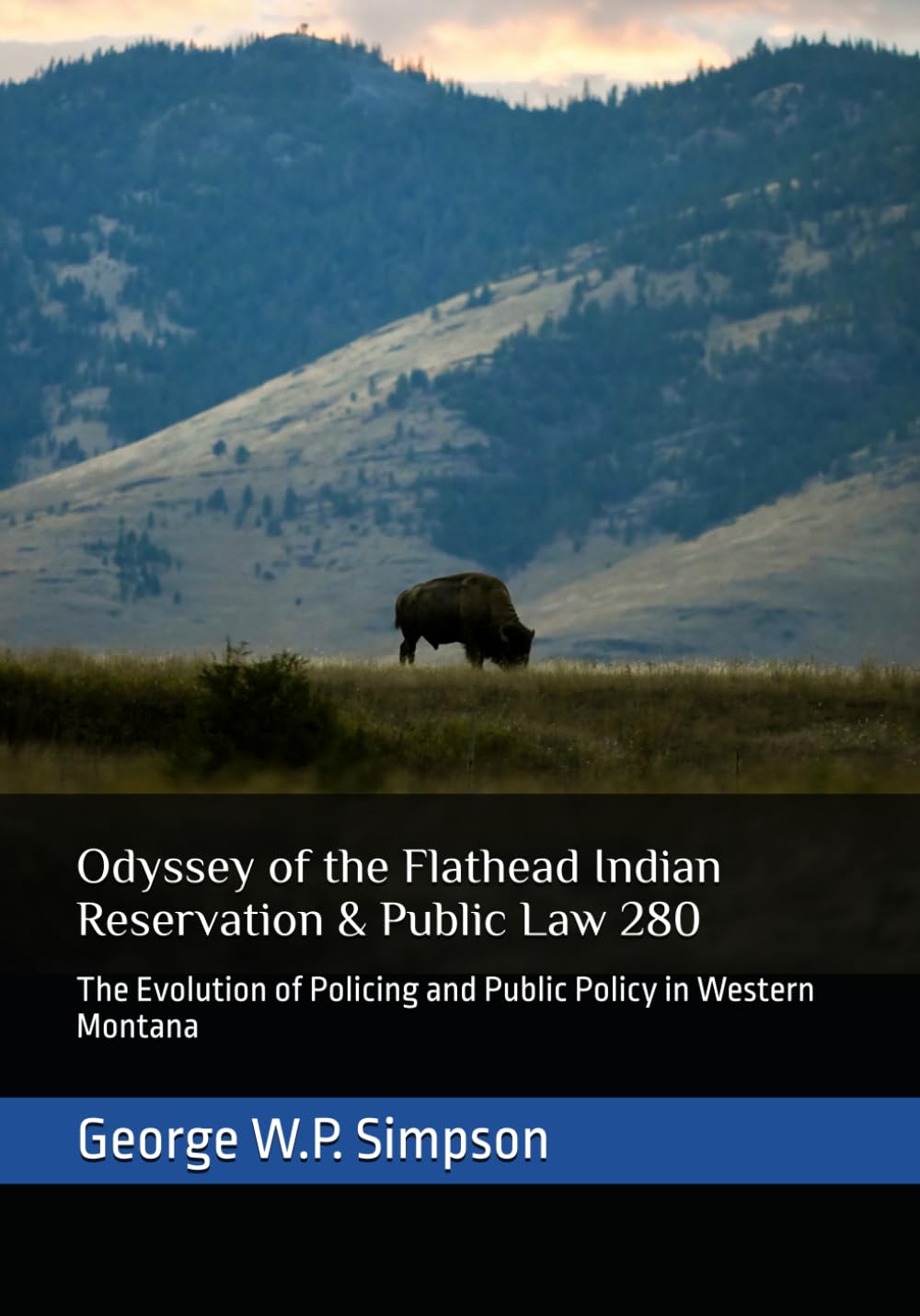
Odyssey of the Flathead Indian Reservation & Public Law 280: The Evolution of Policing and Public Policy in Western Montana (Flathead Odyssey Duology)
$28.00
by George W.P. Simpson



This compelling exploration delves into the unique criminal justice landscape of Western Montana, with a particular focus on the Flathead Indian Reservation, home to the Confederated Salish and Kootenai Tribes. From before the 1855 Hellgate Treaty to contemporary law enforcement challenges, this book unveils the complex evolution of policing and public policy in the region. The Historical Context From the signing of the 1855 Hellgate Treaty to present-day law enforcement practices, this text chronicles the rich history of the Flathead Indian Reservation. Explore how the Confederated Salish and Kootenai Tribes have maintained their sovereignty, navigated complex federal policies, and shaped their own systems of governance and law enforcement. The Evolution of Public Policy Public Law 280 introduced new dynamics into the policing of Indian Country. “Odyssey of the Flathead Indian Reservation & Public Law 280” thoroughly examines how this law has evolved and continues to influence Indian and non-Indian communities. The book also delves into federal and state policies and their socio-political impacts on law enforcement and governance in the area. Contemporary Challenges The book looks at the present-day challenges facing law enforcement and public policy on the Flathead Indian Reservation. From economic development to community relations, it provides insights into how public policy can adapt to meet the evolving needs of both Indigenous and non-Indigenous populations. Cultural Sensitivity and Collaboration A central theme throughout is the importance of cultural sensitivity, community engagement, and collaboration between law enforcement agencies, tribal councils, and non-tribal government officials. The book highlights how these collaborative efforts have led to the creation of a distinctive and effective criminal justice model on the Flathead Reservation.