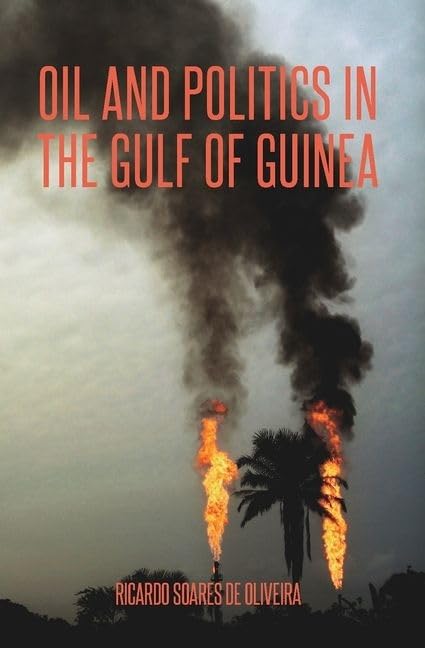



This book investigates the paradox at the heart of present-day Gulf of Guinea politics. The governance crisis festering throughout every one of the region's states ought to discourage outsiders from capital-intensive, long-term commercial involvement and cast doubts over the political survival of ruling cliques. However, the presence of large petroleum deposits radically changes this equation: the negative dynamics of state failure and widespread violence affect the general population but spare the oil nexus. The material and political resources made available by oil allow states to survive regardless of bad policies, facilitate their governing elites' material success regardless of reckless management, earn international allies regardless of erratic domestic conduct, and make companies want to invest regardless of risk. The recent oil boom only strengthens this paradoxical viability. Making possible what is arguably the largest inflow of resources into Africa in history, it is of a different order from the short-term viability afforded by the exploitation of other natural resources. Nonetheless, the partnership between insiders and outsiders that permits the extraction of oil is not conducive to positive long-term outcomes in institution-building or broad-based economic growth. Highly dependent on uninterrupted money flows and beset by various destabilising trends, the political economy of oil in the Gulf of Guinea is poised in a state of "permanent crisis." This study, based on extensive fieldwork, interviews and engagement with primary and secondary sources, is the first on the subject to take on the regional, as opposed to the country-specific, dimension. It has four key aims. The first is to bring out the extent to which oil has forged the interaction of the region with the world economy and how the ongoing expansion of the oil sector will deepen this pivotal role. Secondly, how this international relevance of petroleum has shaped postcolonial domestic politics and institutions. Thirdly, it examines the interests of different sets of empowered actors in the partnership between importers, producers and oil companies, their interplay, and the manner and contexts in which their goals diverge or converge. Finally, it analyses the sources of long-term sustainability of the political economy of oil in the Gulf of Guinea amidst seemingly unmanageable chaos. "Soares de Oliveira has written an important study of the impact of oil on the region's politics. Oil, he shows, has had a powerfully negative effect on the quality of government. Even as the oil economy thrives thanks to high oil prices and significant new investment from Western oil companies, governments in the region have increasingly failed to provide welfare or security to their citizens and have instead used their states' oil evenues to protect their hold on power and enrich small elites...Soares de Oliveira's study provides a rich political sociology of the oil curse in West Africa."--Nicolas van de Walle, Foreign Affairs "This is an intelligent, well-researched, and elegantly written book."--Pierre Englebert, Political Science Quarterly "Outstanding … historically informed and takes structures seriously without falling prey to structural determinism. At the same time, it takes a hard look at the actors involved […] and the strategies they pursue. The result is a fascinating relationship […] An excellent book."' --Denis Tull, Journal of Modern African Studies Ricardo Soares de Oliveira is University Lecturer in Comparative Politics, University of Oxford, fellow of St. Peter´s College, Oxford, and fellow of the Global Public Policy Institute, Berlin. He is the author of Oil and Politics in the Gulf of Guinea and co-editor of China Returns to Africa .