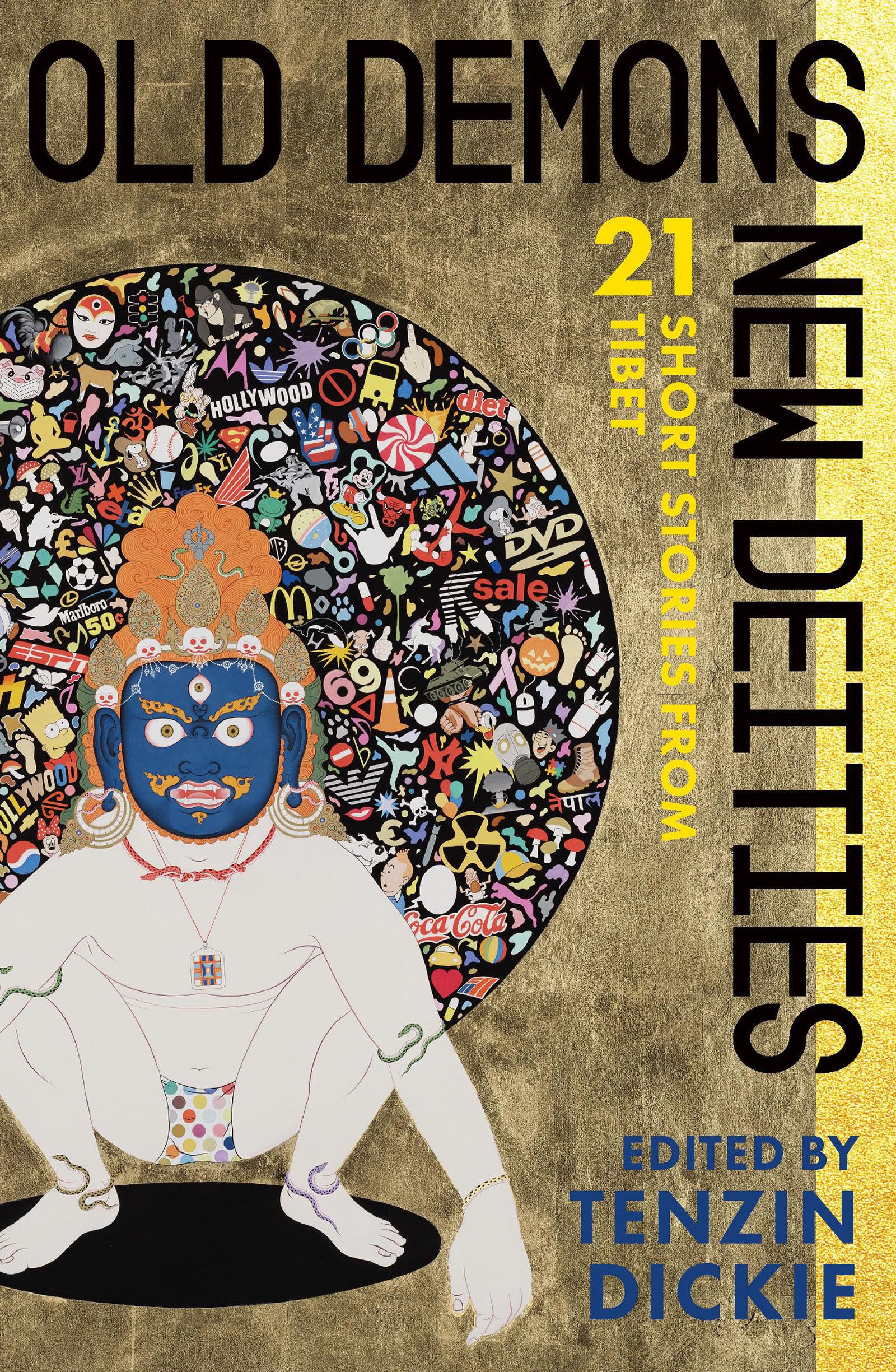



The first English-language anthology of contemporary Tibetan fiction available in the West, Old Demons, New Deities brings together the best Tibetan writers from both Tibet and the diaspora, who write in Tibetan, English and Chinese. Modern Tibetan literature is just under forty years old: its birth dates to 1980, when the first Tibetan language journal was published in Lhasa. Since then, short stories have become one of the primary modern Tibetan art forms. Through these sometimes absurd, sometimes strange, and always moving stories, the English-reading audience gets an authentic look at the lives of ordinary, secular, modern Tibetans navigating the space between tradition and modernity, occupation and exile, the personal and the national. The setting may be the Himalayas, an Indian railway, or a New York City brothel, but the insights into an ancient culture and the lives and concerns of a modern people are real, and powerful. For this anthology, editor and translator Tenzin Dickie has collected 21 short stories by 16 of the most respected and well known Tibetan writers working today, including Pema Bhum, Pema Tseden, Tsering Dondrup, Woeser, Tsering Wangmo Dhompa, Kyabchen Dedrol, and Jamyang Norbu. Praise for Old Demons, New Deities "This book is the first of its kind, and presents a little-known literature that few readers in the West have been able to access. With the well-crafted translations of this collection, Tibetan literature takes a step forward onto the global stage." ― The Los Angeles Times Review of Books "Elegant and accessible stories . . . This collection will go a long way to encouraging further interest in Tibetan literature.” ― Asian Review of Books "A long-overdue and brilliantly edited volume on the Tibetan experience." ―Gary Shteyngart "Tenzin Dickie is to be congratulated on having gathered here these twenty-one short stories by arguably the best Tibetan authors writing today. Informatively introduced by her, this volume is a most welcome treat for anyone interested in literature per se and opens a much-needed window to the contemporary Tibetan short story for an international audience." ― Leonard W.J. van der Kuijp, Professor of Tibetan and Himalayan Studies, Harvard University "This anthology of contemporary fiction from Tibet, with stories from Tibet as well as the diaspora, paints the most real and haunting portraits of Tibetan lives in all their complexities and contradictions. Including luminaries like Woeser, Tsering Dondrup, Pema Bhum, and Jamyang Norbu, Old Demons, New Deities is a unique contribution to world literature." ―Tsering Shakya, Canada Research Chair, Religion & Contemporary Society in Asia, University of British Columbia "Elegant and accessible stories on a variety of themes by the most distinguished of modern Tibetan writers" –John Butler, Scroll.in TENZIN DICKIE is a writer and literary translator living in New York. Her writings have been published in Indian Literature, Apogee Journal, Tibetan Review, Himal SouthAsian , and Cultural Anthropology , and anthologized in The Yellow Nib: Modern English Poetry by Indians from The Seamus Heaney Centre for Poetry and The Tibet Reader , forthcoming from Duke University Press. Her translations have been published in The Washington Post online and Modern Poetry in Translation . A 2014-2015 ALTA Fellow of the American Literary Translators’ Association, she holds an MFA from Columbia University and a BA from Harvard University. She is an editor at treasuryoflives.org, a biographical encyclopedia of significant figures from Tibet, Inner Asia, and the Himalayan Region. From "The Connection" by Bhuchung D. Sonam "You have a background," said the police inspector. It was the first thing he said after ordering me to sit down in the chair in front of his desk. He knew me from my many previous visits to the police station. "I…I…" I intentionally fumbled. Having read enough detective stories and crime thrillers, I knew what "background" meant, especially when used by a senior police officer. "Young man, go on, what do you say to that?" he said. "Sir, I don't understand what you mean," I answered respectfully. I had found that things often worked in my favor when I used polite language and lots of "sirs" with government officials and policemen. These saabs liked to use authoritative language to reinforce their positions of superiority. On the white wall behind the inspector's head was a map of India on a rusty nail and a two-year-old calendar. Perhaps the calendar was kept there for its image; an intimidating painting of the four-armed wrathful goddess Kali extending her tongue to her chin and adorned with a necklace of human skulls. "Kabir, pani lao ," the inspector commanded his peon. A little later a man appeared with two glasses of water. He placed them on the table, bowed a little, and left the room. "Think . . . think about where you travelled and who you met over the last year