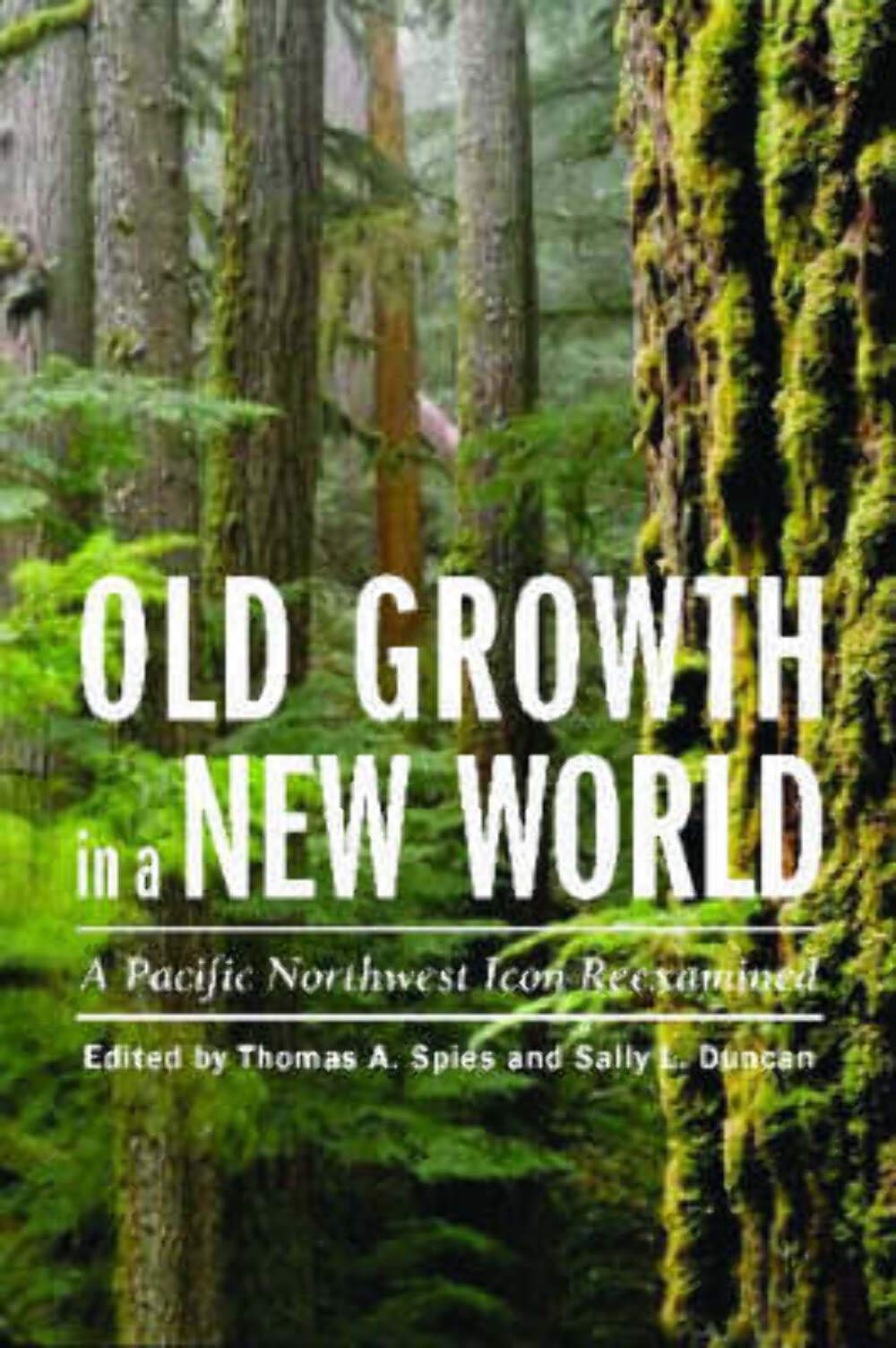



Old-growth forests represent a lofty ideal as much as an ecosystem—an icon of unspoiled nature, ecological stability, and pristine habitat. These iconic notions have actively altered the way society relates to old-growth forests, catalyzing major changes in policy and management. But how appropriate are those changes and how well do they really serve in reaching conservation goals? Old Growth in a New World untangles the complexities of the old growth concept and the parallel complexity of old-growth policy and management. It brings together more than two dozen contributors—ecologists, economists, sociologists, managers, historians, silviculturists, environmentalists, timber producers, and philosophers—to offer a broad suite of perspectives on changes that have occurred in the valuing and management of old-growth forests in the Pacific Northwest over the past thirty years. The book • introduces the issues and history of old-growth values and conservation in the Pacific Northwest; • explores old growth through the ideas of leading ecologists and social scientists; • addresses the implications for the future management of old-growth forests and considers how evolving science and social knowledge might be used to increase conservation effectiveness. By confronting the complexity of the old-growth concept and associated policy and management challenges, Old Growth in a New World encourages productive discussion on the future of old growth in the Pacific Northwest and offers options for more effective approaches to conserving forest biodiversity. "Readers will find this a very informative and enjoyable synthesis of the concepts that have evolved regarding Pacific Northwest old-growth forests." ― CHOICE Thomas A. Spies is a forest ecologist and team leader in the Ecosystem Processes program at the Pacific Northwest Research Station, USDA Forest Service, in Corvallis, Oregon. Sally L. Duncan is policy research director for the Institute for Natural Resources at Oregon State University in Corvallis. Old Growth in a New World A Pacific Northwest Icon Reexamined By Thomas A. Spies, Sally L. Duncan ISLAND PRESS Copyright © 2009 Island Press All rights reserved. ISBN: 978-1-59726-410-5 Contents About Island Press, Title Page, Copyright Page, ACKNOWLEDGMENTS, PART I - Introduction and History, Chapter 1 - Searching for Old Growth, Chapter 2 - Historical Context of Old-Growth Forests in the Pacific Northwest—Policy, Practices, and Competing Worldviews, PART II - Exploring Old Growth Through Ecological and Social Sciences, Chapter 3 - Science of Old Growth, or a Journey into Wonderland, Chapter 4 - Old-Growth Forest as Wildlife Habitat, Chapter 5 - Maintaining Biodiversity in Managed Forests, Chapter 6 - Fish and Old-Growth Forests, Chapter 7 - Contribution of Old-Growth Timber to Regional Economies in the Pacific Northwest, Chapter 8 - Sacred Trees, Chapter 9 - Old Growth and a New Nature: Ambivalence of Science and Religion, Chapter 10 - Common Sense Versus Symbolism: The Case for Public Involvement in the Old-Growth Debate, PART III - Value, Conflicts, and a Path Toward Resolution, Chapter 11 - Starting the Fight and Finishing the Job, Chapter 12 - A Private-Lands and State-Lands Perspective, Chapter 13 - Getting from "No" to "Yes": A Conservationist's Perspective, Chapter 14 - Old Growth: Failures of the Past and Hope for the Future, Chapter 15 - In the Shadow of the Cedars: Spiritual Values of Old-Growth Forests, Chapter 16 - Old Growth: Evolution of an Intractable Conflict, PART IV - The Challenge of Change—New Worlds for Old Growth, Chapter 17 - Increasing Difficulty of Active Management on National Forests—Problems and Solutions, Chapter 18 - Is Adaptive Management Too Risky for Old-Growth Forests?, Chapter 19 - Nontimber Economic Values of Old-Growth Forests: What Are They, and How Do We Preserve Them?, Chapter 20 - Regional Conservation of Old-Growth Forest in a Changing World: A Global and Temporal Perspective, Chapter 21 - Moving Science and Immovable Values: Clumsy Solutions for Old-Growth Forests, PART V - Managing an Icon, Chapter 22 - Conserving Old-Growth Forests and Attributes: Reservation, Restoration, and Resilience, Chapter 23 - Managing Young Stands to Develop Old-Forest Characteristics, Chapter 24 - Managing Forest Landscapes and Sustaining Old Growth, Chapter 25 - Unexplored Potential of Northwest Forests, PART VI - Synthesis, Chapter 26 - Old Growth in a New World: A Synthesis, Chapter 27 - Conserving Old Growth in a New World, CONTRIBUTORS, INDEX, Island Press
Board of Directors, CHAPTER 1 Searching for Old Growth THOMAS A. SPIES AND SALLY L. DUNCAN The flat, glacial outwash plain in northern lower Michigan is savannah-like and open to the sky, but it was not always so. Only scatterings of large, gray, rotted stumps remind me that old-growth eastern white pine, red pine, and hemlock forests flourished here for hund
Board of Directors, CHAPTER 1 Searching for Old Growth THOMAS A. SPIES AND SALLY L. DUNCAN The flat, glacial outwash plain in northern lower Michigan is savannah-like and open to the sky, but it was not always so. Only scatterings of large, gray, rotted stumps remind me that old-growth eastern white pine, red pine, and hemlock forests flourished here for hund