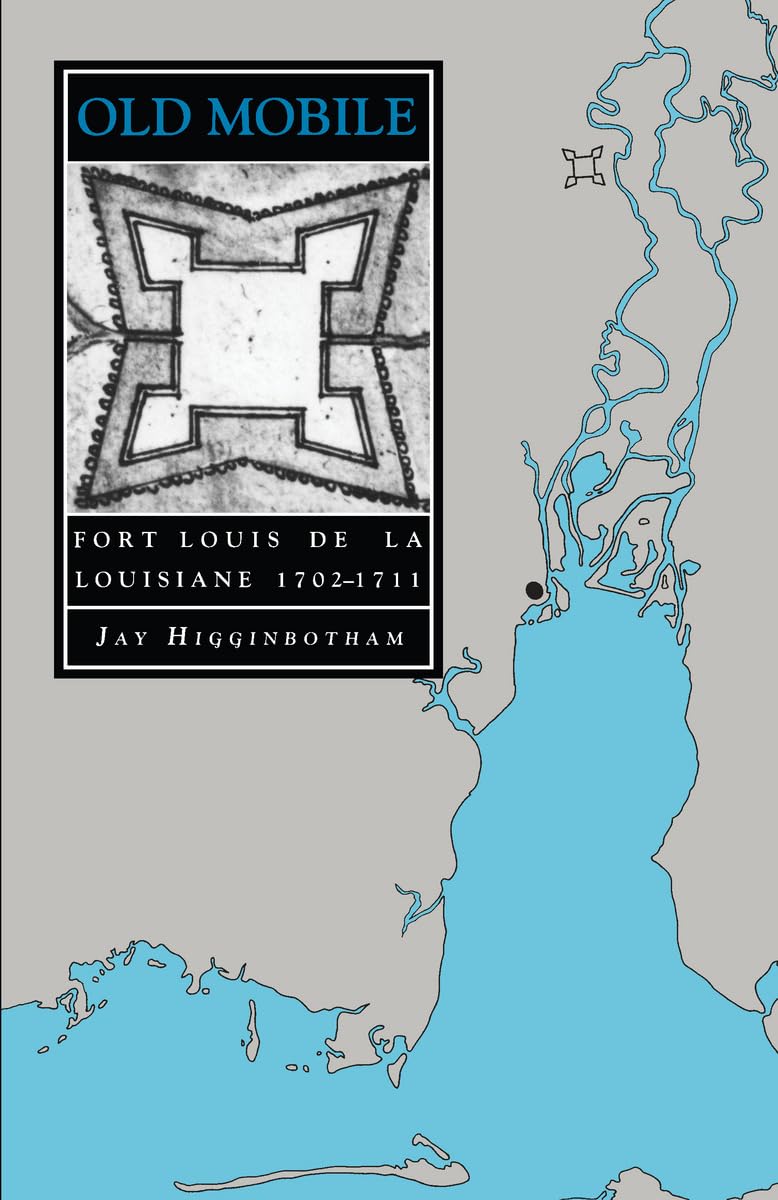
Old Mobile: Fort Louis de la Louisiane, 1702-1711 (Library of Alabama Classics)
$39.95
by Jay Higginbotham



The highly praised, landmark history of the founding of Mobile Commissioned to mark the 275th anniversary of the founding of the city of Mobile, Old Mobile is award-winning historian Jay Higginbotham’s definitive history of the origins of French settlement on Mobile Bay and the birth of the city. Higginbotham’s narrative is replete with memorable characters, such as the LeMoyne brothers: Iberville, the aristocratic adventurer who abandoned the settlement and the younger Bienville, whose iron determination and Catholic faith sustained the community through its first hardscrabble years 26 miles upriver, a disastrous flood in 1711, and the community’s retreat to the city’s current location, nearer the French supply depot on Dauphin Island. The majestic sweep of Higginbotham’s fascinating account also takes in early Mobile’s relations with neighboring European settlements, such as their meddling French neighbors in Louisana to the west and the Spanish in Pensacola to the east. Despite being rivals of a sort, Mobile and Pensacola became, of dire necessity, allies in survival. Higginbotham consulted a wealth of previously unpublished sources in the national archives of the United States, Canada, Mexico, France, England, Spain, and Cuba, creating an authoritative account never likely to be equaled. A copious bibliography, excellent illustrations and figures, tables of relevant statistics, and a detailed index round out this magisterial edition. Scholars and readers interested in the founding of Alabama, the history of Gulf Coast settlements, the French colonial empire, or related subjects will find Old Mobile essential reading. “Higginbotham has given to American historiography a microcosmic view of one of the earliest and most important outposts in the colonial new world. The Latin South can henceforth not be ignored.” — Alabama Historical Quarterly “Meticulously documented. . . . Recommended for libraries interested in the colonial period.” —C hoice “The definitive account . . . superbly recounted.” — Journal of Southern History “Mind-boggling . . . a stupendous job of research. It is amazing that Higginbotham can recreate in such detail the lives of these people. All history books should be written like this.” — Birmingham Magazine “This volume should be read any serious student of the European colonization of the United States.” — Journal of American History “The importance of Old Mobile to students of Gulf Coast history can hardly be overstated. There is nothing by an American author that comes close to rivaling it, nor apt to be for several long lifetimes. The scholarship is awesome and exemplary, the detail and accuracy of the narrative unmatched; the writing is good for such a solid piece of scholarship. It is one of the important books in Alabama history.” — Robert R. Rea, Auburn University “The best book ever written about a French settlement in the United States. . . .It is so good and so significant it presents a major challenge to American historians.” — Journal of the Illinois Historical Society Prieur Jay Higginbotham (1937-2017) was an author, historian, and activist whose major accomplishments included founding the Mobile Municipal Archives and writing several important works about southern history and international relations. In addition to his award-winning Old Mobile (1977), he is known for his nonfiction work about the Soviet Union in the 1960s called Fast Train Russia (1981). He received five literary awards, including the Gilbert Chinard Prize and the Alabama Library Association Award. Old Mobile Fort Louis de la Louisiane, 1702–1711 By Jay Higginbotham The University of Alabama Press Copyright © 1977 Jay Higginbotham All rights reserved. ISBN: 978-0-8173-0528-4 Contents Introduction, Preface, Abbreviations, Prologue, I. Confrontment at Pensacola, II. Transfer to Massacre Island, III. Beginning the Establishment, IV. Tonti and the Pax Gallica, V. Iberville at Fort Louis, VI. Early Dissensions, VII. Perfidy and Reprisal, VIII. Recruitment in Paris, IX. Robinau de Bécancour, X. The Voyage of the Pélican, XI. Summer Scourge, XII. Continuing Crises, XIII. Bienville and La Salle, XIV. Gravier and La Vente, XV. The Aigle Arrives, XVI. Embroilments Old and New, XVII. Dartaguiette d'Iron, XVIII. Threats from Within and Without, XIX. The Colony on Its Own, XX. La Vente and La Salle: Last Days, XXI. The Spanish Grow Cold, XXII. Moving Downstream, Illustrations, Appendixes, Bibliography, Index, CHAPTER 1 Confrontment at Pensacola IBERVILLE'S ships made their landfall on the fifteenth of December at three o'clock in the afternoon five and a half miles to the east of the bay of Pensacola. By early evening the commander's pilots had moved the four ships (the Renommée, the Palmier and two smaller vessels) to the entrance of the port, where they anchored in six fathoms of water. After