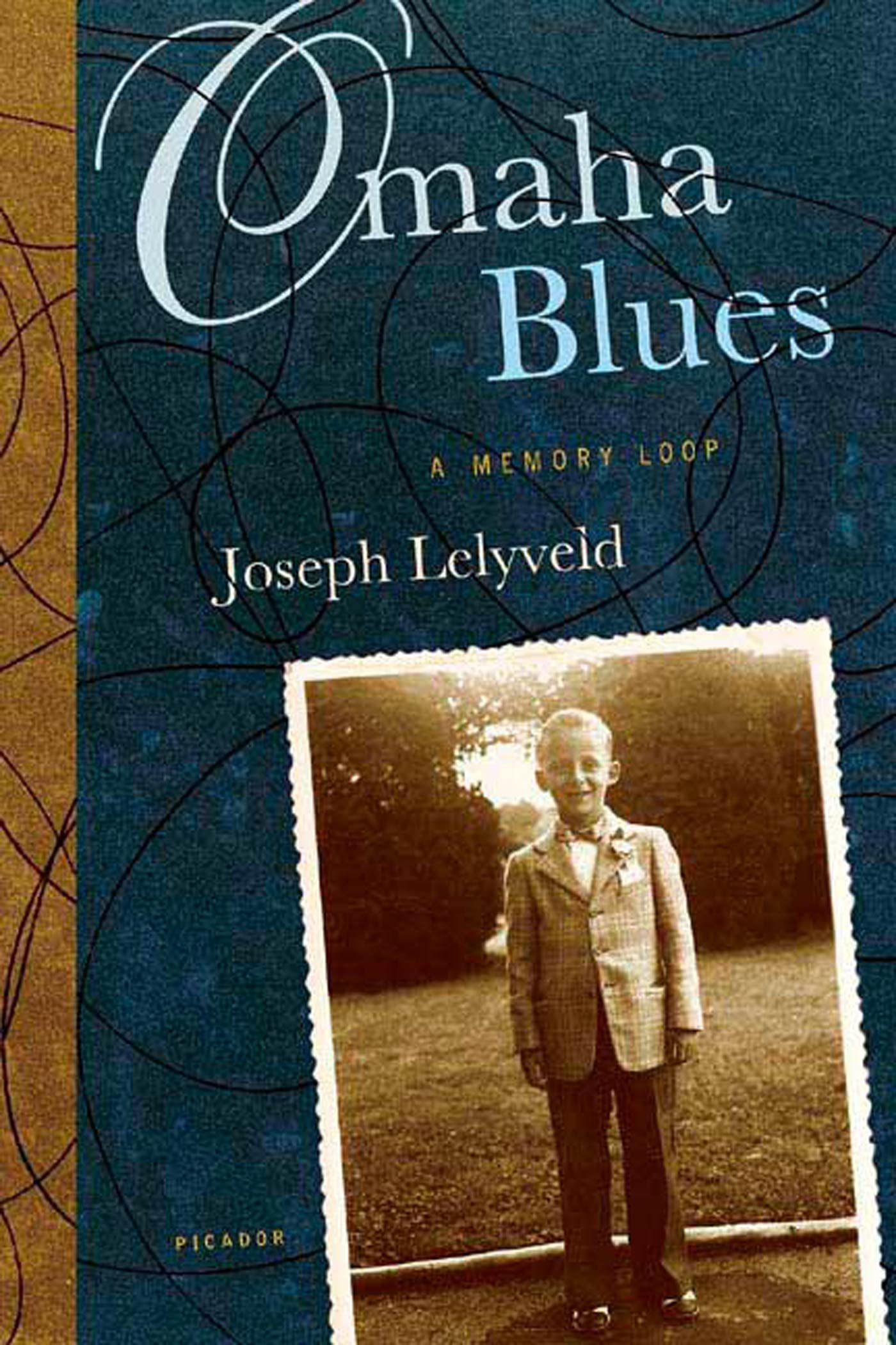



The profoundly moving family history of one of America's greatest newspapermen. As his father lies dying, Joseph Lelyveld finds himself in the basement of the Cleveland synagogue where Arthur Lelyveld was the celebrated rabbi. Nicknamed "the memory boy" by his parents, the fifty-nine-year-old son begins to revisit the portion of his father's life recorded in letters, newspaper clippings, and mementos stored in a dusty camp trunk. In an excursion into an unsettled and shakily recalled period of his boyhood, Lelyveld uses these artifacts, and the journalistic reporting techniques of his career as an author and editor, to investigate memories that have haunted him in adult life.. With equal measures of candor and tenderness, Lelyveld unravels the tangled story of his father and his mother, a Shakespeare scholar whose passion for independence led her to recoil from her roles as a clergyman's wife and, for a time, as a mother. This reacquired history of his sometimes troubled family becomes the framework for the author's story; in particular, his discovery in early adolescence of the way personal emotions cue political choices, when he is forced to choose sides between his father and his own closest adult friend, a colleague of his father's who is suddenly dismissed for concealing Communist ties. Lelyveld's effort to recapture his family history takes him on an unforeseen journey past disparate landmarks of the last century, including the Scottsboro trials, the Zionist movement, the Hollywood blacklist, McCarthyism, and Mississippi's "freedom summer" of 1964. His excursion becomes both a meditation on the selectivity and unreliability of memory and a testimony to the possibilities, even late in life, for understanding and healing. In Omaha Blues , as Lelyveld seeks out the truth of his life story, he evokes a remarkable moment in our national story with unforgettable poignancy. “[ Omaha Blues ] arrives at redemption and forgiveness through the meticulous act of finding out, and recording, the truth.” ― The New Yorker “Reminiscent of Proust's account of his forgotten childhood world suddenly reappearing. . . . His book is more like life than memoir. . . . Remarkable.” ― Russell Baker, The New York Review of Books “Lelyveld has blessed us with a careful, sensitive and moving book . . . a triumph of storytelling.” ― Philip Connors, Newsday Joseph Lelyveld is former executive editor of The New York Times and the author of Omaha Blues, Move Your Shadow, and House of Bondage. Omaha Blues A Memory Loop By Joseph Lelyveld Picador USA Copyright © 2006 Joseph Lelyveld All right reserved. ISBN: 9780312425104 Chapter One MEMORY BOY Long before I taught myself to hold them at a safe distance, my parents called me "the memory boy." If once I knew what they meant by that, the memory boy has long since forgotten, shedding memories and the stories behind pet phrases as so much extra baggage. The tag may have had something to do with my inability to forget the lyric of any song I heard as a child. But what I think it really described was a knack for recalling names and the order in which things happened: where we went on those rare occasions we went anywhere as a family, who we saw, who came to see us, what they said, and our verdicts later on, for as a family we were judgmental to a very considerable fault. Shedding was an acquired skill, a way of getting on with life, which was what you had to do, I later told myself, once you closed your mind to the possibilities of therapy. "Getting on with life" became a slogan of my inner monologues; a catchword or, as I'd now say, admitting to wordplay, a catch cry. Even then, the knack for recalling names and the order of things survived, so long as they had little to do with me. It came in handy on college exams. It came in handy telling the stories of others, which is what I eventually did for a living. I could recall obscure facts, make intuitive connections, ask the right questions. And I could always move on to the next assignment, the next story, as journalists do. Moving on became my particular way of getting on with life, and even if I now acknowledge it as a form of psychic flight, it seemed a liberating, sometimes thrilling, way to live. So I wasn't touched or curious or anyway receptive when, three decades after my parents' divorce, my octogenarian father sent me a packet of love letters between him and my mother that he'd hidden away. He thought his posterity might be interested in preserving them. Not me, his eldest son. I knew instantly that I didn't want to handle them or own them, let alone read them. So I disposed of them and then, characteristically disposed of the memory of how I'd disposed of them. Maybe I gave them to my mother; it might have seemed the honorable thing to do. I mention this close brush with family history now only to describe a reflex and to show how unlike me it was, several years later, to go scavenging