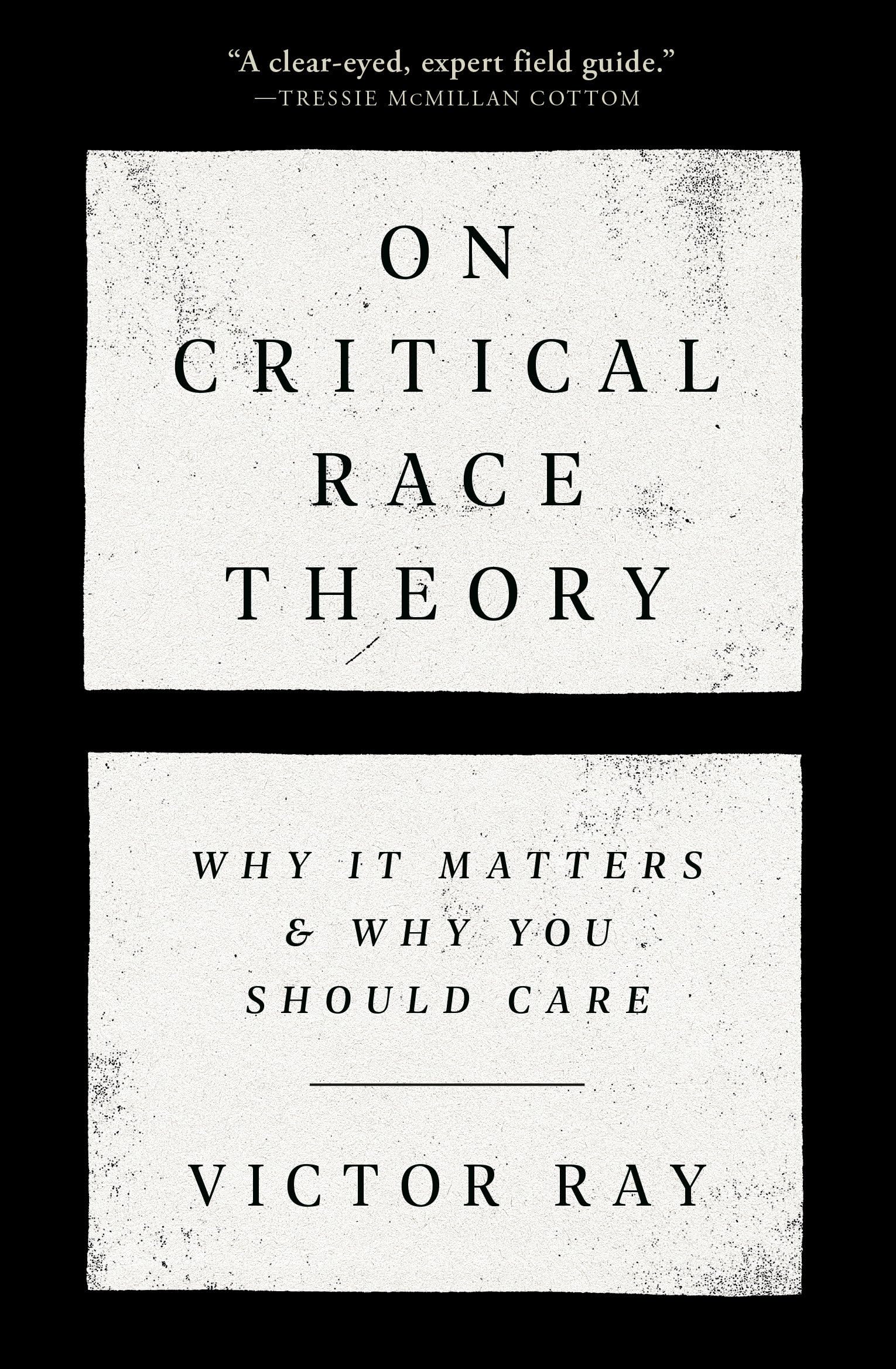



What exactly is critical race theory? This concise and accessible exploration demystifies a crucial framework for understanding and fighting racial injustice in the United States. “A clear-eyed, expert field guide.”—Dr. Tressie McMillan Cottom, author of Thick From renowned scholar Dr. Victor Ray, On Critical Race Theory explains the centrality of race in American history and politics, and how the often mischaracterized intellectual movement became a political necessity. Ray draws upon the radical thinking of giants such as Ida B. Wells, W.E.B. Du Bois, and Dr. Martin Luther King, Jr., to clearly trace the foundations of critical race theory in the Black intellectual traditions of emancipation and the civil rights movement. From these foundations, Ray explores the many facets of our society that critical race theory interrogates, from deeply embedded structural racism to the historical connection between whiteness and property, ownership, and more. In succinct, thoughtful essays, Ray presents, analyzes, and breaks down the scholarship and concepts that constitute this often misconstrued term. He explores how the conversation on critical race theory has expanded into the contemporary popular conscience, showing why critical race theory matters and why we should all care. “Regimes ban books when the books explain what is actually happening. Everyone who reads Victor Ray’s book will emerge understanding that this is exactly why critical race theory is being banned. In clear and accessible prose, Ray explains why we need critical race theory to understand the problems we face, and simultaneously reveals why it is such a target. The government doesn’t want you to have this knowledge. This book explains why.” —Jason Stanley, author of How Fascism Works “Sociologist Victor Ray has given us the profound gift of a clear-eyed, expert field guide to racial fascism and critical race theory. This is a handbook for serious people who want to fight dishonest fearmongering.” —Dr. Tressie McMillan Cottom, author of Thick Victor Ray was born in Pittsburgh and raised in western Pennsylvania. After receiving his bachelor of arts in urban studies at Vassar, he earned his PhD from Duke University in 2014. His work has been published in a number of peer-reviewed journals, including American Sociological Review and The Annals of the American Academy of Political and Social Science. Dr. Ray is a nonresident senior fellow at the Brookings Institution and his research has been funded by the Ford Foundation. As an active public scholar, his social and critical commentary has appeared in outlets such as The Washington Post, Newsweek, Harvard Business Review , and Boston Review. Victor Ray currently resides in Iowa City. Introduction Why Critical Race Theory Matters The law, in its majestic equality, forbids rich and poor alike to sleep under bridges, to beg in the streets, and to steal their bread. —Anatole France What is Critical Race Theory? “Not everything that is faced can be changed; but nothing can be changed until it is faced.”2 James Baldwin wrote those words to convey the intellectual’s role in laying bare a nation’s faults. Critical race theory is a body of scholarship that faces America’s brutal racial history, recognizes the parts of that history that remain unchanged, and works toward changing the rest. Racism is America’s central political fault line. Critical race theory shows how this fault line runs through the American legal system. Critical race theory developed, in part, to explain why the monumental legal victories of the civil rights movement—for instance, the Brown v. Board of Education decision outlawing state-sponsored school segregation—didn’t always lead to lasting improvements in the lives of people of color in the United States. By the late seventies and early eighties it was clear that a backlash to the civil rights movement was gaining traction. Several trends supported this conclusion. Schools that had been forced to open their doors to Black students in the wake of the Brown ruling were resegregating. This resegregation continues, with some public schools now equally or more segregated than before Brown . The best evidence shows that discrimination against Black men in entry-level jobs hasn’t decreased since the late 1980s, and emerging businesses are increasingly segregated. The impact of antidiscrimination law in the workplace is also waning (or reversing) as occupational desegregation stalled in the 1980s. Conservative think tanks waged an all-out war on affirmative action in higher education, characterizing policies designed to (slightly) intervene in decades of explicit exclusion from white colleges as reverse racism. It might be tempting to diagnose policies like affirmative action and school desegregation as failures because racial equality is still elusive in schools and workplaces. But these policies successfully opened educational opportunities and jobs