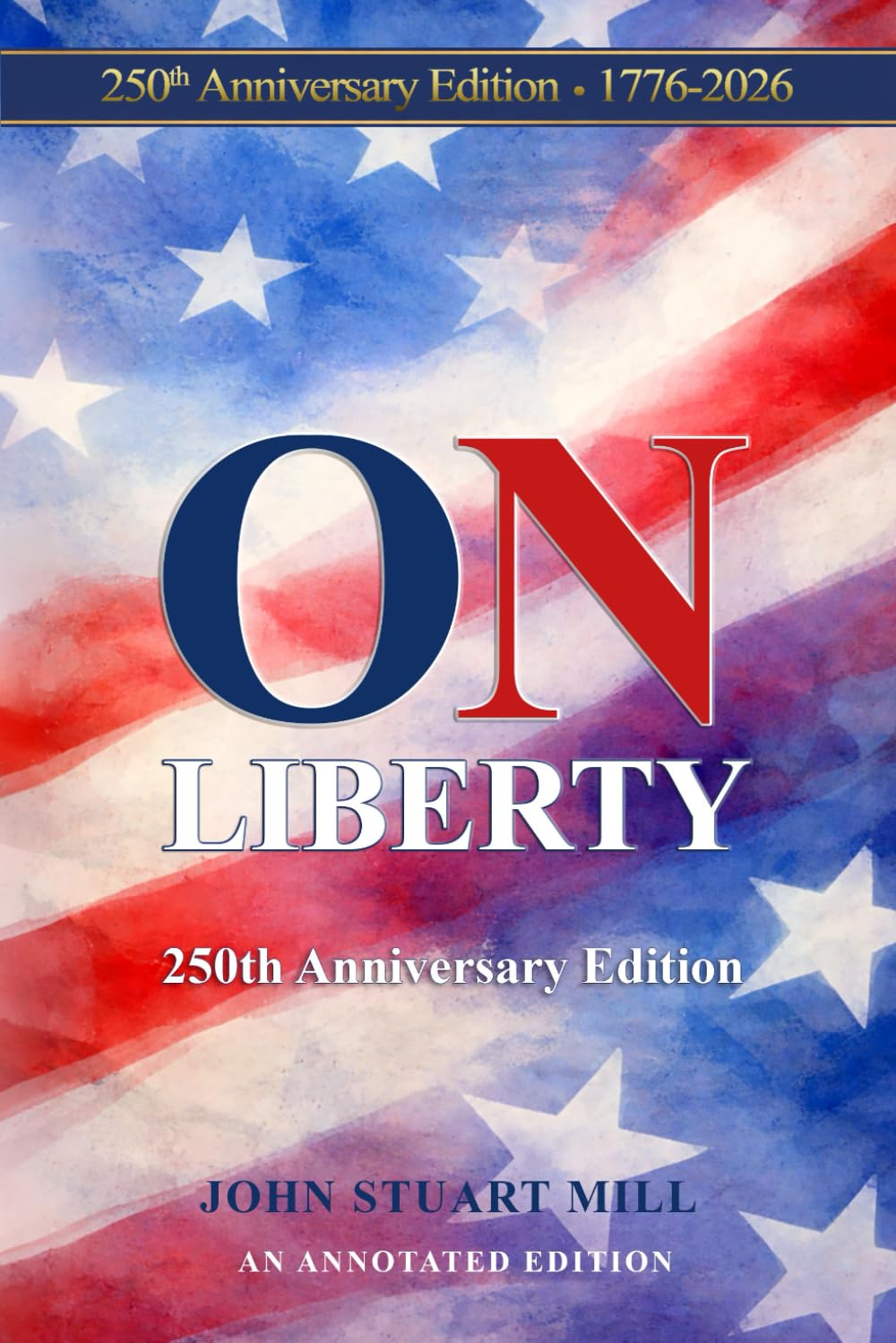
On Liberty 250th Anniversary Edition: An Annotated Classic on Freedom, the Limits of Power, and Individual Rights
$9.99
by John Stuart Mill



Your employer fires you for an opinion expressed online. - A speaker is disinvited from campus because students find their views offensive. - Government mandates require you to act against your conscience “for the common good.” Sound familiar? These aren’t hypothetical scenarios. They’re happening now. And the arguments against them? They were already laid out in 1859. When philosopher John Stuart Mill wrote On Liberty , he was responding to the same pressures we face today: growing demands for conformity, calls to silence “dangerous” ideas, and the expansion of both government power and social control over individual lives. His answer remains radical: You are sovereign over yourself. Society may stop you from harming others, but it has no right to control your thoughts, dictate your choices, or enforce its vision of the good life upon you. Mill’s harm principle is simple but powerful: Society may interfere with individual freedom only to prevent direct harm to others. Not to enforce morality. Not to protect adults from themselves. Not to silence offensive speech. Not to demand conformity. His real warning wasn’t about government tyranny. It was about the tyranny of the majority —enforced through social pressure, public shaming, and moral conformity. The quiet suppression of dissent that happens when people fear ostracism more than they value truth. Published in 2026 to mark America’s 250th anniversary, this annotated edition connects Mill’s defense of liberty to the founding principles of free speech and limited government that shaped the American republic. The complete public domain text is presented with modern editorial guidance: Clear footnotes explaining Victorian-era references - Chapter introductions connecting Mill’s arguments to today’s debates - Discussion questions for students, book clubs, and classrooms - Editorial notes clarifying difficult passages On Liberty is essential reading for understanding: Free speech and censorship debates - The limits of government power and individual rights - Classical liberalism and the American founding - When moral disapproval crosses into coercion - Cancel culture and the tyranny of public opinion Mill’s ideas aren’t historical curiosities—they’re urgent answers to questions we’re asking right now about censorship, government overreach, social media mobs, and ideological conformity. On Liberty asks the question every generation must answer: Where does your authority over me end, and my sovereignty over myself begin? Perfect for students, educators, and anyone wrestling with the tension between individual freedom and collective authority in the 21st century.