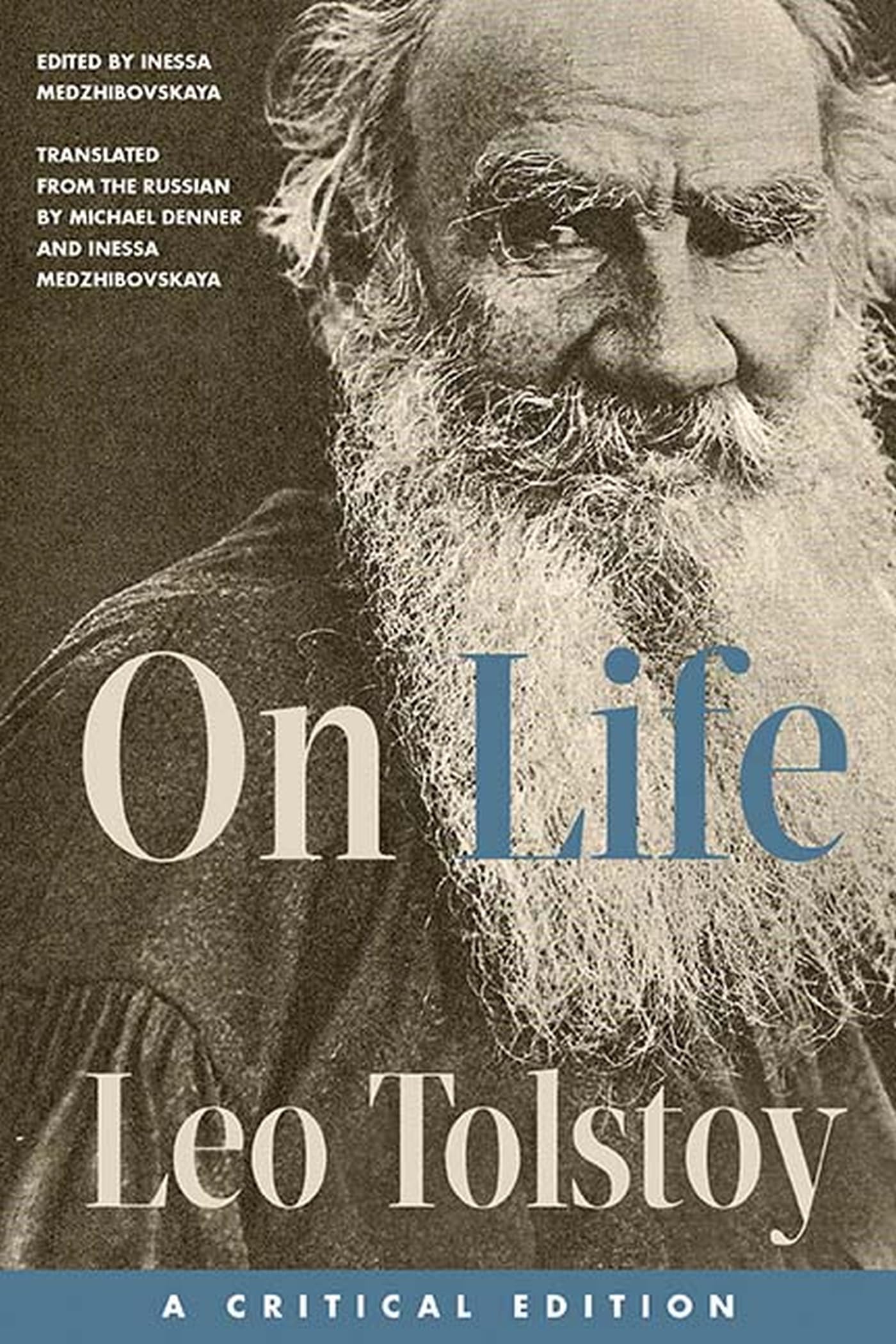



In the summer of 1886, shortly before his fifty-eighth birthday, Leo Tolstoy was seriously injured while working in the fields of his estate. Bedridden for over two months, Tolstoy began writing a meditation on death and dying that soon developed into a philosophical treatise on life, death, love, and the overcoming of pessimism. Although begun as an account of how one man encounters and laments his death and makes this death his own, the final work, On Life , describes the optimal life in which we can all be happy despite our mortality. After its completion, On Life was suppressed by the tsars, attacked by the hierarchs of the Russian Orthodox Church, and then censored by the Stalinist regime. This critical edition is the first accurate translation of this unsung classic of Russian thought into English, based on a study of manuscript pages of Tolstoy's drafts, and the first scholarly edition of this work in any language. It includes a detailed introduction and annotations, as well as historical material, such as early drafts, documents related to the presentation of an early version at the Moscow Psychological Society, and responses to the work by philosophers, religious leaders, journalists, and ordinary readers of Tolstoy's day. "This first annotated translation of an 1886 work from Tolstoy marks a significant achievement in studies of the author... Though clearly aimed at Tolstoy scholars, this critical edition will be of interest to anyone attracted to Tolstoy’s unique brand of spirituality." — Publishers Weekly “This welcome translation of Tolstoy’s striking meditation on life and mortality is illuminated by the editor’s superb introduction that traces the fate of this controversial work, while situating it in the broader context of Tolstoy’s lifelong confrontation of death, the mystery of life, and the paradox of necessity and freedom.” —Victor Brombert, author of Musings on Mortality: From Tolstoy to Primo Levi "Tolstoy is fifty-eight years old, newly recovered from a near-fatal injury. In the face of Darwinists, positivists, the new science of psychology, and the venerable teachings of the Russian Orthodox Church, he defines life: the overcoming of pessimism by a proper understanding of part to whole, which will make us worthy of happiness. At the time, Tolstoy's radical ethics was likened to Nietzsche's. This lucid and poetic translation, meticulously annotated and introduced, restores this astonishing text to its controversial nineteenth-century context and recommends it to our own." —Caryl Emerson, author of The Cambridge Introduction to Russian Literature "This new translation has two advantages over all the others. First, it is done jointly by a native speaker of Russian . . . and of English . . . who both pay close attention to Tolstoi's language and render it as consistently as possible. Secondly, Medzhibovskaya's annotations are extraordinarily helpful in guiding the reader through the subtleties of Tolstoi's terminology—the different words he uses for reason or love, for instance, or his varying use of pronouns (I, we, they)—and also in situating Tolstoi's thought within the cultural context of the time." —Donna Orwin, Slavonic East European Review LEO TOLSTOY (1828 –1910) is widely regarded as one of the greatest writers of all time. He wrote novels, short stories, plays, and philosophical essays and is perhaps best known for War and Peace and Anna Karenina . I NESSA MEDZHIBOVSKAYA is an associate professor of liberal studies and literature at Eugene Lang College and at The New School for Social Research in New York City. MICHAEL DENNER is a professor of Russian, East European, and Eurasian studies at Stetson University and the editor of the Tolstoy Studies Journal . On Life A Critical Edition By Leo Tolstoy, Inessa Medzhibovskaya, Michael Denner Northwestern University Press Copyright © 2019 Northwestern University Press All rights reserved. ISBN: 978-0-8101-3803-2 CHAPTER 1 The Main Contradiction of Human Life Every person lives only to feel good, for his own happiness. Were a person not to wish for his own happiness, he would not feel alive. Man cannot imagine life without wishing happiness for himself. Being alive for every person is precisely the same thing as wanting to acquire this happiness; wishing for and acquiring this happiness is the same thing as being alive. A person senses life only in himself, in his own individuality. A person, therefore, initially imagines that this happiness that he desires is only individual happiness. Initially, it seems to him that he, alone, truly lives. The life of other creatures seems to him not at all like his own — it seems to him to be a mere semblance of life; he only observes the life of other creatures and only from these observations does he learn that they live. A person knows about the life of others when he wants to think about them; but about himself he knows that he is alive and