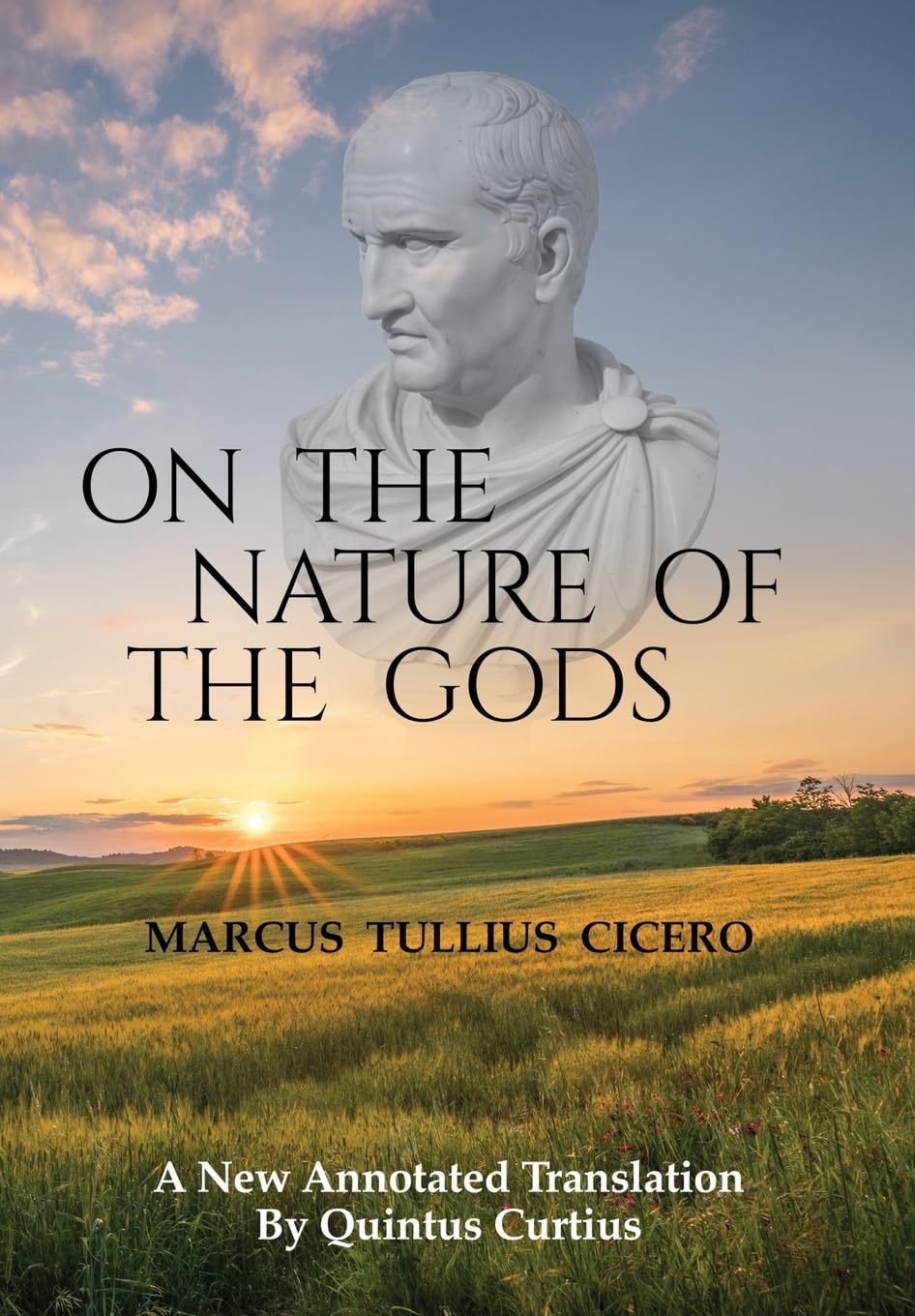



This new, original translation of Cicero's On the Nature of the Gods is the first to appear in many years. Do the gods exist? Is there a divine order to the universe? And if there is, what is humanity's role in this grand conception? Does a divine power care about human affairs? These are just a few of the profound questions discussed in Cicero's philosophical masterpiece. In dialogues that showcase the differing perspectives of the Stoic, Epicurean, and Academic schools, Cicero delves into a stunning variety of subjects, including human anatomy, theology, cosmology, astronomy, biology, and divination. The persistent themes of Cicero's vision are his insistence on a moral basis for human conduct, the existence of free will and human agency, and his soaring faith in the unique role reserved for the human race in the universe's destiny. It is no wonder that Voltaire called On the Nature of the Gods, along with Cicero's Tusculan Disputations, "[the] two most beautiful works ever composed by human wisdom." Translator Quintus Curtius has returned to the original Latin text to produce a fresh, modern, illustrated English edition that breathes new life into a long-neglected classic of Western thought. The text is extensively annotated, and formatted using modern dialogue conventions for ease of reading. Also included are an explanatory introduction, topical content list, and a comprehensive index. Cicero's seminal work has much to tell us today, and with this translation has never been more accessible to the modern reader. "Quintus Curtius is the finest translator of Cicero we have seen in many years, and he deserves credit for helping to launch the resurgence of interest in Cicero's philosophical works that is now thriving outside the ivory tower...[T]his new translation strikes an ideal balance between readable modern English and scrupulous fidelity to the tone of the Latin. The outstanding introduction and the many succinct notes that round it out make it a complete book in itself. I recommend it highly." --Dr. Michael Fontaine, from his literary review in "The New Criterion," Vol. 42, No. 7 (March 2024), "A Deathless Dialogue" Few subjects in philosophy have so consistently engaged the interests of contemplative minds through the centuries as the question of a divine power. Does a supreme being exist? What unseen forces govern the universe? If a divine power does exist, what is its nature? What is the nature of our relationship to it? Does a divine power care about the affairs of mankind, or does it ignore us completely? And as a practical matter, how should we go about investigating this recondite and elusive subject? What impresses the modern student of philosophy is the fearless readiness of ancient thinkers to propound comprehensive answers to these questions. Despite the wide divergence of perspective among the classic philosophical schools, each of them offered systematic views on the nature and operation of the universe. The ancient schools were not always able to reconcile their cosmologies with the accepted religious beliefs of their day; and, acutely aware of the fates of Socrates and other philosophers who strayed beyond the acceptable limits of impiety and apostasy, they often confined their opinions to sympathetic adherents, or adopted a protective coloration of didactic ambiguity. But in these brave early efforts we feel the first stirrings of mankind's struggle to understand his place in the cosmos. It is a struggle that has continued to the present day. Cicero's On the Nature of the Gods ( De Natura Deorum ) is the fullest comparative study of ancient theology that has come down to us. Most of the sources that Cicero mentions in his treatise—and as the reader will see, there are many of them—have not survived the ravages of time. The works of Epicurus, Zeno, Cleanthes, Posidonius, Xenophanes, Anaxagoras, Pythagoras, Heraclitus, Democritus, and Clitomachus, to name only a few, are known to us only as tantalizing fragments, if at all. Yet Cicero's work has survived. This fact alone assures the work a prominent place in the history of philosophy. On the Nature of the Gods is a crucial document not simply because it preserved the ideas of some Greek philosophers who predated Cicero. It is an original and profound work in its own right, and is fit to stand alongside the great classics of Western philosophical thought. It offers penetrating analyses of religion's role in human affairs, man's place in the cosmos, divine providence, the problem of evil, the necessity of human agency, and the need for free will. The tone throughout is rationalist; but it is a rationalism buttressed by a powerful and inspiring sense of moral purpose. It was not without reason that Voltaire, in his Philosophical Dictionary , identified On the Nature of the Gods, together with Cicero's Tusculan Disputations , as "the two noblest works that were ever written by mere human wisdom." Marcus Tulli