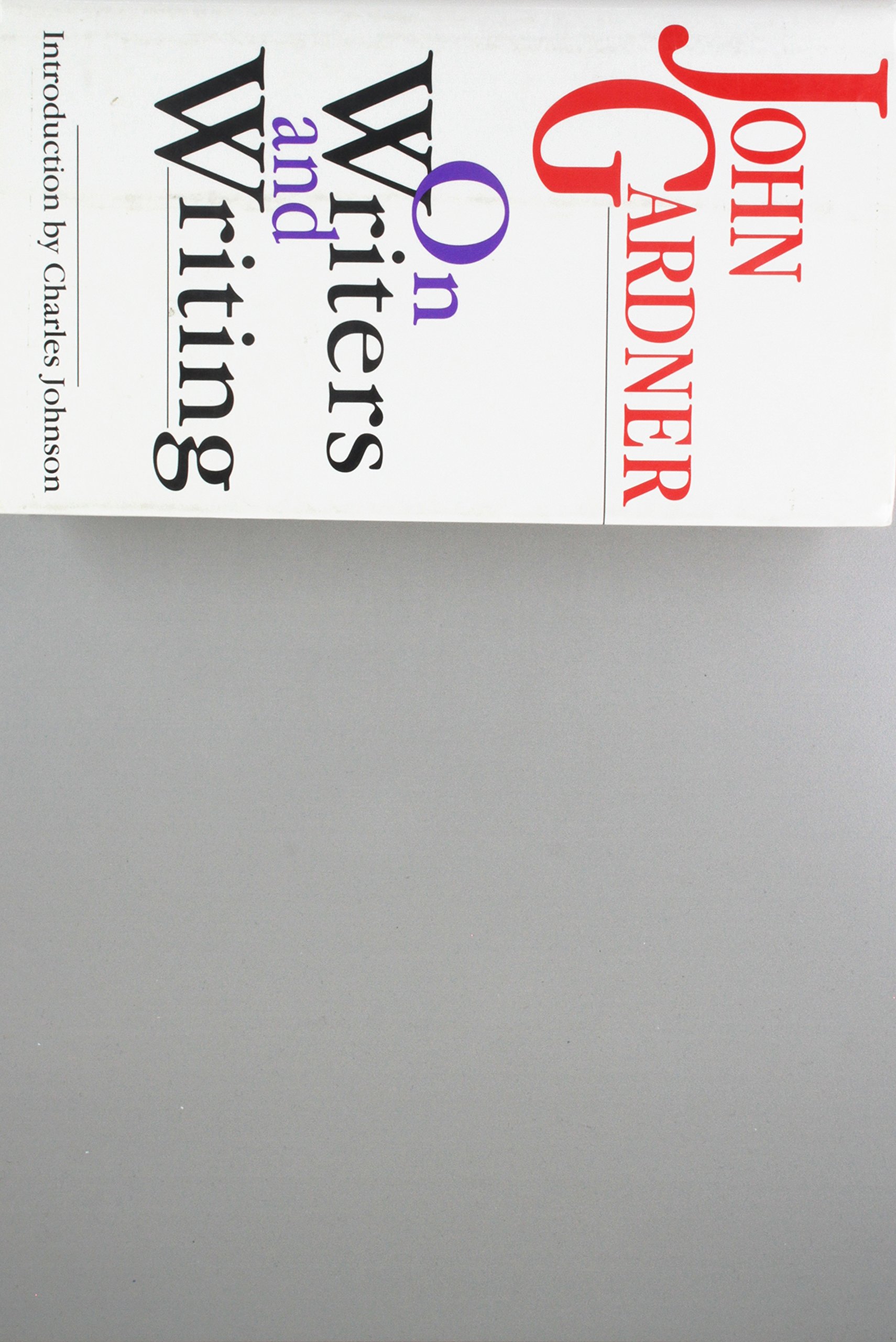



A first-time collection of the essays and reviews of the late artist and critic, presenting his views on Bellow, Nabokov, Updike, and others, explores subjects ranging from religion to fairy tales, and from King Arthur to Walt Disney. Most literary criticism sends me into a coma, but John Gardner talks about literature in a way that anyone who likes books can follow and appreciate. Until his death in a 1982 motorcycle crash at age 49, Gardner suffered from neither a lack of productivity--he wrote more than 20 books--nor for want of opinions about the literary productions of others. In this collection of his essays and lectures, Gardner provides several upper-level English lit seminars' worth of commentary on a number of books and authors--Melville, Roth, Oates, Styron, Calvino, Cheever, to name a few. These 28 pieces, dating from 1964 to Gardner's death in 1982, are mostly reviews. There are also a few longer essays or omnibus reviews, some thoughts on patriotism and the bicentennial, and posthumous pieces: "Cartoons," perhaps the best short statement of his thinking on literature and the influences on his work, a short story on Julius Caesar, and, most interesting for fans and students, a "general plan" for The Sunlight Dialogues . The reviews--of Cheever, Gaddis, Calvino, Roth, Tolkien, Malamud, Oates, Fowles, etc.--are mostly literary journalism that, however thoughtful, tends to veer off into Gardner's standard pitch for absolutes and "moral fiction" and against whining, false, stupid, trivial, limited trash and "self-congratulatory self-doubt and alienated positivistic pessimism." There is little depth or growth in Gardner's thinking, and a little bit of it is probably enough for most readers. - Richard Kuczkowski, Dominican Coll., Blauvelt, N.Y. Copyright 1994 Reed Business Information, Inc. By the time he died in a motorcycle crash in 1982, novelist John Gardner had distinguished himself as a candid, thoughtful critic of his fellow fiction writers who wasn't embarrassed to write a manifesto, On Moral Fiction (1978), that argued against purely aesthetic, formal judgments of literature. In this collection of essays and reviews, he addresses specific writers and books--e.g., John Cheever's Falconer, William Styron's Sophie's Choice, even Lewis Carroll's Alice in Wonderland--as well as the generic problems, joys, and issues involved in the writing of fiction. Even when critical, Gardner gives his objections a contrarian twist, finding that William Gaddis' JR is not, as the common wisdom has it, an ``awesomely unreadable'' but intellectually majestic novel. Instead, he argues that JR is ``wonderfully and easily readable,'' but that in the end it is intellectually and morally lazy, concluding: ``It pays, of course, that scornful sneer; people love to be told everything stinks. It sounds so intelligent.'' -- Copyright ©1994, Kirkus Associates, LP. All rights reserved.