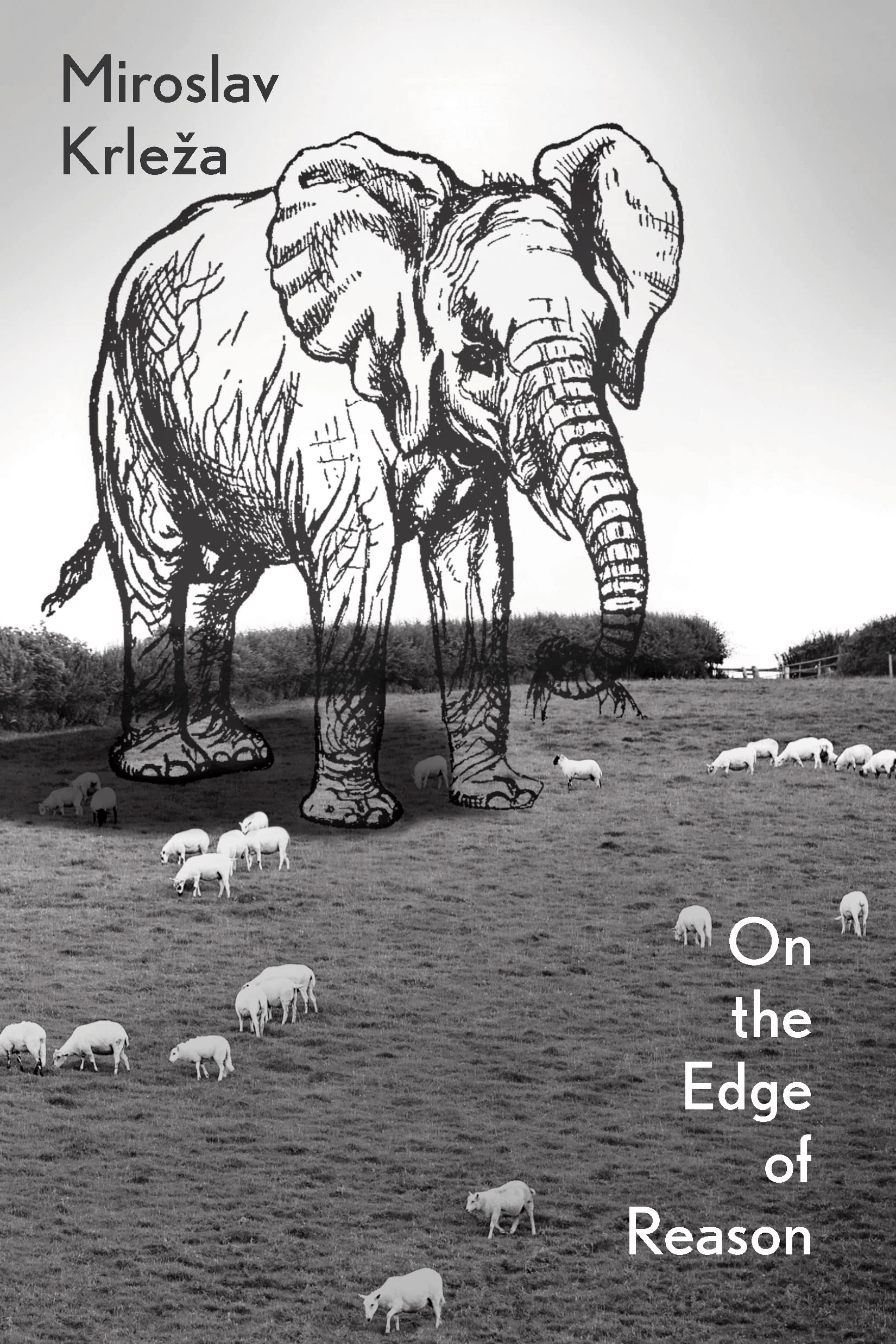



From the great Croatian writer: a masterly work of literature―hilarious, unforgiving, and utterly reasonable Until the age of fifty-two, the protagonist of On the Edge of Reason suffered a monotonous existence as a highly respected lawyer. He owned a carriage and wore a top hat. He lived the life of “an orderly good-for-nothing among a whole crowd of neat, gray good-for-nothings.” But, one evening, surrounded by ladies and gentlemen at a party, he hears the Director-General tell a lively anecdote of how he shot four men like dogs for trespassing on his property. In response, our hero blurts out an honest thought. From this moment, all hell breaks loose. Written in 1938, On the Edge of Reason reveals the fundamental chasm between conformity and individuality. As folly piles upon folly, hypocrisy upon hypocrisy, reason itself begins to give way, and the edge between reality and unreality disappears. "An attack on conformity. " ― Library Journal "Krleza is a shrewd observer of man as social animal, and his wry, sardonic style fits cleanly into the Eastern European tradition of bureaucratic satire by the likes of Kafka, Karel Capek, and Jaroslav Hašek." ― Publishers Weekly (Starred) "Paris had its Balzac and Zola; Dublin, its Joyce; Croatia, its Krleža. One of the most accomplished, profound authors in European literature." ― Saturday Review " On the Edge of Reason is one of the great European novels of the first half of the twentieth century." ― Susan Sontag "A tale of refusal to match Herman Melville's Bartleby, the Scrivener ― though its nameless protagonist has more fun than Bartleby ever does." ― Lily Meyer, NPR During his long and distinguished career, the Croatian writer Miroslav Krleža (1893–1981) battled against many forms of tyranny. He wrote over forty novels, plays, and volumes of poetry and is widely considered to be the greatest Croatian writer of the twentieth century. Zora Depolo also translated Krleža’s The Return of Philip Latinowicz . Joshua Cohen is the author of six novels, one collection of short fiction, and one collection of nonfiction. Called "a major American writer" by the New York Times , and "an extraordinary prose stylist, surely one of the most prodigious at work in American fiction today" by the New Yorker , Cohen was awarded the 2013 Matanel Prize, and in 2017 was named one of Granta ’s Best Young American Novelists. The Netanyahus won the 2021 National Jewish Book Award for Fiction and the 2022 Pulitzer Prize for Fiction. "Human intelligence today is but nervous restlessness, or rather neurasthenic fussing amid the postdiluvian conditions of reality. We neurotic individuals are surrounded by dullards, landlords, owners of soda-water factories, honorable citizens and petit-bourgeois wearing bowlers and felt hats as they attend one another’s funerals.”