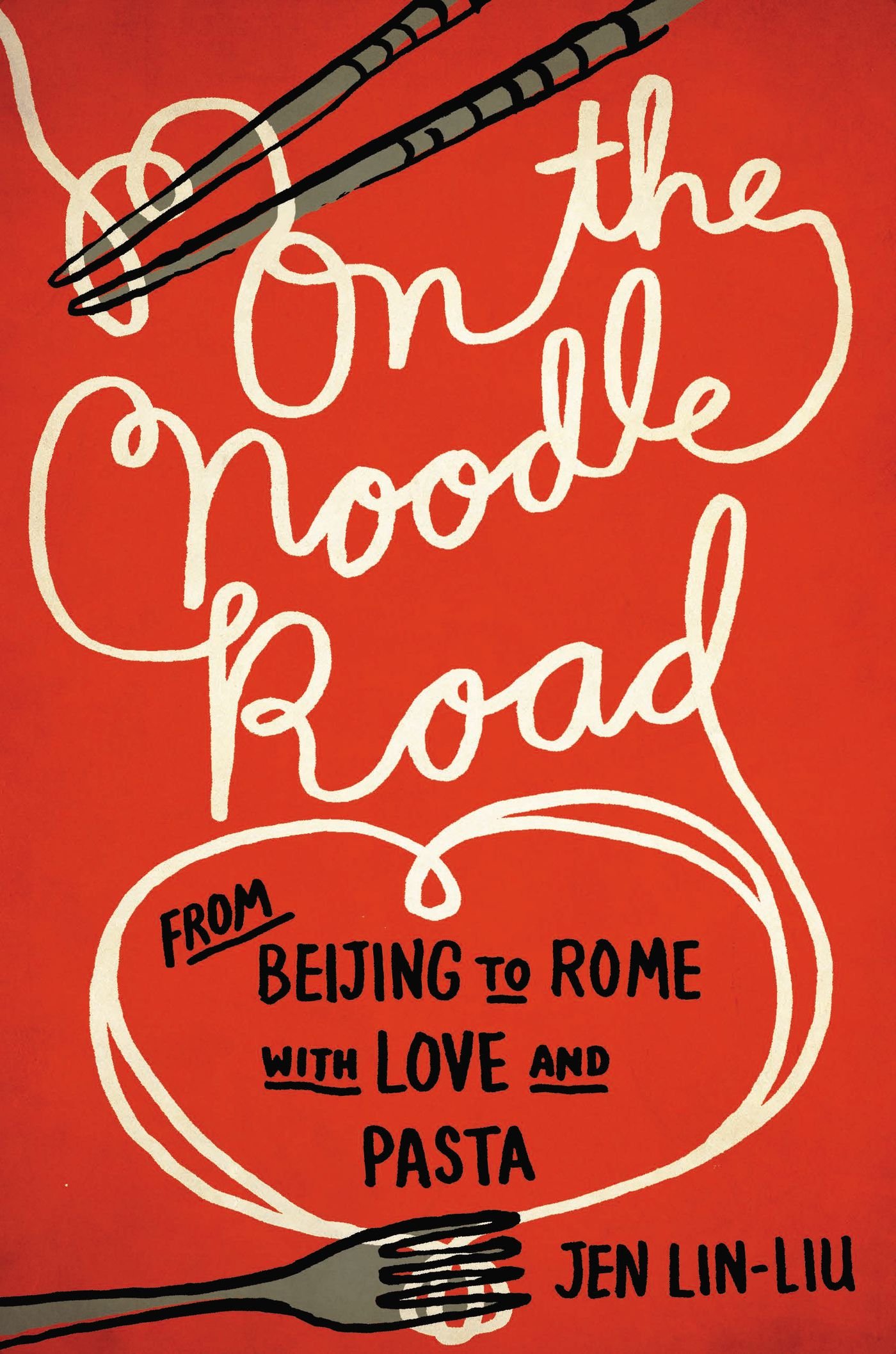



A food writer travels the Silk Road, immersing herself in a moveable feast of foods and cultures and discovering some surprising truths about commitment, independence, and love. Feasting her way through an Italian honeymoon, Jen Lin-Liu was struck by culinary echoes of the delicacies she ate and cooked back in China, where she’d lived for more than a decade. Who really invented the noodle? she wondered, like many before her. But also: How had food and culture moved along the Silk Road, the ancient trade route linking Asia to Europe—and what could still be felt of those long-ago migrations? With her new husband’s blessing, she set out to discover the connections, both historical and personal, eating a path through western China and on into Central Asia, Iran, Turkey, and across the Mediterranean. The journey takes Lin-Liu into the private kitchens where the headscarves come off and women not only knead and simmer but also confess and confide. The thin rounds of dough stuffed with meat that are dumplings in Beijing evolve into manti in Turkey—their tiny size the measure of a bride’s worth—and end as tortellini in Italy. And as she stirs and samples, listening to the women talk about their lives and longings, Lin-Liu gains a new appreciation of her own marriage, learning to savor the sweetness of love freely chosen. Even though the hoary legend that depicts Marco Polo bringing the noodle back from China to Italy has been long debunked, the noodle’s origins remain shrouded in the mists of prehistory. Lin-Liu, an American and director of a cooking school in Beijing, sets off on a trek to follow the Silk Road west across China through Central Asia and Turkey to Italy to discover how disparate times and peoples have given the noodle new shapes and textures. Touring initially with a couple of fellow chefs, she notes that, even within their own nation, the Chinese can be very wary of other provinces’ cooking. Crossing into Central Asia, Lin-Liu reunites with her husband and in-laws, making the journey less lonely. Encountering Iranian women in the course of cooking demonstrations teaches Lin-Liu more than Persian cooking and gives her a glimpse across an ideological divide. Of value to both travelers and gourmets. --Mark Knoblauch Born in Chicago and raised in Southern California, Jen Lin-Liu attended Columbia University and went to China as a Fulbright fellow. The founder of Black Sesame Kitchen, a Beijing cooking school, she is the author Serve the People: A Stir-Fried Journey through China . She has written about food, culture, and travel for The New York Times , The Wall Street Journal , Saveur , Newsweek , Travel + Leisure , and other publications. She lives in Chengdu, China. Prologue The year after we married, Craig and I went to Italy for Christmas. It was our first time in Europe together, a break from years of living and traveling in Asia. After a week of hiking along precipitous cliffs on the Amalfi coast that dropped into the sparkling blue Mediterranean, we drove to Rome. In a neighborhood called Trastevere, full of winding alleys and couples in embrace, my husband led me to a restaurant called Le Fate and surprised me with a belated holiday gift: a pasta-making class. In the cluttered kitchen, we stood before the chef and proprietor, a man named Andrea. With dark espresso eyes and curly brown hair, the chef happily played the part of the handsome Italian guy female tourists swoon over. He flirted, chatted, and joked with guests as they arrived. But once class began, he cleared his throat and surveyed the room with narrowed eyes. The room fell as silent as a church before mass. “Americans,” Andrea declared, “think that Italians use a lot of garlic.” He placed a single garlic clove on the stainless-steel counter, whacked it with the back of a cast-iron frying pan, and held up the flattened result. “We do not use a lot of garlic. Delete this information from your brain!” At the counter, Andrea began breaking eggs with bright yellow yolks into a crater he’d made in a mound of finely ground, refined flour. After working the eggs into the flour, he vigorously kneaded and flattened the dough with a rolling pin, gradually stretching the pliable putty into long sheets almost as thin as newsprint. He wound a sheet tightly around the pin, then swung it to and fro, releasing the dough so that it folded over itself in neat S-shaped layers. After cutting them into slivers, he shook the pieces in the air like a magician, unfurling long, wide strands of pasta. Over my years of learning how to cook in China, I’d come across many pasta shapes that echoed ones in Italy. Chinese “cat’s ear” noodles resembled Italian orecchiette. Hand-pulled noodles, a specialty of China’s northwest, were stretched as thin as angel hair. Dumplings and wontons were folded in ways similar to ravioli and tortellini. Even the more obscure shapes of Italian pasta—handkerchief-like squares called quadrellini, for example—had the