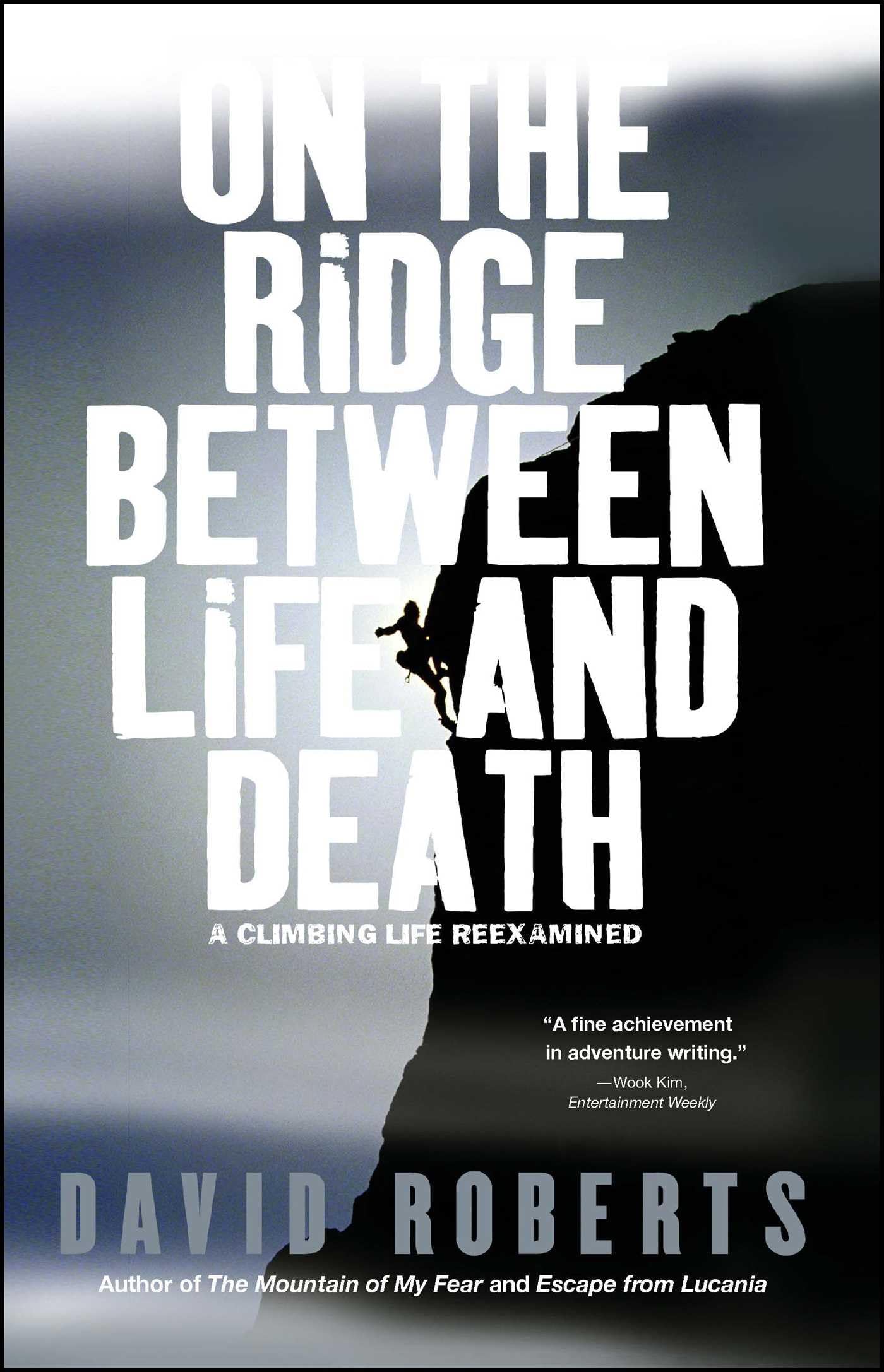



What compels mountain climbers to take the risks that they do? Is it the thrill in the physical accomplishment, in managing to defy the odds, or both—and why do they continue to do what they do in the face of such great danger? What compels mountain climbers to take the risks that they do? Is it the thrill in the physical accomplishment, in managing to defy the odds, or both—and why do they continue to do what they do in the face of such great danger? In On the Ridge Between Life and Death , David Roberts confronts these questions head-on as he recounts the exhilarating highs and desperate lows of his climbing career. By the time he was twenty-two, Roberts had already been involved in three fatal mountain climbing accidents and had escaped death himself by the sheerest of luck. And yet, as he acknowledges, few things have brought him more joy than climbing. In a famous essay on the subject written more than twenty years ago, Roberts judged climbing to be “worth the risk.” He continues to climb to this day, and several of his challenging routes in Alaska have never been climbed since. But in reassessing the emotional costs to himself and to loved ones, he reaches a different conclusion, one that is sure to cause controversy not only in climbing circles, but among adventurers of all kinds. Candid and unflinching, On the Ridge Between Life and Death is a compelling examination of the risks we take in order to feel more alive. "Nobody alive writes better about mountaineering and its peculiar adherents than David Roberts, my mentor and friend of thirty-some years, and this is Professor Roberts's magnum opus. Told with wrenching candor, On the Ridge Between Life and Death may disturb you, or even make you angry, but you will not be able to put it aside." -- Jon Krakauer, author of Under the Banner of Heaven: A Story of Violent Faith and Into Thin Air: A Personal Account of the Mount Everest Disaster "Critic's Choice, * * * *. This is an addiction memoir like no other." -- Pope Brock, People "A fine achievement in adventure writing." -- Wook Kim, Entertainment Weekly David Roberts (1943–2021) was the author of dozens of books on mountaineering, adventure, and the history of the American Southwest. His essays and articles have appeared in National Geographic , National Geographic Adventure , and The Atlantic Monthly , among other publications. On the Ridge Between Life and Death A Climbing Life Reexamined By David Roberts Simon & Schuster Copyright © 2006 David Roberts All right reserved. ISBN: 9780743255196 Chapter One: Gabe The trouble began on the fifth pitch. I handed Gabe our hardware -- half a dozen soft-iron pitons and eight or nine carabiners dangling from a nylon sling -- and said, "On belay." Once again, I had been unable to drive a single piton for my anchor: instead, I had found a bucket-shaped hollow in the ruddy sandstone and sat in it with my back against the right wall, my feet braced against an opposing bulge. Gabe started up the inside corner, angling left as the arching dihedral dictated his path. The going looked easy, for he was moving with that jerky efficiency that had become his forte during the last three months. My breath escaped in a sigh of well-being. Once again, we were launched on the flight that turned the neurotic thrum of ordinary life into a staccato pulse of purpose. But there were no cracks for our pitons. That was the trouble with the First Flatiron -- with all the Flatirons, those massive tilting slabs that stared east from Green Mountain over the mesas above Boulder. Eighty feet up, Gabe sidled left around a protruding aràte and passed out of sight. Still he had placed no protection, so as I fed the rope out, I knew my belay was worthless. The rope stopped. Gabe's distant voice: "Should I go straight up? Or traverse left?" We had been shouting too much on this climb -- conferring from a hundred feet apart, as we had forced our way through the route's odd intricacies. The elders in the Colorado Mountain Club who had taught us to climb early that spring had stressed the importance of economy in our shouted signals: "On belay!," "Climbing!," "Slack!," "Up rope!" -- the syllables apportioned so that even over a droning wind one call should never be mistaken for its opposite. "Try to go straight up!" I yelled back. So the route had seemed to unfold, as I had studied it in binoculars from my home on Bluebell Avenue. Atop this pitch, I thought, we would have it made, with less than 200 feet of easy scrambling to the notch just below the summit. The rope inched out again. Ten minutes later came Gabe's call: "Off belay!" With a sense of relief, I started up. It was a perfect summer day, pine sap wafting on the fickle breeze, warm sun slanting across the cliff, the whole of the First Flatiron to ourselves. Each wrinkle in the sandstone offered a toehold, each knob a handle to seize with my fingers. The rhythm of movement absorbed me. The burde