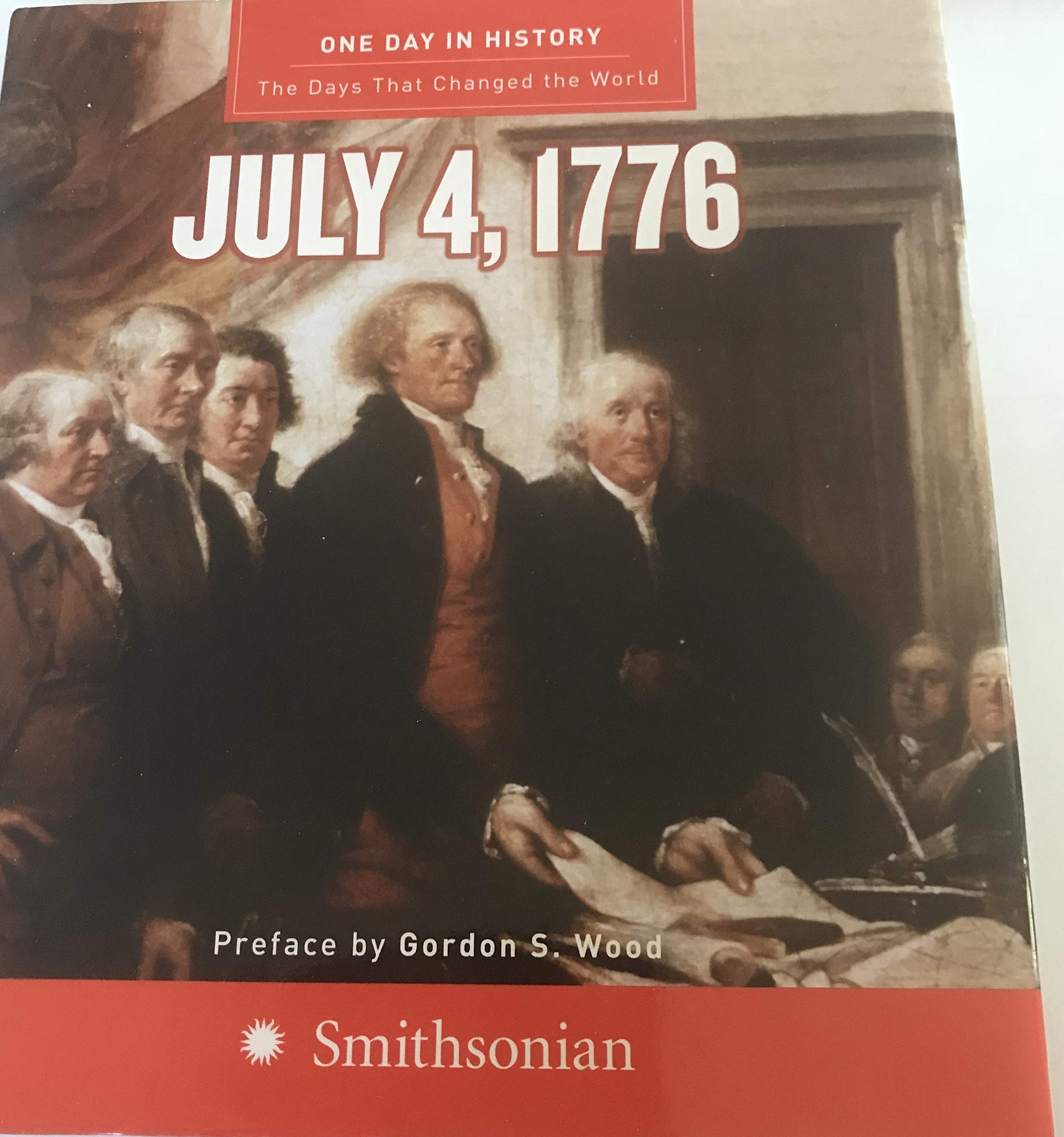



On a summer day in July, 1776, in Philadelphia, Pennsylvania, the world changed forever. On July 4, thirteen English colonies on the continent of North America decided to declare themselves free and independent states, united in their purpose of forming a new nation. The approval of that decision on July 4 represented the culmination of lengthy debates. As the delegates filed into the State House on Thursday, July 4, tempers were flaring. Despite entreaties from others, the New York delegation continued to balk. They had no instructions from the state and could vote against the resolution. Furthermore, it looked as if the two delegates from Delaware were deadlocked. Unless Caesar Rodney arrived in time for the vote, July 4, 1776, promised to be just another day of delay and political wrangling. One Day in History: July 4, 1776 is a look at how one day changed the course of history; in this case, a day that produced a new nation. Grave consequences beyond the Declaration of Independence flowed from the day's events. This reference sets out in 100 articles, written by noted historians, the details of the day in history, its causes and consequences, and how the actions of July 4 resonated throughout the colonies. The words and logic of the declaration approved on July 4, as well as larger events surrounding that decision, shaped the destiny of the world, creating a new nation that would build on the principles enumerated in the document. The day is examined in its historical context, with articles ranging from "African Americans" to "Colonies or States" to "Daily Life in 1776" and "Dunlap's Broadsides." Here, in one complete reference, is a "you were there" experience of what it was like to be in Philadelphia on July 4, 1776. Moreover, this book represents the cumulative effect of "one day in history": the United States as we know it today, some 230 years later. Dr. Rodney P. Carlisle is a professor emeritus of Rutgers University. He received his AB degree from Harvard College and his PhD from the University of California, Berkeley. He most recently served as general editor of the award-winning Encyclopedia of Politics: The Left and Right (2005) and authored The Iraq War (2004). One Day in History: July 4, 1776 By Rodney Carlisle HarperCollins Publishers, Inc. Copyright © 2006 Rodney Carlisle All right reserved. ISBN: 0061120324 Chapter One A Adams, Abigail (1744-1818) A letter from Abigail Adams to her husband, John Adams, dated Sunday, July 14, 1776, read, in part: By yesterdays post I received two Letters dated 3 and 4 of July and tho your Letters never fail to give me pleasure, be the subject what it will, yet it was greatly heightned by the prospect of the future happiness and glory of our Country; nor am I a little Gratified when I reflect that a person so nearly connected with me has had the Honour of being a principal actor, in laying a foundation for its future Greatness. May the foundation of our new constitution, be justice, Truth and Righteousness. Like the wise Mans house may it be founded upon those Rocks and then neither storms or temptests will overthrow it. I cannot but feel sorry that some of the most Manly Sentiments in the Declaration are Expunged from the printed coppy. Perhaps wise reasons induced it. The correspondence between John and Abigail Adams not only helps illuminate the events of July 4, 1776, in Philadelphia, but also provides light on the home front, from Abigail's point of view. In the above letter, she is surely referring to the final changes made to the Declaration prior to proclamation. Born Abigail Smith on November 11, 1744, at Weymouth, Massachusetts, the future first lady was grounded on both sides of her lineage by generations of community leaders within the colonies. Abigail Adams was schooled at home due to her fragile health. The lack of a formalized education did not hinder Adams's intellectual development and fostered her love of reading. Her voracious appetite for literature bolstered her sharp wit and gave her the foundation for her above-average intelligence. In 1764 at the age of 19, she married a young Harvard law graduate, John Adams, who felt that he had found his mental, emotional, and intellectual equal. The union produced two sons and three daughters. The family lived between their small farm at Braintree and in Boston as John Adams's legal practice began to grow. When John became a circuit court judge and was required to spend inordinate amounts of time traveling, Abigail proved herself a capable mistress at Braintree, managing the affairs of the family as well as the farm. Their legendary letters spell out their longing for each other while apart, as well as their personal opinions on the political events of the day. Abigail was fiercely patriotic and urged her husband to " . . . remember the ladies . . . " as a prominent member of the fledgling government. Abigail was one of the first American suffragists who lobbied fo