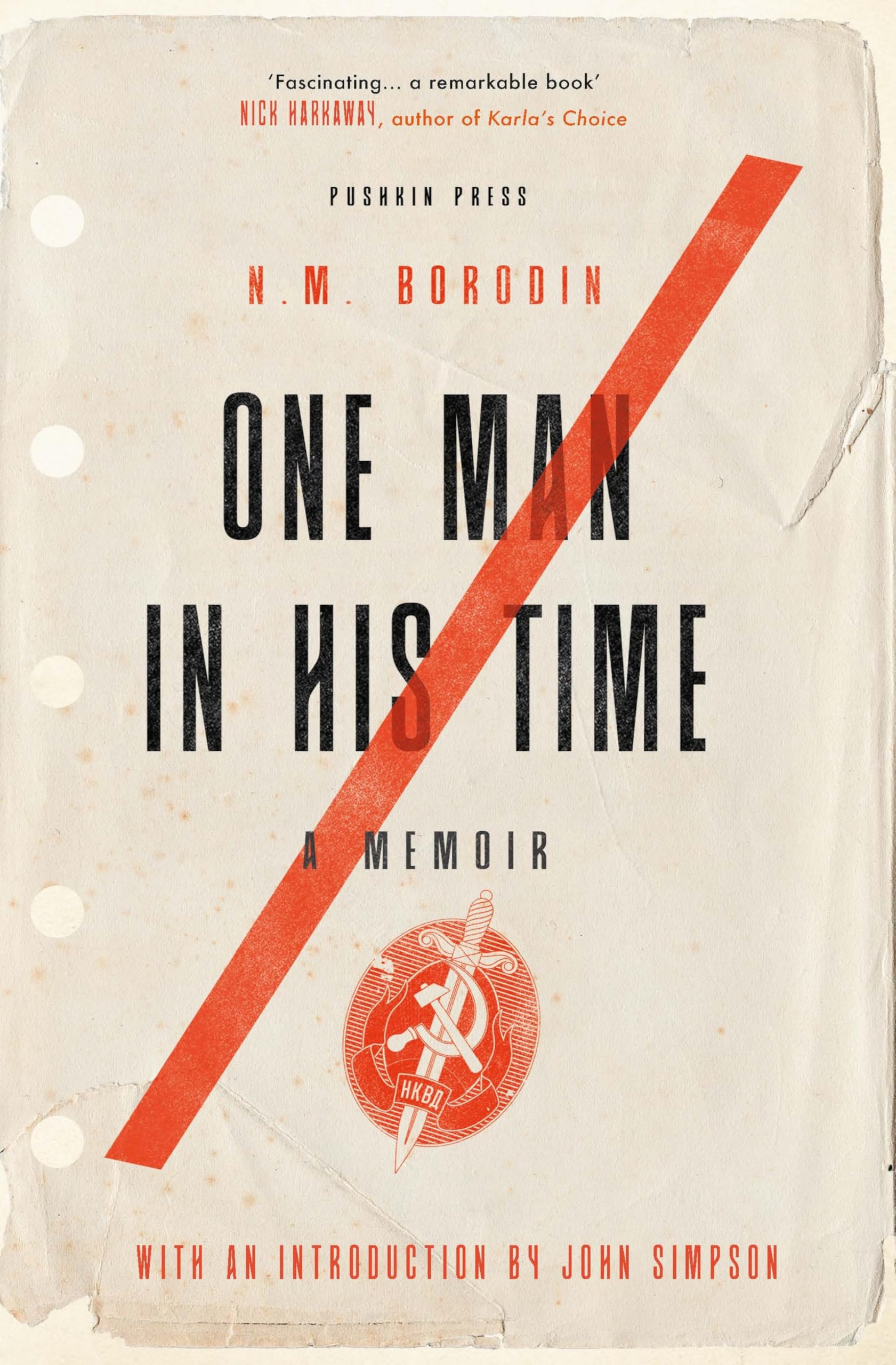



An extraordinary rediscovered memoir of one man striving to make a distinguished scientific career—and live an ordinary life—amidst the brutal purges of Stalinist Russia “Remarkable. . . an astonishing testimony that has never seemed more timely or more pertinent” — Nicholas Shakespeare From humble origins, the eminent Russian scientist Nicholas Borodin forged a career in microbiology in the era of Stalin. Pragmatic and dedicated to his work, he accepted the Soviet regime, so much so that he even worked on several occasions with the Secret Police, providing information on those around him. But in 1948, while on a state-sponsored trip to the UK to report on the bulk manufacture of antibiotics, he could no longer ignore his rising consciousness of the suppression of independent thought in his country. It was then that he committed high treason by writing to the Soviet ambassador to renounce his citizenship. One Man in his Time is the story of a man trying to live an ordinary life in extraordinary times. Rich in incident and astonishing details, it charts Borodin's childhood during the revolution and famine through to his scientific career amidst the suspicion and violence of the purges. Written with crystal clarity, it is unsparing and frank in its depiction of the author's collaboration with Soviet authorities. Published here with an introduction by foreign correspondent and journalist John Simpson, One Man in His Time offers unparalleled insight into the daily reality of life under totalitarian rule. "Engrossing... Borodin’s raw account captures the tension between his love of science and hatred of tyranny. It’s a unique perspective on the first decades of the Soviet Union" —Publishers Weekly "This disconcerting insider’s perspective of the enormity of autocratic rule and the dire consequences of subjugating science to ideology offers a dire warning of perennial relevance." —Library Journal N.M. Borodin was born in 1905 in Kamensk, Russia. After a childhood marred by civil war and famine, Borodin enrolled to study in Novocherkassk with the aim of becoming a microbiologist. He briefly served in the Red Army as part of his military service before embarking on a successful career researching animal disease, including posts in Armavir, Moscow and Baku. Borodin kept working through Stalin's purges and received the Order of Lenin. He renounced his Soviet citizenship in London in 1948, and went on to write One Man in His Time, a memoir of his life and career in Stalinist Russia. This is a book like no other I have come across. Its simple title, bland byline (‘N. M. Borodin D. Sc.’) and opaque opening pages conceal the extraordinary story of a life-journey which leads Nikolai Michailovich Borodin from his origins in a peasant Cossack family under Tsar Nicholas II to the collapse of imperial rule and the Russian revolution, the starvation years of the Civil War, the terrifying growth of Stalin’s police state, the German invasion of Russia and Borodin’s emergence as a senior scientist entrusted with a hugely important mission abroad; and then to his decision to turn his back on the Soviet state, which he had come to detest, and defect to Britain at the end of the Second World War. His experiences are dizzying and sometimes pretty scary. They are portrayed in a flat, unemotional style which nevertheless manages to capture the precise look of places and people: ‘Alekseev, the chief of the division of Armavir headquarters of the Political Police for the exter- mination of sabotage of the national economy was a man of middle height, in his late thirties, with watchful grey eyes… Only a few minutes before our first conversation started I saw an expression of a not very pleasant kind on his face. It happened that he had obviously forgotten he had appointed me to come and had ordered a guard to bring into his office a prisoner from the cellar under the building for a routine night interrogation. It also transpired that it was against the regulations of the place that arrested people should be seen by free citizens unless it was specially arranged; and Alekseev was very displeased. For a second there was confusion in the office, and then he ordered the guard to take away the grey figure of a man of indefinite age whose lips were trembling as if he were ready to cry. We began our conversation as though nothing had happened.’ It’s often quite hard to work out whether you really like Borodin or not. Perhaps that’s because he’s so honest about himself and his thought-processes. Faced during the Stalinist Terror with a friend with a dodgy political record, Borodin runs through the possibilities: should he turn him away, or denounce him, or take him in and give him a job? He’s quite prepared to do the decent thing, but instead he chooses the bureaucratic option and shoves the decision off to a regional committee. None of it matters anyway, because the man simply vanishes. Borodin’s frankness allows him to admit