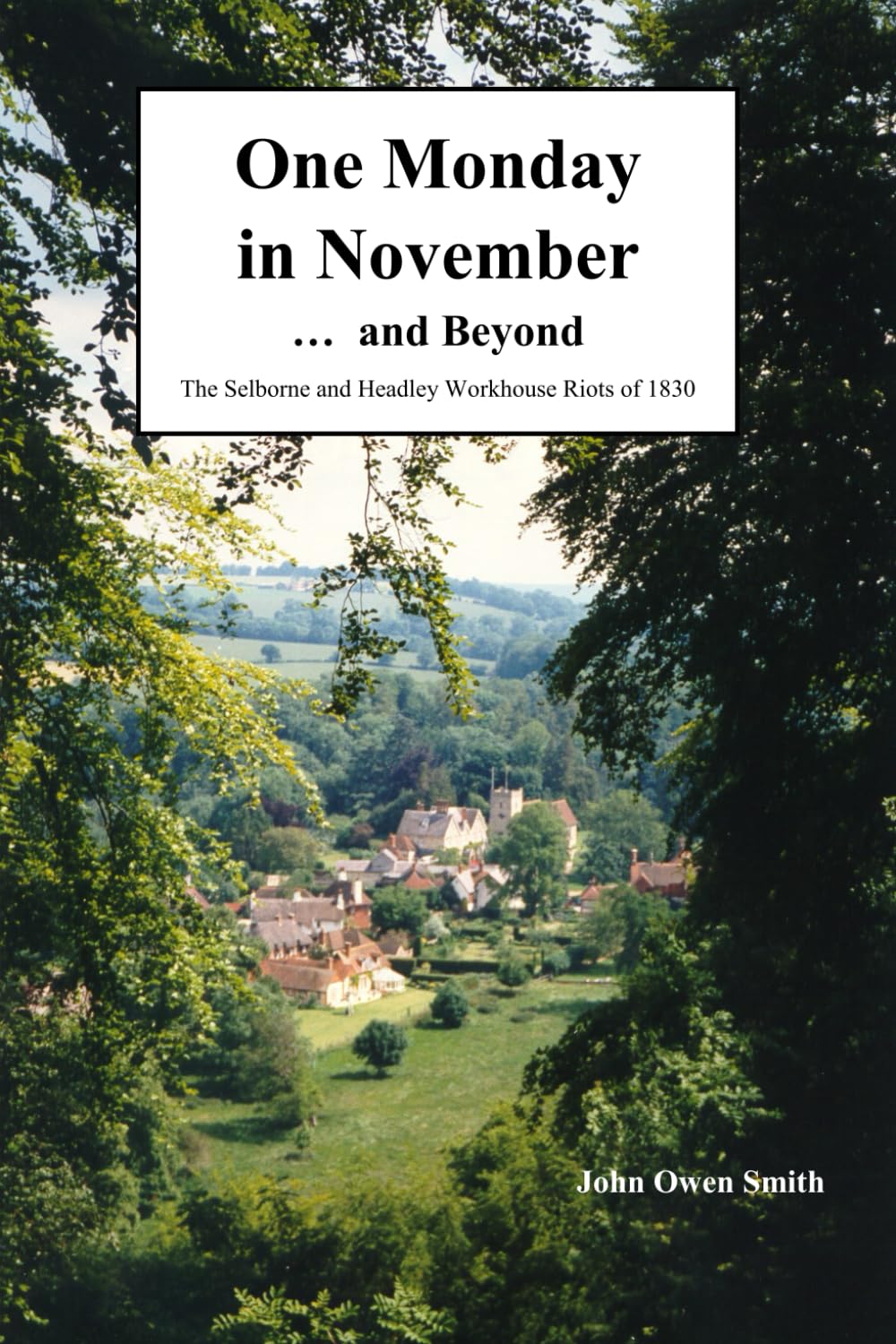
One Monday in November... And Beyond: The Story of the Selborne and Headley Workhouse Riots of 1830... And Their Aftermath
$9.72
by John Owen Smith



In November 1830, a mob several hundred strong attacked the workhouse in Selborne, Hampshire, turned out the occupants, burned or broke the fittings and furniture, and pulled down the roof. The next day an even larger mob, containing some of the Selborne rioters, did the same to the workhouse at Headley, some seven miles away. The parsons in both villages were also coerced into promising to reduce by half the income they took from tithes.Less than a month later, at a special court hearing in Winchester attended by no less a person than the Duke of Wellington, nine local men were sentenced to transportation (commuted from a death sentence in the case of eight of them), and all but one sailed for the antipodes in the Spring of 1831 never to return.These are the bare bones of the story. But why did the riot start? Why were the two workhouses attacked? And why were some of the supporters and leaders of the mobs seen to be not oppressed labourers, but relatively well-to-do artisans and farmers?In this book we cover the dramatic events of the two days and their aftermath, piecing together the sometimes contradictory reports and legends which have grown up during intervening years around the names and deeds of those involved in the action.