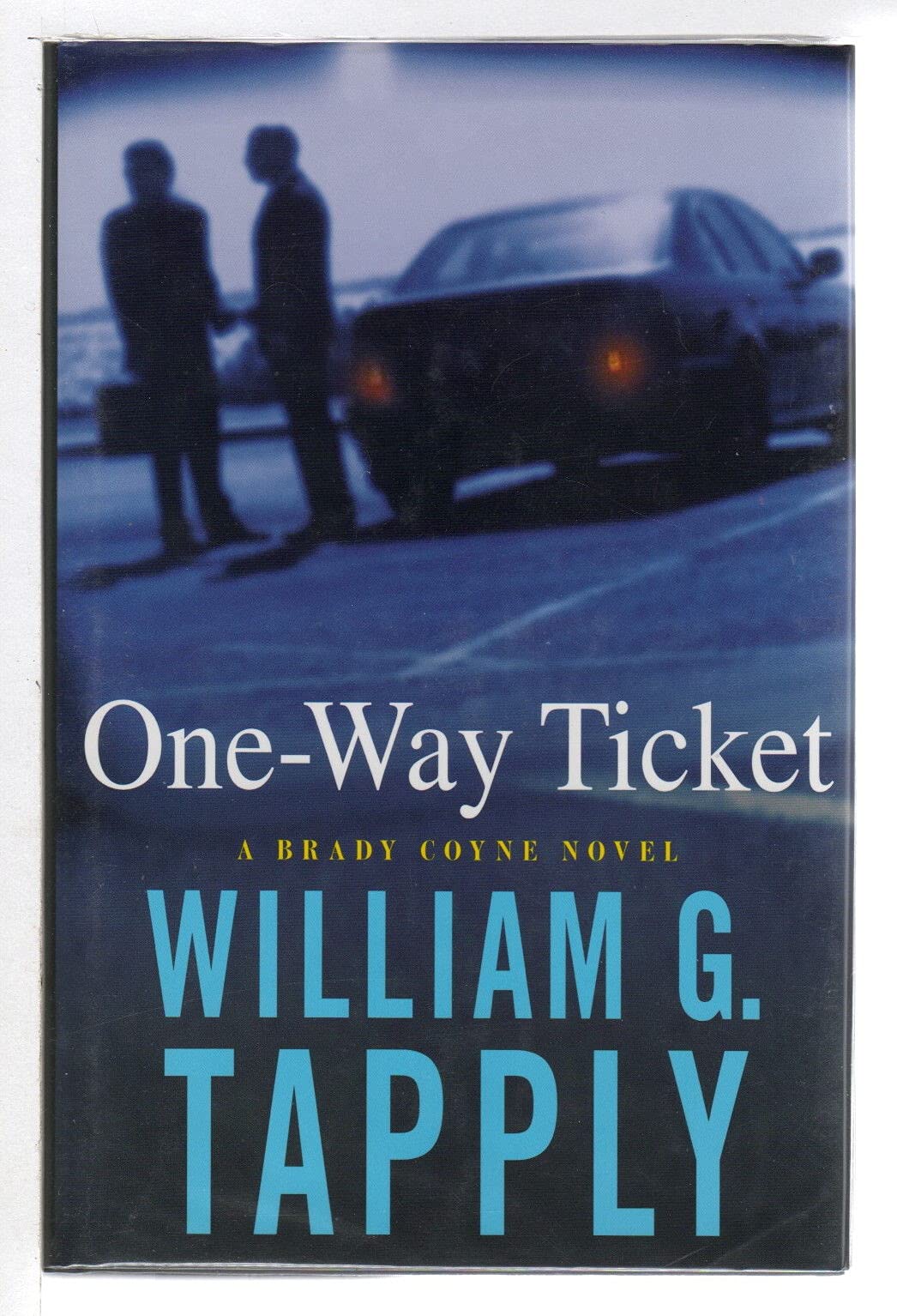



Boston attorney Brady Coyne has a generally placid life with a nice house, a stable relationship, and the occasional fishing trip with old friends. But one balmy June evening, that quiet life begins to fall apart after Brady receives a frantic phone call from his friend and client Dalton Lancaster. Dalt is in the emergency room, having been severely beaten by a group of thugs who warned him that he has a week to pay off his debt. Even worse, the message comes directly from Paulie Russo, the head of the Boston mob. Dalt swears he has no such debt, but when Brady tries to intercede, Russo lets him know he is holding Brady responsible for his client's obligation. Then Dalt disappears and no one seems to know whether he's fled for his life or been murdered -- until the ransom demand arrives.While Brady tries to rescue Dalt, and himself, from the escalating situation, his live-in girlfriend Evie buys a one-way ticket to California to care for her dying father, leaving Brady to wonder when -- or if -- she will return. When Boston restaurateur Dalton Lancaster is mugged but not robbed, he instructs his son, Robert, to call Brady Coyne, his lawyer and friend, rather than the police. The elder Lancaster, the son of a prominent Boston familyhis mother is a respected judgederailed his future with a gambling addiction. What should have been a life among Boston's legal elite instead became a struggle to avoid wagering while owning a series of marginally successful restaurants. Coyne assumes the beating was a message to accelerate payment on a gambling debt, but Lancaster swears he hasn't gambled in years. Coyne's digging reveals that the younger Lancaster has his own gambling addiction and is deeply in debt to the Boston Mob. Things get worse when Robert is kidnapped and held for ransom, and the family refuses to involve law enforcement for fear of negative publicity. The latest in the revered Coyne series contains all the ingredients readers have come to expect: excellent plotting; conversational, friendly narration; and a compelling secondary story line focused on Coyne's private life. Lukowsky, Wes "Nearly every flowing phrase of MUSCLE MEMORY impels the story or deepens the character, and, quite often, both. Only a few writers of crime fiction have managed to generate prose this leanly poetic in the service of their hard-boiled stories. Tapply does it all the time."-- Boston Globe William G. Tapply was the author of numerous books on fishing and wildlife, as well as more than twenty books of crime fiction, including Out Cold . He lived in Hancock, New Hampshire. ONE-WAY TICKET (Chapter One) June bugs and fireflies were flitting around in the walled-in garden behind our townhouse on Beacon Hill. Overhead, an almost-full moon and a skyful of stars lit up the Boston evening. Now and then a myopic moth would alight on the screen of our little portable TV, which was sitting on our picnic table. Evie and I were slouching side by side in our comfortable wooden Adirondack chairs with sweaty bottles of Sam Adams in our hands, as we often did on a pleasant June evening when the Red Sox were playing. Henry David Thoreau sprawled on the bricks beside us, his legs occasionally twitching with dog dreams. Baseball put Henry to sleep. From our backyard we imagined that we'd heard the roar of the Fenway crowd all the way from Kenmore Square when David Ortiz hit one over the bullpen in the third inning. At the end of the sixth inning, Evie yawned, stood up, stretched, and said she was exhausted. She kissed the back of my neck and stumbled into the house and up to bed. Evie enjoyed baseball. She liked the geometric symmetry of it and the occasional remarkable feat of athleticism, but she wasn't really a fan. She didn't care enough about who won, and she didn't understand the passionate neuroses of lifelong Red Sox addicts such as I, who had seen the home team squander so many late-inning leads over the years that we were never comfortable until after the final out. We knew there was always a Bucky Dent or a Bill Buckner lurking around the corner, waiting to break our hearts. The aberration of 2004 would never ease our apprehensions. "It's only a game," Evie would point out while I clenched my fists on every pitch. "And besides, they play about two billion of them a year." "It's not only a game," I would say. "It's life in a nutshell." One inning and half a bottle of beer later the Sox were clinging to an uncomfortable 9-6 lead. The Orioles had runners on first and third with only one out when the phone rang. We'd brought the portable kitchen phone outside with us, so I was able to grab it on the first ring, before the one beside our bed disturbed Evie, I hoped. When I answered, a voice I didn't recognize said, "Mr. Coyne?" "Yes," I said, "this is Brady Coyne, and it's almost eleven o'clock on a Tuesday night. You better not be trying to sell me something." Henry, hearing the tone of my voice, sat up, yawned, and arched his eyebr