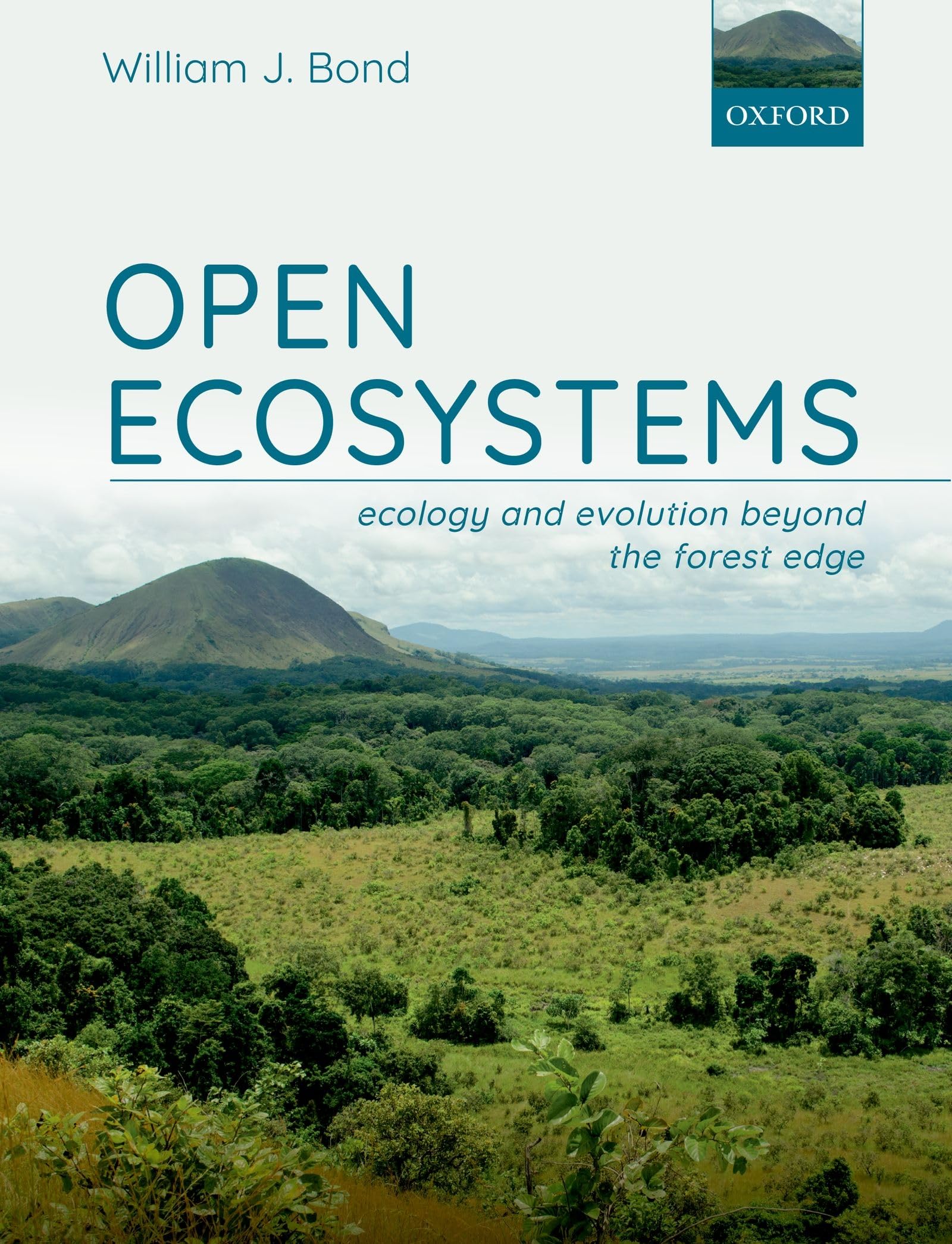



This book explores the geography, ecology, and antiquity of 'open ecosystems', which include grasslands, savannas, and shrublands. They occur in climates that can support closed forest ecosystems and often form mosaics with forest patches. With the aid of remote sensing, it is now clear that open ecosystems are a global phenomenon and occur over vast areas in climates that could also support forests. This book goes beyond regional narratives and seeks general explanations for their existence. It develops the theme of open ecosystems as being widespread and ancient, with a distinct biota from that of closed forests. It examines hypotheses for their maintenance in climate zones favouring the development of forests, including fire, vertebrate herbivory, and soils hostile for tree growth. Open Ecosystems: Ecology and Evolution Beyond the Forest Edge provides an accessible introduction for graduate students and researchers of open (non-forested) ecosystem ecology in departments of ecology, geography, and environmental science. It will also be of relevance and use to professional ecologists, biogeographers, and global change biologists requiring a concise, authoritative overview of the topic " Open Ecosystems was a fascinating read, packed with authoritative evidence, personal observations and experimental support across the globe. The content makes out, and often challenges, a solid body of past and novel ecological hypotheses, presented in a rather coherent manner. The ultimate strength of this book is that it clearly defines research gaps and provides important guidelines for future research aimed at an improved understanding of OEs." -- F. Siebert, North-West University, South Africa, Bothalia "this interesting and well-written book draws readers into the ecological issues that matter most to open ecosystems: climate mismatches, fossil records that support their origins, soil factors that lead to openness, fire and adaptations to it, and herbivory . . . Overall, the volume is excellent, and presents a thorough review of ecological factors that keep open ecosystems open . . . It is my hope that the fascinating details in this book will garner a greater appreciation for open ecosystems by students, scientists, and members of the general public." -- Brian J. Wilsey, Iowa State University, The Quarterly Review of Biology William J. Bond, Professor Emeritus, Department of Biological Sciences, University of Cape Town, South Africa William Bond is an Emeritus Professor in Biological Sciences at the University of Cape Town. He served as Chief Scientist for the South African Environmental Observation Network (SAEON) from 2014 to 2018. He is an ecologist with broad interests in the processes most strongly influencing vegetation change in the past and present, including fire, vertebrate herbivory, atmospheric CO2, and climate change. In addition, Professor Bond has worked on plant-animal mutualisms and on plant form and function. Particular research interests include grasslands and savannas, and winter-rainfall shrublands. He has served on the Boards of the South African National Botanical Institute and of Cape Nature and on the editorial boards of several journals. He has published more than 200 peer-reviewed scientific publications and co-authored three books. He is a Fellow of the Royal Society of South Africa and was made a Foreign Associate of the US National Academy of Sciences in 2013.