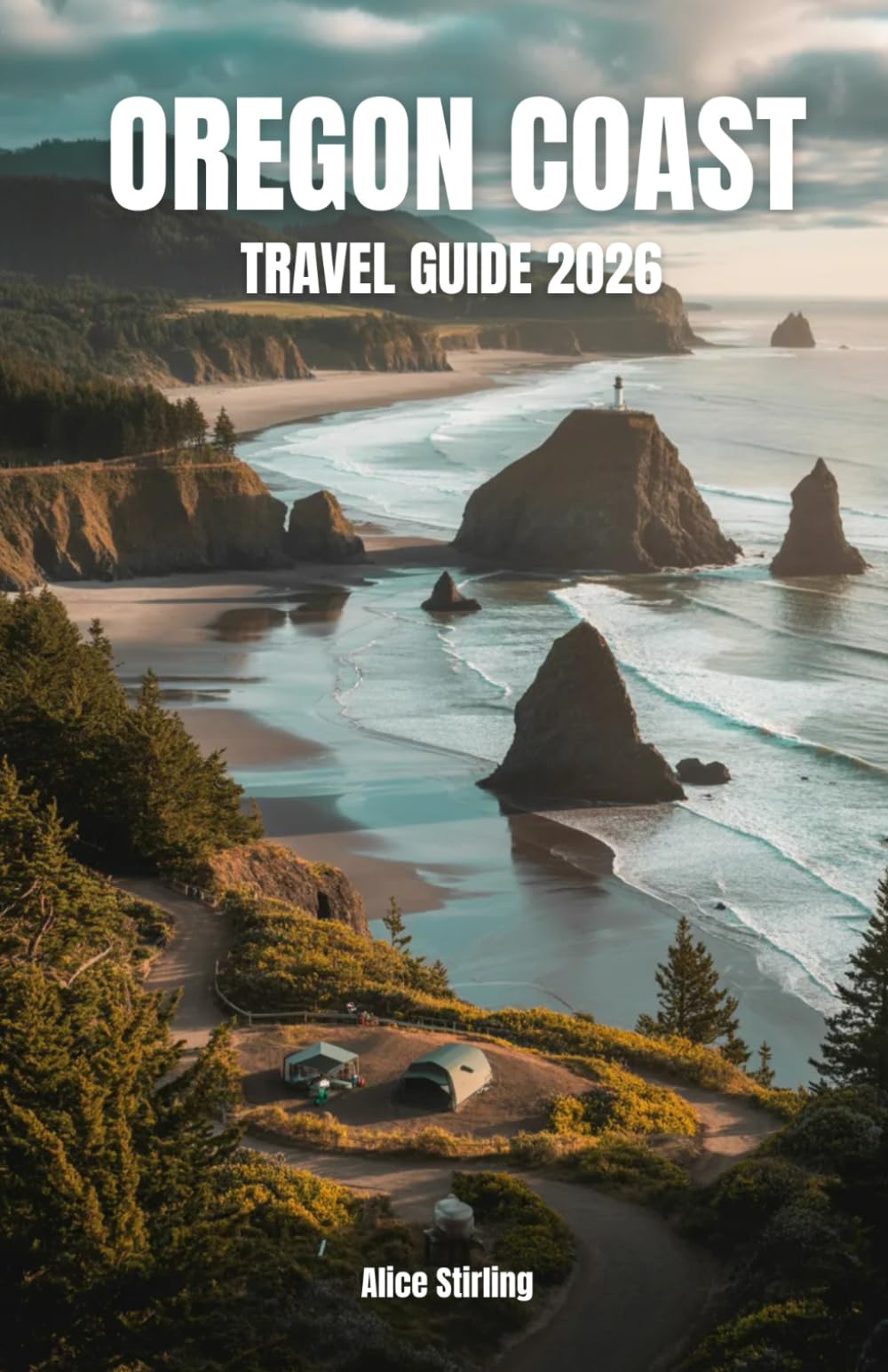
Oregon Coast Travel Guide 2026: Highway 101 Road Trip, Hiking Trails, Tide Pools, Camping, State Parks, Whale Watching, Storm Watching and Seasonal
$17.99
by Alice Stirling



The Oregon Coast does not ease you in. The forest breaks, the Pacific appears, and everything you planned to think about stops mattering. Three hundred and sixty-three miles of public shoreline — every inch of it legally yours, from the Columbia River at Astoria to the California border at Brookings. No private beaches. No gated coves. Just wild coast, working harbors, old-growth headlands, and a road that keeps finding new ways to surprise you. This guide covers all of it. Not the highlight reel — all of it. The north coast's dramatic sea stacks and Victorian port towns. The central coast's tide pool reefs, ancient forests, and the small town of Yachats that regulars have been quietly returning to for decades. The south coast's sea stack beaches, jet boat wilderness rivers, and the Samuel H. Boardman Corridor's seventeen miles of concentrated coastal geology that most travelers never reach. What You Will Find Inside A three-region breakdown from Astoria to Brookings, with town-by-town guidance on where to stay, eat, and spend your time Seasonal travel timing, including gray whale migration windows, storm watching season, and the spring shoulder period that offers the coast at its least crowded and most alive Itineraries for 3 days, 7 days, 10 to 14 days, and 3 weeks — built around how the coast actually works, not how a generic road trip template assumes it does State park campground reservation strategy, yurt booking timelines, RV routing, and the six-month advance booking window that determines whether you get the site you want Tide pool access with species guidance, tidal timing, and the marine garden etiquette that protects the ecosystems worth visiting The Oregon Dunes — 40 miles of active coastal sand, with ATV corridors, hiking trails, freshwater lake swimming, and golden hour photography positions Lighthouse history, shipwreck records, Indigenous coastal heritage, and the working galleries in small towns that most visitors drive past Fresh Dungeness crab, razor clam beaches, coastal brewery trails, farm stands, and the marionberry pie that belongs on a short list of things worth planning a day around Safety guidance for sneaker waves, rip currents, and cold Pacific water — the practical information that most Oregon Coast guides leave out entirely Off-season travel guidance that makes a case for November that most people only believe after they have experienced it Who This Guide Is For Road trippers driving Highway 101 for the first time. Returning visitors who have done Cannon Beach and want to know what the central and south coast actually offer. Families with children and dogs, solo hikers, storm watchers, wildlife photographers, and the traveler who wants the full coast rather than the edited version. Pick up your copy and start with the coast that most visitors only get to the edge of.