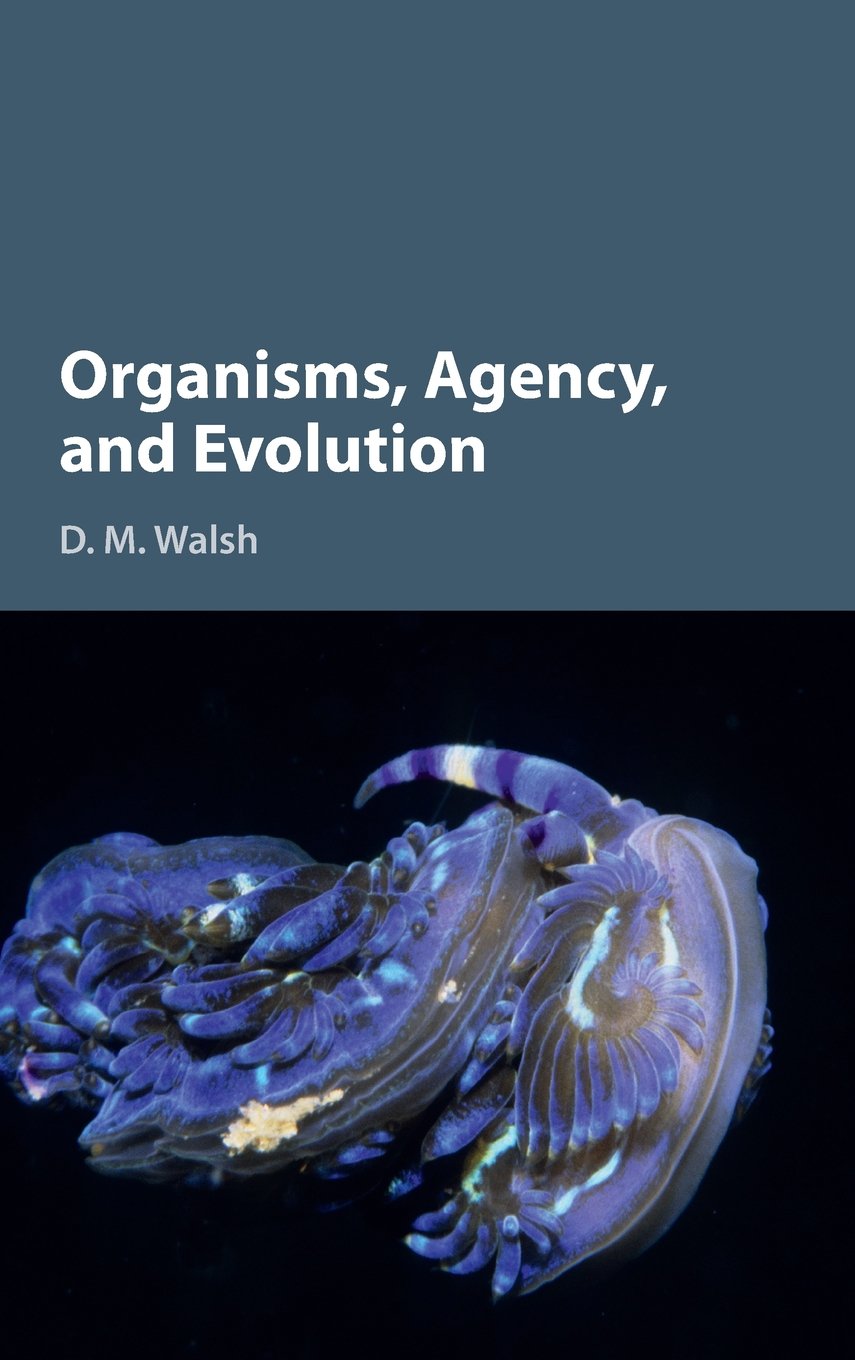



The central insight of Darwin's Origin of Species is that evolution is an ecological phenomenon, arising from the activities of organisms in the 'struggle for life'. By contrast, the Modern Synthesis theory of evolution, which rose to prominence in the twentieth century, presents evolution as a fundamentally molecular phenomenon, occurring in populations of sub-organismal entities - genes. After nearly a century of success, the Modern Synthesis theory is now being challenged by empirical advances in the study of organismal development and inheritance. In this important study, D. M. Walsh shows that the principal defect of the Modern Synthesis resides in its rejection of Darwin's organismal perspective, and argues for 'situated Darwinism': an alternative, organism-centred conception of evolution that prioritises organisms as adaptive agents. His book will be of interest to scholars and advanced students of evolutionary biology and the philosophy of biology. 'Walsh provides a concise and well-informed account of [20th-century] modern evolutionary thinking and its shortcomings, as well as argue[s] for a more ecologically-focused theory. Organisms, Agency, and Evolution is a salient addition to the fundamental understanding of evolutionary biology. This book is highly recommended to undergraduate and graduate students of evolutionary biology. It may also serve as a reference guide for advanced researchers and educators.' Termara Parker, Yale Journal of Biology and Medicine This book argues that evolution arises from the activities of organisms as agents, not from the replication of genes. D. M. Walsh is Professor in the Department of Philosophy, the Institute for the History and Philosophy of Science and Technology, and the Department of Ecology and Evolutionary Biology at the University of Toronto. He is the editor of Naturalism, Evolution and Mind (Cambridge, 2001) and the coeditor of Evolutionary Biology: Conceptual, Ethical and Religious Issues (with R. Paul Thompson, Cambridge, 2014).