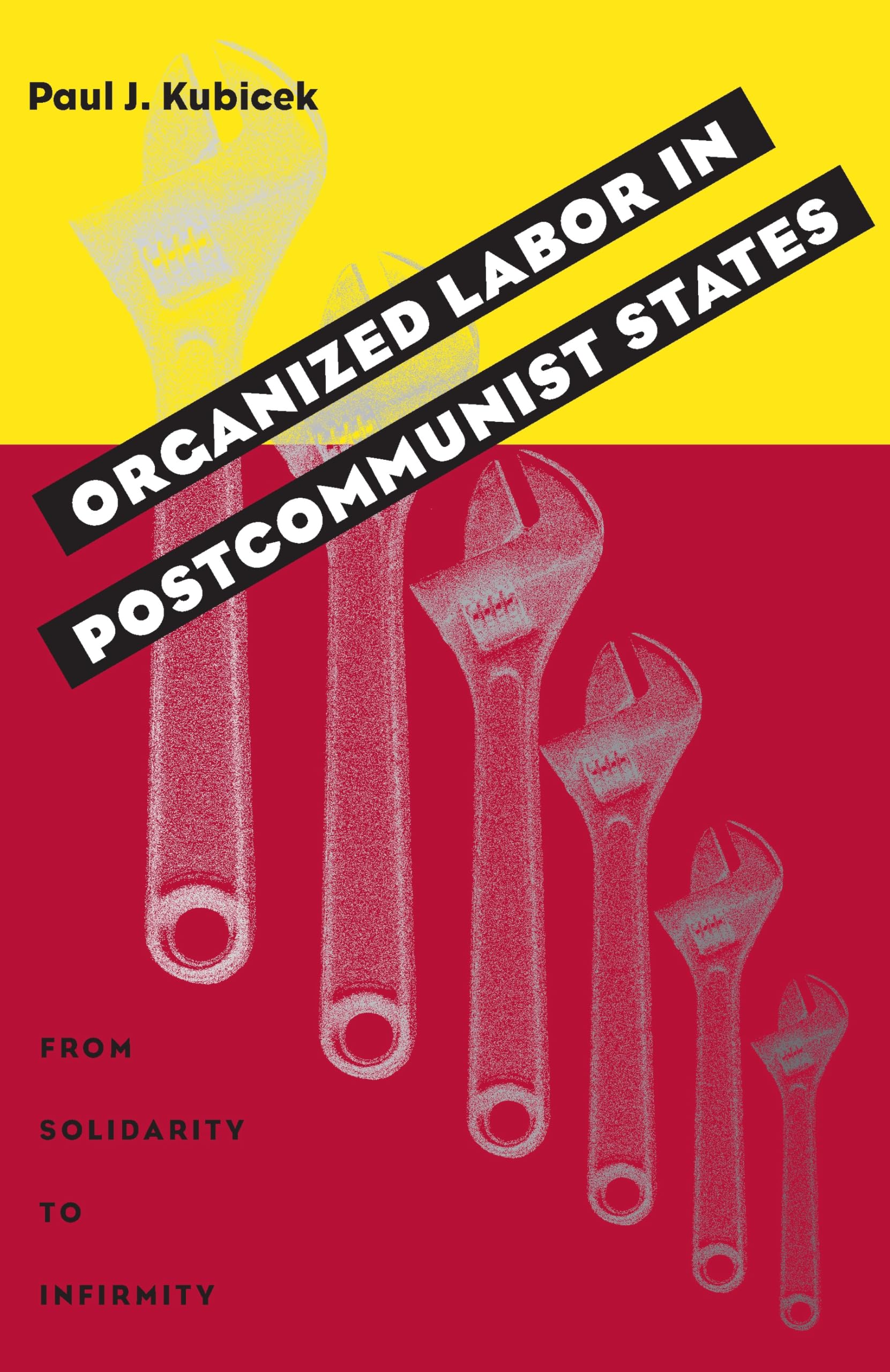
Organized Labor In Postcommunist States: From Solidarity To Infirmity (Russian and East European Studies)
$50.00
by Paul J. Kubicek



Paul Kubicek offers a comparative study of organized labor's fate in four postcommunist countries, and examines the political and economic consequences of labor's weakness. He notes that with few exceptions, trade unions have lost members and suffered from low public confidence. Unions have failed to act while changing economic policies have resulted in declining living standards and unemployment for their membership. While some of labor's problems can be traced to legacies of the communist period, Kubicek draws upon the experience of unions in the West to argue that privatization and nascent globalization are creating new economic structures and a political playing field hostile to organized labor. He concludes that labor is likely to remain a marginalized economic and political force for the foreseeable. Offers a detailed account of the ways in which political and economic reforms have fragmented and weakened labor unions in Poland, Russia, Hungary, and Ukraine. ― Thomas Remington, Emory University Kubicek's main argument―that unions in postcommunist societies are weak, and that this weakness is increasing rather than decreasing over time―is well supported by a variety of empirical evidence. His novel contribution is to connect a discussion of postcommunist labor to an examination of globalization's impact on labor, a combination that points to the continued decline of unions in the postcommunist world. ― Stephen Crowley, Oberlin College Explains definitively the weakness of organized labor in postcommunist countries, identifying as causes a complex mix of history, politics, and the pressures of globalization. ― Linda Cook, Brown University Well researched . . . well organized, and written in a manner which the reader does not find difficult to understand. I would highly recommend this work to scholars with an interest in Eastern Europe, especially to those with an interest in contemporary problems of post-Communist countries. ― The Polish Review A superb, concise, well-written account of labor after communism. One of the most informative books on contemporary unionism in a globalized world that I have read in a long time. ― Industrial and Labor Relations Review A much needed study of the fate of organized labor in countries that once regarded themselves as defenders of the international working class. The analysis is clearly presented and compelling, and the stories are interesting and well-researched. ― Russian Review Examination of why the power and role of workers' unions have greatly diminished in the former Soviet Union and Eastern European countries since the fall of Communism. Generally surprising turn of events, since organized labor played a large role in regime change. Paul J. Kubicek , associate professor of political science at Oakland University in Rochester, Michigan, is the author of Unbroken Ties: The State, Interest Associations, and Corporatism in Post-Soviet Ukraine .