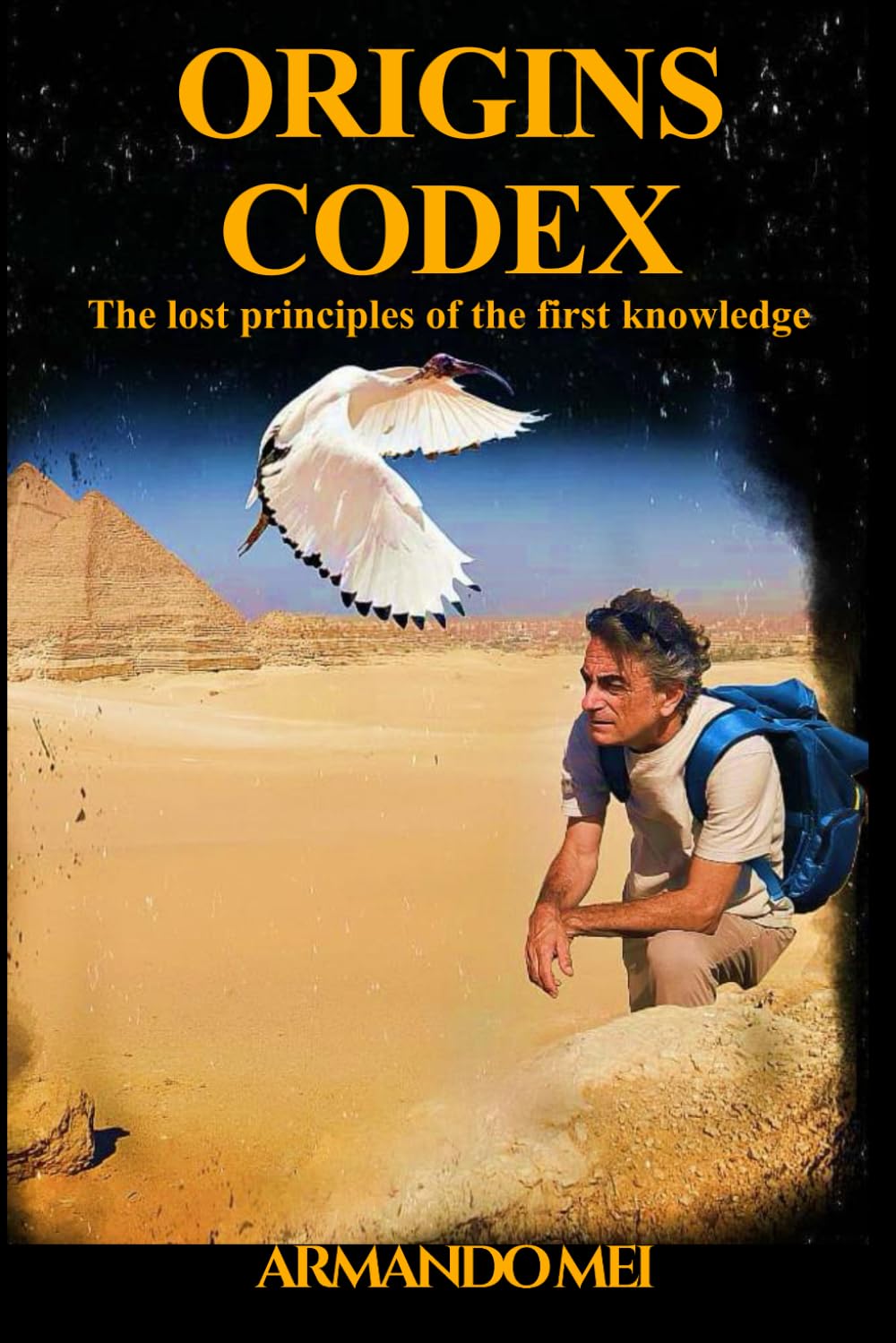



Origins Codex The Book That Reopens the Question of Humanity’s Origins What happens when new data forces history to reconsider its own foundations? In Origins Codex , independent researcher Armando Mei documents a critical turning point in the study of human origins, tracing how satellite-based remote sensing, geological evidence, and architectural anomalies converge to challenge long-established historical narratives. This book does not present a closed theory, but follows the unfolding of a real investigative process—from initial discoveries to their global implications. Beginning with the international reaction to the first SAR results and the emergence of what became known as the “Biondi Protocol,” the book explores how non-invasive technologies opened previously inaccessible layers of the past, forcing archaeology, geology, and history into a new dialogue. The volume examines: the impact of SAR technology on archaeological investigation - geological and historical discontinuities from Toba to early Egypt - Saqqara as a primordial district predating dynastic history - the symbolism and structural role of the Djed - the emergence of Giza as a coordinated, pre-dynastic project - subterranean structures, shafts, and architectural thresholds beneath the plateau - the growing evidence of a lost scientific knowledge embedded in stone Rather than relying on mythological speculation, Origins Codex follows evidence, context, and architectural logic, presenting Giza not as an isolated necropolis but as part of a much older and more complex system of knowledge. This book is recommended after reading 36,400 BCE – The Secrets of the Gods . It represents a conceptual and narrative bridge between the initial investigation and the more technical analyses developed in subsequent works.