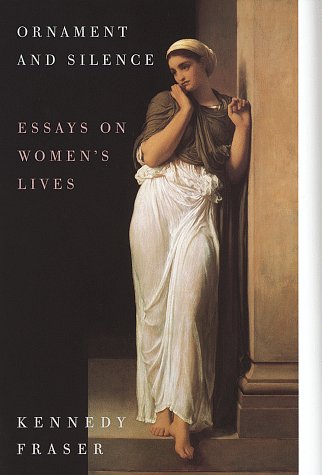



In 13 superb essays that first appeared in Vogue and The New Yorker, Kennedy Fraser explores the uniquely female voice and presence in literature and art. Interspersing vignettes from her own life with history and anecdotes surrounding such notable literary personages as Virginia Woolf and Edith Wharton, Fraser provides a personal, informative, brilliant, and compassionate book. Ornament and Silence is a highly personal and exquisitely well-written collection of essays that address the relationships between women and the creative process. The subjects of Fraser's essays are mostly writers and artists, mostly famous, and mostly dead. Fraser's engagement with them, however, is immediate, and her interests are timely and self-revealing. This collection considers how women's artistic accomplishments are bundled up with their relations toward men. This theme is explored in particular in an essay on Russian writer Nina Berberova, whose literary career did not take off until she left her male lover, as well as an essay concerning the impact of sexual abuse on the life and work of Virginia Woolf. These essays are exceptional in their vibrancy and lack of didacticism. The very personal element of Fraser's theme comes through in her poignant essay entitled "Meat," in which Fraser describes her own failed marriage, her artistic struggles, and her writing career at The New Yorker under William Shawn. Most of the essays in this polite, polished collection, which appeared previously in either The New Yorker or Vogue, concern women only in relation to the men in their lives. A "daughter of the paternal old New Yorker" in her youth, Fraser (Scenes from the Fashionable World, LJ 8/87) has moved on with time, taking for her more mature role models Nina Berberova, Edith Wharton, and Germaine Greer. Fraser's essays are quiet, thorough, and beautifully paced, testifying to her tutelage under William Shawn, yet her account of her early years playing the feminine object in "boots and velvet hot pants" will exasperate some readers. The juxtaposition of essays on successful male artists?"A Normal Man" (Matisse), "Stones in His House" (Paul Scott)?only throw into relief the sacrificial achievements of the women who surround them, and in the end we are left with the depressing thought, "Women must set aside the bowl they have used to beg for approval and praise." In a concluding essay bidding farewell to The New Yorker old guard, we cheer to see Fraser burning her bridges. For most collections.?Amy Boaz, "Library Journal" Copyright 1996 Reed Business Information, Inc. Fraser introduces this set of essays by confiding that they were written during a time of personal change, and, indeed, much of their power derives from her empathy with the often tormented artists she portrays. The strongest of the 13 essays, all published originally in Vogue and the New Yorker , are Fraser's sensitively interpretative profiles of Virginia Woolf, Nina Berberova, and Edith Wharton. The collection's title is taken from a line of Woolf's and is a clue to Fraser's emphasis on how the rejection of the traditional code for women--be pretty, be quiet--not only stoked the creative fires of these three writers but helped liberate their readers. Fraser's insight into the complexities of women's lives fuels her personal essays as well, and, unexpectedly, her contemplations of the work of Matisse and Vermeer. She also pays tribute to her mentor, William Shawn of the New Yorker , and readers, too, will be grateful to Shawn for setting such high standards and for bringing a writer as fine as Fraser into their lives. Donna Seaman Ornament and Silence , beyond its intelligent perceptions on the work and lives of women. . .is deep with private messages from Ms. Fraser, which makes her essays more than mere reviewing or reporting. . . .Ms. Fraser does the greatest honor a writer can do people: she brings them alive. -- The New York Times Book Review, David Plante essays that first appeared in Vogue and The New Yorker, Kennedy Fraser explores the uniquely female voice and presence in literature and art. Interspersing vignettes from her own life with history and anecdotes surrounding such notable literary personages as Virginia Woolf and Edith Wharton, Fraser provides a personal, informative, brilliant, and compassionate book.