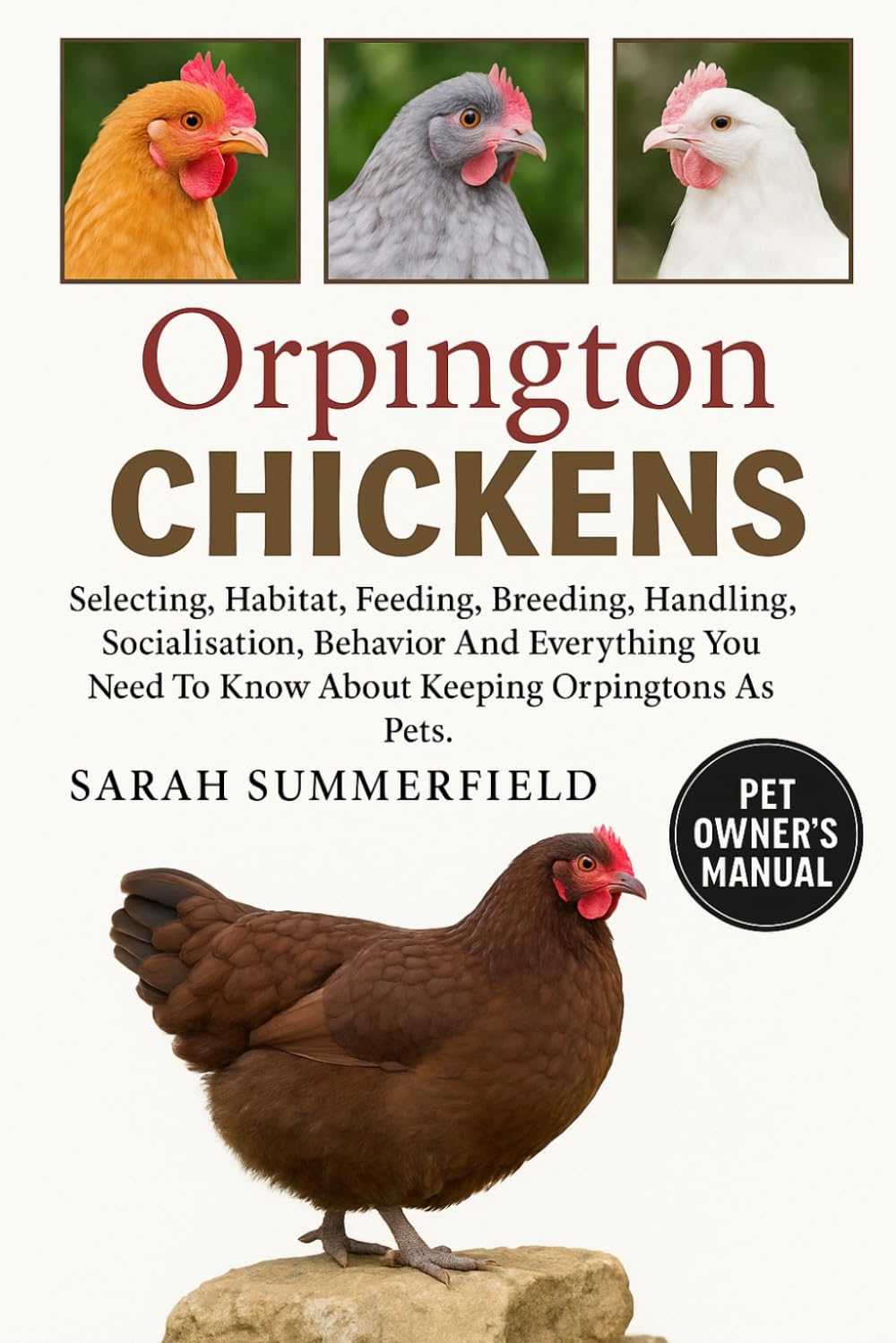
Orpington Chicken: Selecting, Habitat, Feeding, Breeding, Handling, Socialization, Behavior and Everything You Need to Know About Keeping Orpington as
$11.87
by Sarah Summerfield



The 19th century in Britain was a time of immense change. Industrialization surged forward, steam engines roared to life, and railways stitched the nation into a tighter fabric. But far from the clatter of factories and smoke-stacked cities, in the quiet folds of England’s countryside, a different revolution was unfolding — one in the coops and runs of village poultry yards. This was the golden age of selective poultry breeding. During the Victorian era, chickens were not just farmyard creatures — they were status symbols, prized possessions, and subjects of intense competitive breeding. Exhibitions and shows were popular, with breeders traveling across counties to showcase their birds. The poultry fancy had taken hold of the English imagination, and innovation in fowl genetics became both an art and a science. It was within this vibrant backdrop that the Orpington chicken would emerge — not by accident, but by deliberate design. The breed’s creation was not merely a matter of genetics; it was a response to changing societal needs. British families were growing, the urban poor needed affordable protein, and smallholders sought hens that could produce both meat and eggs — a dual-purpose bird, hardy yet handsome. The stage was set for a new avian protagonist. William Cook: The Creator of the Orpington At the heart of the Orpington’s origin story is William Cook , a man of vision, practicality, and unmistakable ambition. Born in 1849 in the village of Orpington, Kent, Cook was a coachman by trade, but his true passion lay in poultry. By his thirties, he had transformed that passion into a profession — becoming one of the most influential poultry breeders of his time. William Cook was not just a breeder; he was a brand builder. He understood the power of image, reputation, and storytelling. In an age before Instagram and advertising agencies, he launched his own poultry journal, traveled the country lecturing, and sent birds by rail and ship to customers far beyond England’s borders. He wasn’t just creating a breed; he was launching a legacy. The Orpington, named after his hometown, was his signature achievement. Cook wanted to create a chicken that was not only beautiful enough to win at shows but also practical enough to serve the table. Many birds at the time excelled in one area but failed in another. The fancier birds were poor layers; the good layers were often too lean for the roasting pan. Cook aimed to blend both worlds.