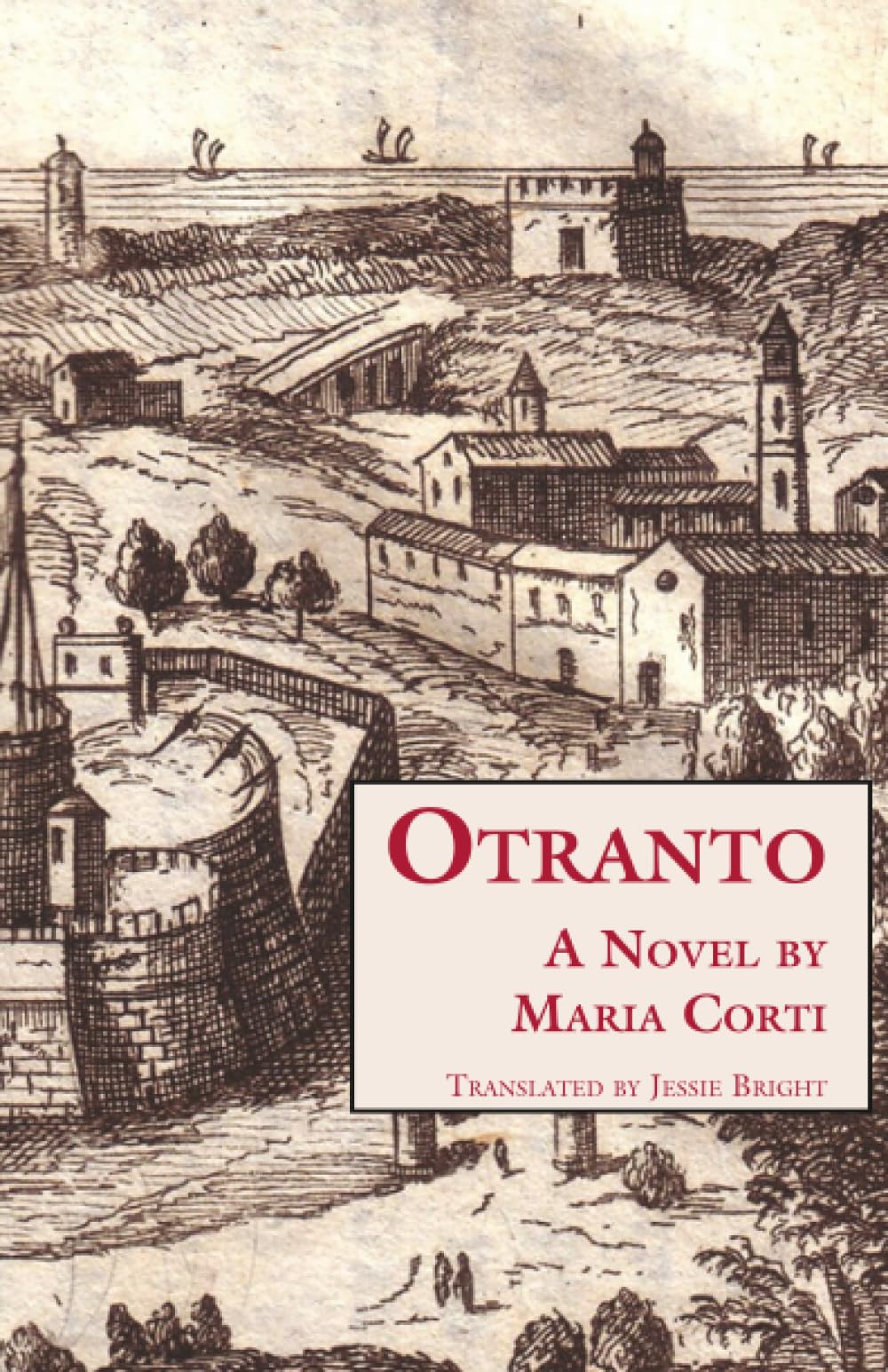



One of Italy's leading writers recounts the sack of Otranto by the Turks in 1480. Like the film "Rashomon" or Robert Browning's "The Ring and the Book," this novel relates the events in overlapping tales told by survivors and victims. As "Otranto" weaves its web of memories, it also focuses on the beauty of everyday life: the essence of place - the fragrance of oleander, the feel of new linen and old wood, the sky, sea and wind, lovers and friends. Corti's style is riveting, her eye for detail compelling. "...an inventive form that keeps replaying the historical event in a way that conveys the quicksilver shifts of reality;...a deft, sensitive translation by Jessie Bright." -- Small Press, Fall 1994 "Otranto is...a detailed and poetic inquiry into the small, everyday things of life to which we don't always pay the attention they deserve and which are, after all, the essence of existence." -- America Oggi, April 3, 1994 "This is an extraordinary, enjoyable novel with memorable characters. It is an excellent example of the historical novel.... With Otranto, Italica Press continues to bring readers translations of some of Italy's most outstanding authors." -- L'Italo Americano, June 9, 1994 Corti's style is riveting, her eye for detail compelling. Any serious reader of Italian letters will know Maria Corti. Born in Milan in 1915, she was a professor at the University of Pavia. In 1990 she received the Premio della Presidenza del Consiglio dei Ministri per la Letteratura. Other fiction awards include the Premio Crotone for Otranto. Her academic publications include annotated editions of Cavalcanti, Vittorini, Fenoglio and Ennio Flaiano, as well as many other scholarly works that have earned her an international reputation as a linguist and semiotic critic. She has also served as editor and co-director of important literary reviews and has written commentary for Italian national newspapers. Otranto is the first of her works to be translated into English. Along a path made by countless bare feet among the reeds and grasses of the Idro Valley the women come down to Otranto at dawn, carrying baskets of chicory and caciotte cheeses; their eyes are large and dark, their shiny hair tangled, and their bearing proud. As the soles of their feet spread unharmed on the path, they gaze steadily toward the sea, in the fixed dry-eyed stare of generations of Otrantini, who have lived their lives watching for the African scirocco or the northerly tramontana, the winds by which they order their thoughts and daily activities. Reaching the city walls they put down their chicory and cheeses at the foot of Alfonso of Aragon's tower, and abruptly begin to shriek, trembling inside their black dresses as though suddenly possessed by an oracle, screaming in the faces of passersby: "Chicore-e-e, chicory, fresh curly chicory!" At this point, should a stranger be present, he will stand there in the shadow of the tower, his feet glued to the pavement, staring at their violet black eyes and dark skin, and asking himself in perplexity: "Greek blood? Or Arab?" "Otrantini blood," answers the ancient chant with which the women sing their babies to sleep.... Used Book in Good Condition