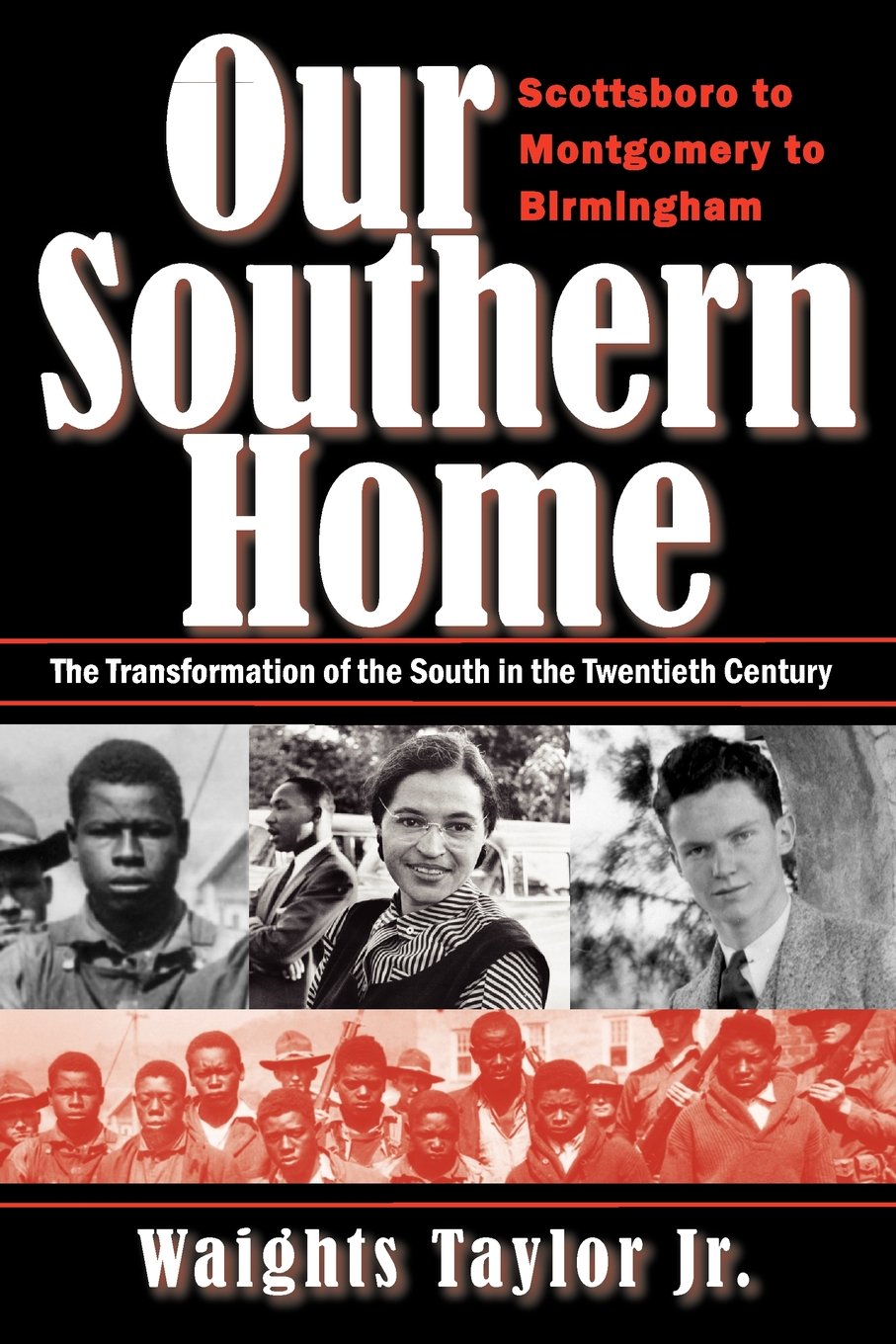
Our Southern Home: Scottsboro to Montgomery to Birmingham--The Transformation of the South in the Twentieth Century
$10.99
by Waights Taylor Jr. Jr



Three eighteen-year-old southerners start the day of March 25, 1931, not knowing that the events soon to occur in Scottsboro, Alabama will lead them and the South on an inexorable journey of change: Clarence Norris, black, is boarding a freight train as a hobo in Chattanooga; Waights Taylor, white, is a student at the University of Alabama; Rosa McCauley Parks, black, is a resident of Pine Level, Alabama. The three become involved in the Scottsboro events in different ways with profound implications to the region and their lives. Three cities—Scottsboro, Montgomery, and Birmingham—are the critical points for the events about to unfold: Clarence Norris becomes one of the Scottsboro Boys; Waights Taylor is from an upper middle class Birmingham family; Rosa Parks will spark the start of the civil rights movement in Montgomery. Each city bears the scars of its segregated past leading to the second emancipation of African Americans from the yokes of slavery and segregation. Our Southern Home—Scottsboro to Montgomery to Birmingham: The Transformation of the South in the Twentieth Century is a narrative history and is based on four broad themes: (1) The inevitability of change for better or worse; (2) The Scottsboro period in the 1930s represents the nadir in Alabama's segregated history; (3) The importance the accident of birth places on most individuals, and the resulting extreme disparities between being born white or black in the South; (4) Southerners, black and white alike, are inexplicably connected, both figuratively and literally, in ways the region has yet to fully recognize and accept. The life stories of Clarence Norris, Waights Taylor, and Rosa Parks are the book's consistent thread through the twentieth century, the tragedy of the Scottsboro Boys and their trials, and other important civil rights moments in Montgomery, Selma, and Birmingham. "Two 'isms' - racism and liberalism - make their way through Our Southern Home , a new carefully researched book...'I am haunted by my past,' Taylor exclaims at the end of the book...it does indeed read like a story about ghosts of racism that go on haunting not only the author but all of American society." Jonah Raskin--Swans Commentary "Memoir. Journalism. History. The book's title suggest all three genres. That is precisely what is presented..Alabama's moon has been the inspiration for both song and poetry. It takes a native Alabaman (now transplanted to the Bay Area) to reveal the dark side of the moon." Dennis Halac--Mechanics' Institute Library His [Mr. Taylor's] writing style is very readable...Mr. Taylor has retold these tragic stories that many of us know but he does it in such an entertaining yet sad way that the reader feels as if the story is being related this time more eloquently than before. This fascinating account of the civil rights struggle is highly recommended to you.-Robert R. Kracke, Birmingham Bar Association Bulletin , Summer 2012 Taylor combines the story of his own family's history with the Scottsboro Boys and the burgeoning activism of Rosa Parks in the racially segregated and tumultuous South...Publicity of the case laid bare the racial attitudes of the post-slavery era, which Taylor recounts with remarkable finesse. He's critical without being harshly judgmental...It's an engrossing tale that marries fine attention to detail with a creative, engaging writing style. It's no mere retelling of history, as Taylor uses meticulous research to breathe vibrant life into the major players.-Kirkus Reviews, October 2012 Afraid of the South and yet fascinated by it, I turned to Waights Taylor's history of Alabama...Taylor writes from his head; years of research went into his book. He also writes from his heart; there's an ocean of feelings behind the words...The book reads like a literary ritual in which the author aims to exorcise the ghosts of racism that have haunted him for much of his life...At the end of the book, the author himself, all alone, sifts through his memories and his dreams, and monitors emotions that "vary from joy to sadness to despair."Jonah Raskin, The Redwood Coast Review , Summer 2013 Used Book in Good Condition