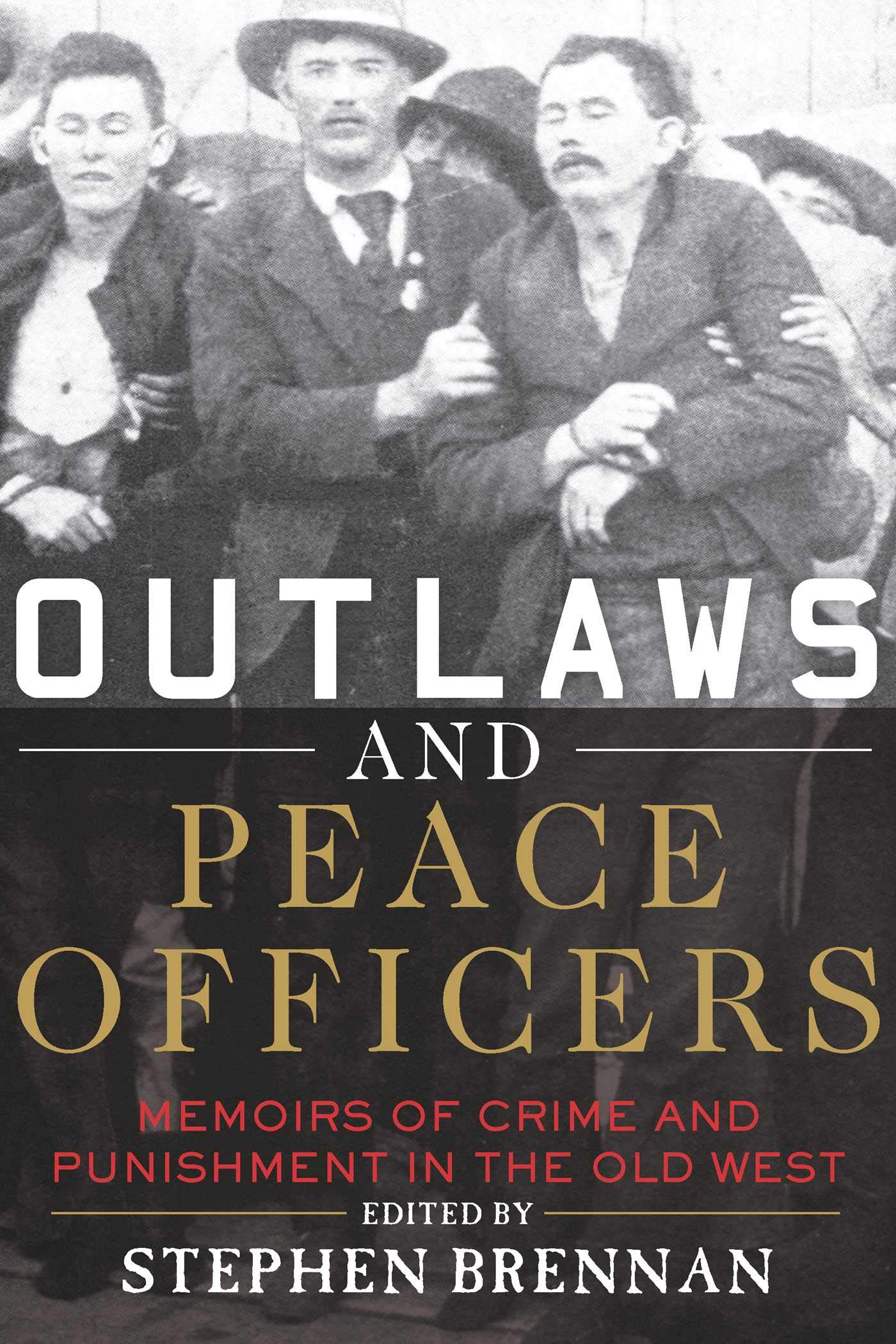
Outlaws and Peace Officers: Memoirs of Crime and Punishment in the Old West
$14.99
by Stephen Brennan



This New York Times ' bestseller features the West’s most prominent lawmen and criminals, who tell their stories of fight, death, and survival. In the romantic narrative of the Old West, two larger-than-life characters emerged as the perfect foils for each otherthe rampant outlaw and the heroic peace officer. Without the villain, sheriffs would not have needed to uphold the law; and without the sheriff, villains would have had no law to break. Together, both personalities fought, lost, and triumphed amid shootouts, train robberies, and bank holdups against the backdrop of the lawless American frontier. This spectacular New York Times ' bestselling collection of true memoirs and autobiographies, told by the very people who lived these criminal and righteous lives during the Old West, reveal the outlaw and peace officer at their worst and best. Watch as Mark Twain introduces notorious gunslinger Jack Slade; hear about Theodore Roosevelt’s encounters with men, women, and game from Roosevelt himself; read sheriff Pat Garrett’s biography of Billy the Kid, the outlaw he killed; and listen as lawmen Bat Masterson and Wyatt Earp describe each other in their own accounts. Including other carefully curated stories by Tom Horn, Cole Younger, and more, Outlaws and Peace Officers invokes danger, honor, and the fight for survival during this perilous but exciting chapter in American history. Stephan Brennan is an editor, teacher, and playwright. He is the editor of The Best Cowboy Stories Ever Told , The Gigantic Book of Sailing Stories , The Gigantic Book of Pirate Stories , and Classic Adventure Stories . Outlaws and Peace Officers Memoirs of Crime and Punishment in the Old West By Stephen Brennan Skyhorse Publishing Copyright © 2016 Stephen Brennan All rights reserved. ISBN: 978-1-63450-436-2 Contents Chapter I. Dodge William MacLeod Raine, Chapter II. Cowboy Detective Charles Siringo, Chapter III. Slade Mark Twain, Chapter IV. Wild Bill Hickok J. W. Buel, Chapter V. The Texas Rangers, How the Law Got Into the Chaparral Fredric Remington, Chapter VI. Billy, the Kid Pat Garrett, Chapter VII. Pat Garrett, Sheriff Pat Garrett, Chapter VIII. The Daltons Emerson Hough, Chapter IX. Evolution of a Train Robber Edgar Beecher Bronson, Chapter X. Bat Masterson Wyatt Earp, Chapter XI. Wyatt Earp Bat Masterson, Chapter XII. The Statement of Wyatt Earp Wyatt Earp, Chapter XIII. Theodore Roosevelt, Lawman Theodore Roosevelt, Chapter XIV. Tom Horn, Cattle Detective Tom Horn, Chapter XV. Exploits of the James Gang J. A. Dacus, Chapter XVI. Cole Younger Cole Younger, CHAPTER 1 DODGE By William MacLeod Raine It was in the days when the new railroad was pushing through the country of the plains Indians that a drunken cowboy got on the train at the way station in Kansas. John Bender, the conductor, asked him for his ticket. He had none, but he pulled out a handful of gold pieces. "I wantta — go-go to — h-hell," he hiccuped. Bender did not hesitate an instant. "Get off at Dodge. One dollar, please." Dodge did not get its name because so many of its citizens were or had been, in the Texas phrase, on the dodge. It came quite respectably by way of its cognomen. The town was laid out by A. A. Robinson, chief engineer of the Atchison, Topeka & Santa Fe, and it was called for Colonel Richard I. Dodge, commander of the post at Fort Dodge and one of the founders of the place. It is worth noting because it is one of the few respectable facts in the early history of the cowboy capital. Dodge was a wild and uncurried prairie wolf, and it howled every night and all night long. It was gay and young and lawless. Its sense of humor was exaggerated and worked overtime. The crack of the six-shooter punctuated its hilarity ominously. Those who dwelt there were the valiant vanguard of civilization. For good or bad they were strong and forceful, many of them generous and big-hearted in spite of their lurid lives. The town was a hive of energy. One might justly use many adjectives about it, but the word respectable was not among them. There were three reasons why Dodge won the reputation of being the wildest town the country had ever seen. In 1872 it was the end of the track, the last jumping-off spot into the wilderness, and in the day when the transcontinental railroads were building across the desert the temporary terminus was always a gathering place of roughs and scalawags. The payroll was large, and gamblers, gunmen, and thugs gathered for the pickings. This was true of Hays, Abilene, Ogalala, and Kit Carson. It was true of Las Vegas and Albuquerque. A second reason was that Dodge was the end of the long trail drive from Texas. Every year hundreds of thousands of longhorns were driven up from Texas by cowboys scarcely less wild than the hill steers they herded. The great plains was being opened, and cattle were needed to stock a thousand ranches as well as to supply the government at Indian re