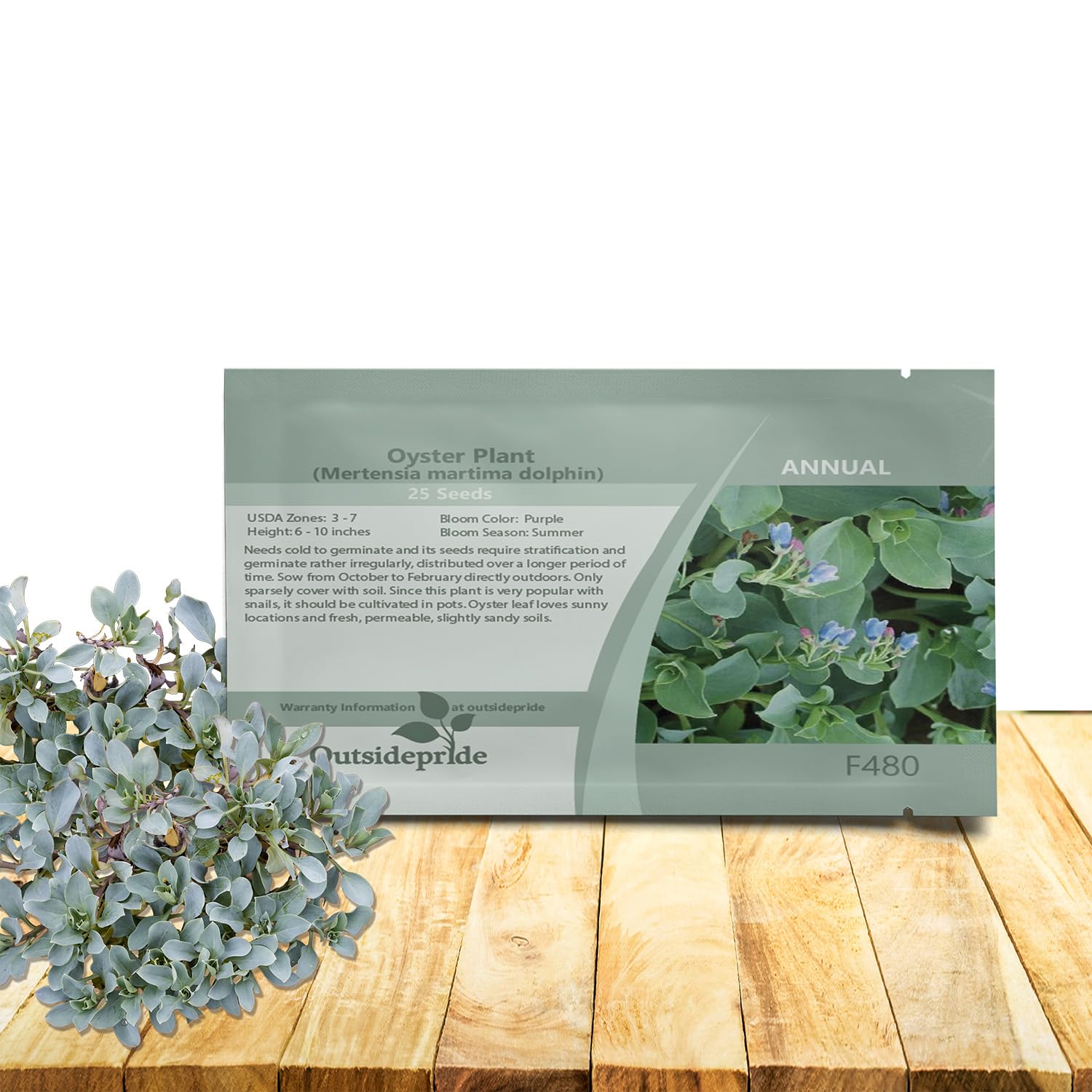
Outsidepride 25 Seeds Oyster Plant Leaf Seeds for Planting Indoors or Outdoors
$7.49
by Outsidepride



Edible variety for pots and hanging baskets or in the garden Plant height mature plants 6 inches in pots, 10 inches in the garden Leaves have an oyster- like taste Suitable for salads, garnish and mixed containers If raw oysters are your thing, this is the herb plant choice for you. Beautiful glaucous blue-green leaves on sprawling stems tipped in small sky blue flowers. This likes ample nutrition. Perennial and dormant in winter. Oyster Plant (Mertensia martima dolphin) - Also known as Oyster Leaf and Sea Bluebells. Mertensia maritima has its unique name because it gives off a faint smell of mushrooms and when eaten it tastes vaguely of oysters. The chemical that gives this plant the oyster-like odor when its leaves are crushed is dimethyl sulphide, a compound that is noted for being a major part of the odor profile of raw oysters. If raw oysters are your thing, this is the herb plant choice for you. Beautiful glaucous blue-green leaves on sprawling stems tipped in small sky blue flowers. This likes ample nutrition. Perennial and dormant in winter. This is a plant of just above high tide line on cold northern hemisphere beaches from Maine to Greenland and Japan to Alaska so if you have a cool to cold garden, here you go.The fleshy leaves of this low-growing shore plant are rich in flavor, which is comparable to oysters, anchovies, mushrooms, and borage depending on your palette. Oyster leaf needs cold to germinate and its seeds require stratification and germinate rather irregularly, distributed over a longer period of time. Sow from October to February directly outdoors. Only sparsely cover with soil. Since this plant is very popular with snails, it should be cultivated in pots. Oyster leaf loves sunny locations and fresh, permeable, slightly sandy soils.