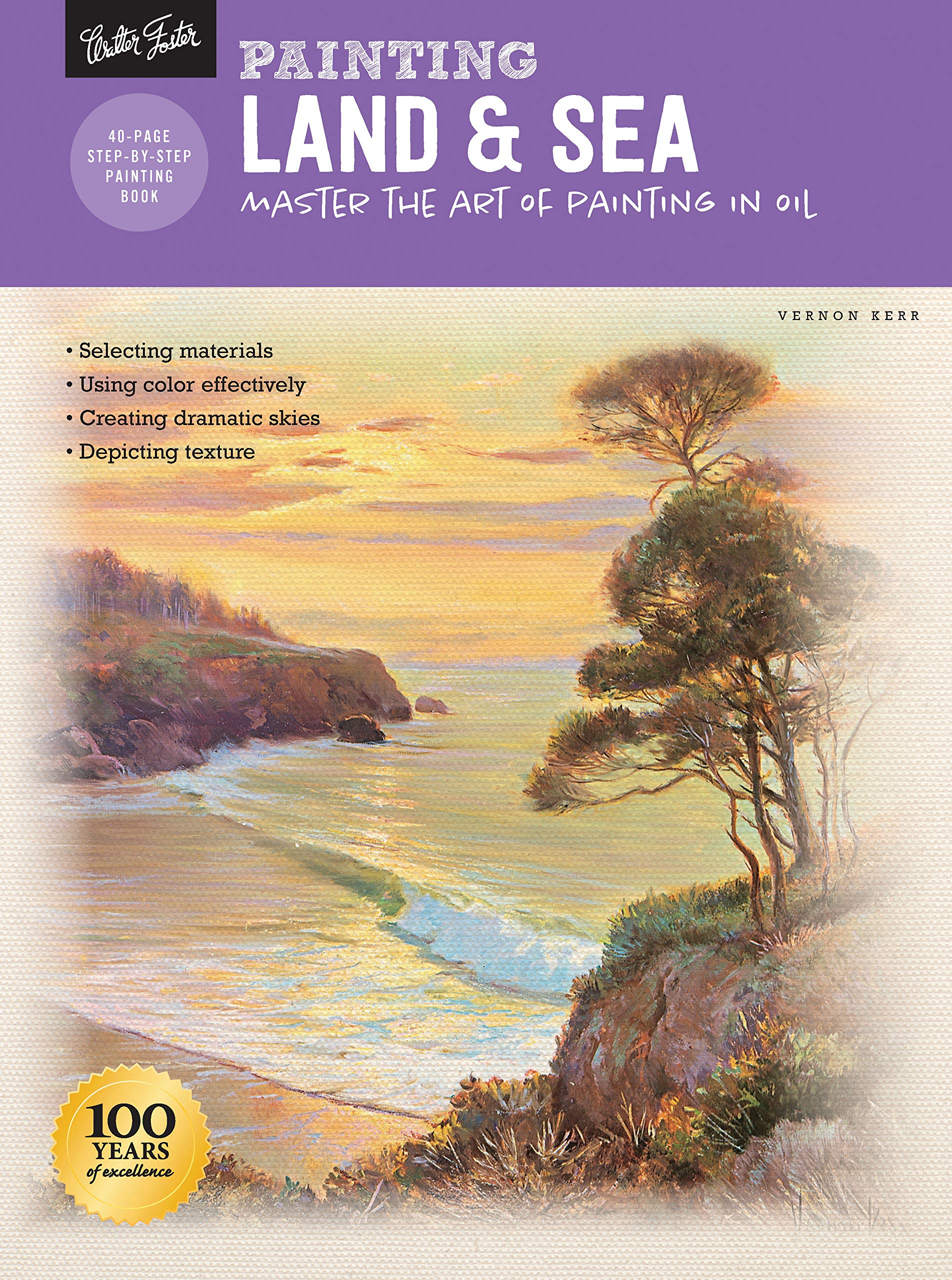
Painting: Land & Sea: Master the art of painting in oil (How to Draw & Paint)
$16.99
by Vernon Kerr



Featuring the artwork of Vernon Kerr, Painting: Land & Sea includes a variety of easy-to-follow, step-by-step projects including dynamic landscapes and seascapes with sweeping vistas. Nature provides an endless variety of appealing subjects to inspire the artist. And with the versatile mediums of oil and acrylic, you can both layer transparent glazes and apply thick, luscious strokes of color for a wide range of interesting effects. In Painting: Land & Sea, artist Vernon Kerr shows you his step-by-step process for painting seascapes and landscapes in oil and acrylic , from simple sketches to the most elaborate renderings. In addition, he demonstrates how to capture the beauty of nature in all its seasons and at different times of the day, as well as the importance of making small color studies and learning the various cloud formations. You’ll also discover tips for using color effectively , with additional helpful information on composition , perspective , texture , and contrast . And along the way, you’ll learn special techniques for creating dramatic skies , luminous waves , and lush landscapes . From rendering light and shadow to creating realism through depth and texture , aspiring artists will discover the basics of oil and acrylic painting through engaging, inspirational lessons and useful artist tips. Artists will find helpful information about selecting the right paintbrushes, supports, and paints to get started in acrylic painting. Additionally, artists will discover useful tips for using basic and special acrylic painting techniques to render textures, suggest dimension, and create effects . The How to Draw & Paint series offers an easy-to-follow guide that introduces artists to basic tools and materials and includes simple step-by-step lessons for a variety of projects suitable for the aspiring artist. With comprehensive instruction, plenty of artist tips and tricks, and beautiful artwork to inspire, Painting: Land & Sea is the perfect resource for any aspiring acrylic painter. Vernon Kerr was born in Bellevue, Pennsylvania, in 1938. Recognizing his young son's talent, his father secured an apprenticeship for him with Leon Franks. Vernon studied with Franks for four years and was an accomplished artist by age 23. His first taste of fame occurred when he was the youngest artist to be published by the International Art Publishing Company. He worked as a naval illustrator while stationed in Japan during his time in the U.S. Navy and had also won numerous awards for his portraits, marines, and still lifes before his move to Laguna Beach, California, in 1959. Vernon was a professional artist for 26 years and was internationally known for his seascapes and landscapes. He taught at his own school in Laguna Beach and Coeur d'Alene, Idaho, for 15 years. He once said, "Painting is not fun unless I am learning something new, and nature is my greatest teacher." Vernon passed away in 1982 at the age of 44. Painting Land & Sea Master The Art Of Painting In Oil By Vernon Kerr The Quarto Group Copyright © 2019 Quarto Publishing Group USA Inc. All rights reserved. ISBN: 978-1-63322-775-0 Contents Tools & Materials, 2, Wind Song, 22, Painting Techniques, 4, Fantasy Mountain, 24, Color Basics, 6, Surrender to Fall, 26, Painting Methods, 8, Sea Dunes, 30, Sky Studies, 10, Autumn Lullaby, 32, Wave Studies, 12, Awakening Sunset, 34, Rock Studies, 14, Walking Through Summer, 36, Snow Studies, 15, The Citadels, 38, Mendocino Melody, 16, Anchor Bay, 40, The Storm King, 18, CHAPTER 1 TOOLS & MATERIALS Painting is fun, frustrating, exhilarating, tedious, absorbing, and transformative. Feel free to experiment with the tools and materials presented here, and choose the ones that you are most comfortable with. PAINTS Oil paints are made up of pigments suspended in oils (such as linseed oil) with additives for durability and consistency. Paint is available in two main qualities: student grade and artist grade. Artist-grade paints contain a higher quality of pigment and fewer additives. Although they are slightly more expensive, they tend to last longer. PAINTBRUSHES Brushes vary greatly in size, shape, and texture. Naturalhair brushes, as opposed to synthetic, work best for oil painting. There are four main brush shapes: round, filbert, flat, and bright. Round brushes taper to a thin point and are good for detail work and fine lines. Filbert brushes taper to a thin point and are good for detail work and fine lines. Filbert brushes are slightly flattened with long bristles, making them good for blocking in large areas and rounding our forms. Flat brushes can hold a lot of paint and are great for creating corners. Bright brushes are similar to flat brushes, but allow for more control. Clean your brushes after each use to keep them in good condition. Remove as much paint as you can with turpentine. Then wipe the bristles with a paper towel,