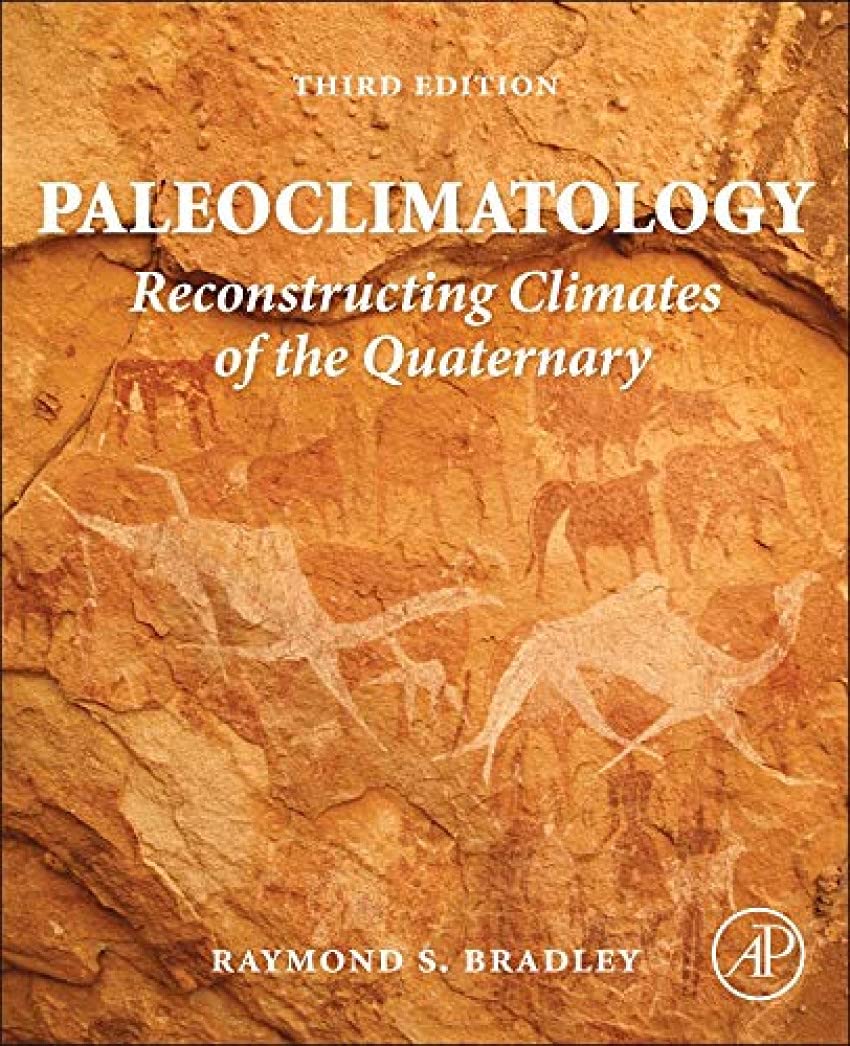



Paleoclimatology: Reconstructing Climates of the Quaternary, Third Edition ―winner of a 2015 Textbook Excellence Award (Texty) from The Text and Academic Authors Association―provides a thorough overview of the methods of paleoclimatic reconstruction and of the historical changes in climate during the past three million years. This thoroughly updated and revised edition systematically examines each type of proxy and elucidates the major attributes and the limitations of each. Paleoclimatology, Third Edition provides necessary context for those interested in understanding climate changes at present and how current trends in climate compare with changes that have occurred in the past. The text is richly illustrated and includes an extensive bibliography for further research. Winner of a 2015 Texty Award from the Text and Academic Authors Association - A comprehensive overview of the methods of paleoclimate reconstruction, and the record of past changes in climate during the last ~3 million years - Addresses all the techniques used in paleoclimatic reconstruction from climate proxies - With full-color throughout, and thoroughly revised chapters on dating methods, climate forcing, ice cores, marine sediments, pollen analysis, dendroclimatology, and historical records - Includes new chapters on speleothems, loess, and lake sediments - More than 1,000 new references and 190 new figures - Essential reading for those interested in how present trends in climate compare with changes that have occurred in the past "...Any serious researcher or lecturer in the field of Quaternary research who has a desire to see beyond their own narrow field of expertise should have a well-thumbed copy of this book on their desk...Very few people in our community have the ability, or the dedication, to review this huge range of material, to see so clearly the interconnections, or to write with such clarity. It is a great achievement". D. McCarroll, The Holocene, March 2015. "It is difficult to conceive of the vast amount of work that must have gone into this comprehensive revision, and it is a great service to the international Quaternary research community." -- The Holocene "The book has been thoroughly updated since the previous edition... Valuable for specialist collections...Summing Up: Recommended. With reservations." -- CHOICE Reviews Online, Nov 01 2014 Winner of a 2015 Texty Award from the Text and Academic Authors Association Paleoclimatology: Reconstructing Climates of the Quaternary, Third Edition provides a comprehensive overview of the methods of paleoclimatic reconstruction and of the historical changes in climate during the past three million years. This thoroughly updated and revised text systematically examines each type of proxy and elucidates the major attributes and the limitations of each. This essential text provides a complete overview of the methods used in paleoclimatology. Paleoclimatology, Third Edition provides necessary context for those interested in understanding climate changes at present, and how present trends in climate compare with changes that have occurred in the past. The text is richly illustrated and includes an extensive bibliography for further research. Raymond S. Bradley has been involved in many national and international activities related to paleoclimatology, most notably as Chair of the Scientific Steering Committee for the International Geosphere-Biosphere Program on Past Global Changes (IGBP-PAGES). He has published ~200 articles in scientific journals, and has edited more than a dozen important books in climatology and paleoclimatology. Of these, Paleoclimatology, now in a fully revised 3rd edition (2014) has been the definitive text in this field for the last 20 years. His research focuses on climatic change and how the earth's climate has varied in the past. He has carried out research on climate variations, both on the long (glacial and interglacial) time-scale and on the short (historical and instrumental) time-scale, involving the analysis of data from all over the world. In recent years he has been involved in studies of natural climate variability, to provide a background for understanding potential anthropogenic changes in climate resulting from rapid increases in greenhouse gases over the last century or so. Ray Bradley has been a professor in the Department of Geosciences, University of Massachusetts, Amherst, USA, since 1984. Additionally, he is a member of Clare Hall at Cambridge University, and a Visiting Professor at the University of Bergen, Norway. He currently holds the Zuckerberg Leadership Chair at the University of Massachusetts.