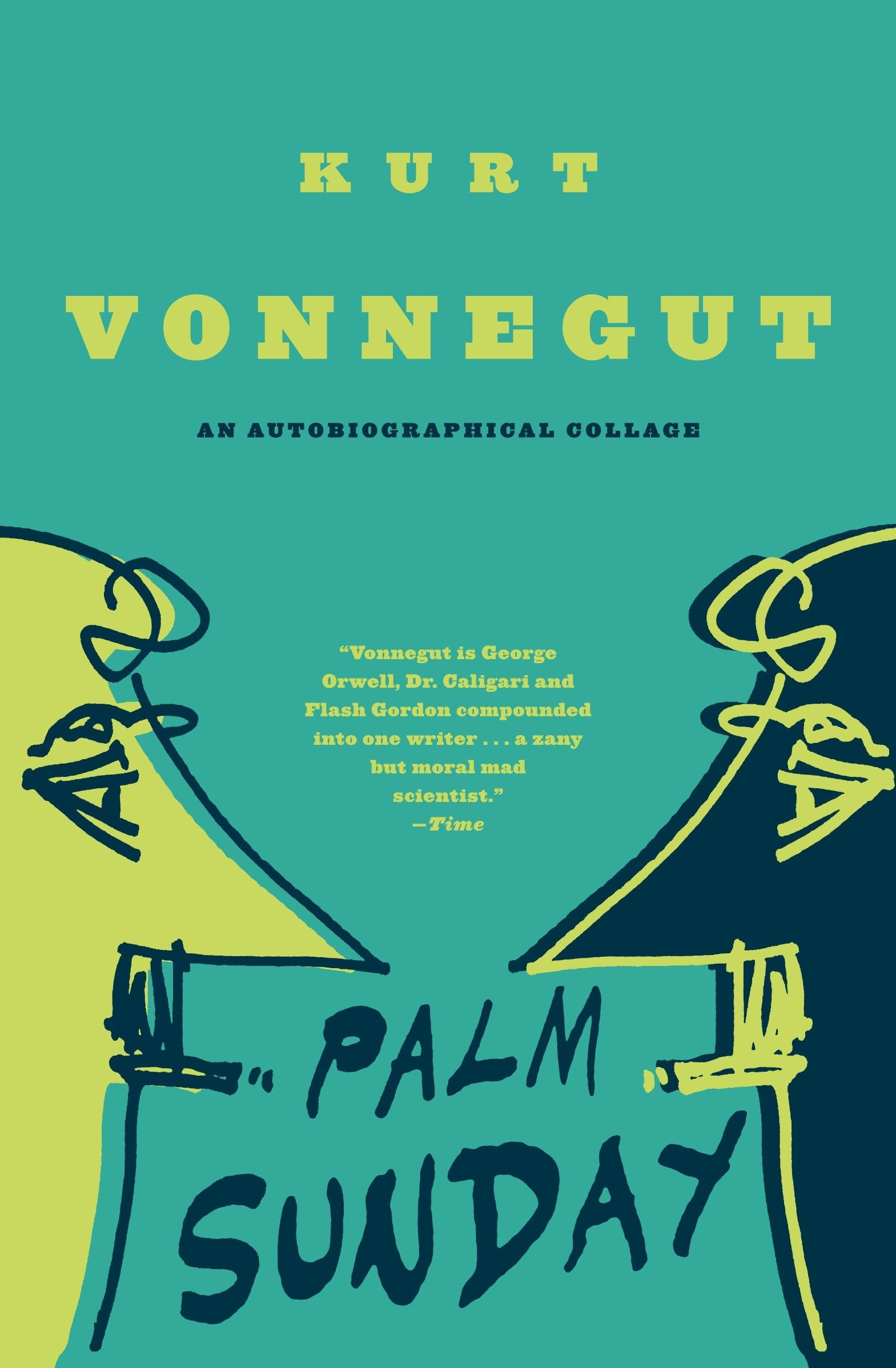



“[Kurt Vonnegut] is either the funniest serious writer around or the most serious funny writer.”— Los Angeles Times Book Review In this self-portrait by an American genius, Kurt Vonnegut writes with beguiling wit and poignant wisdom about his favorite comedians, country music, a dead friend, a dead marriage, and various cockamamie aspects of his all-too-human journey through life. This is a work that resonates with Vonnegut’s singular voice: the magic sound of a born storyteller mesmerizing us with truth. “Vonnegut is at the top of his form, and it is wonderful.”— Newsday “[Kurt Vonnegut] is either the funniest serious writer around or the most serious funny writer.” — Los Angeles Times Book Review “Vonnegut is at the top of his form, and it is wonderful.” — Newsday Kurt Vonnegut ’s humor, satiric voice, and incomparable imagination first captured America’s attention in The Sirens of Titan in 1959 and established him as “a true artist” ( The New York Times ) with Cat’s Cradle in 1963. He was, as Graham Greene declared, “one of the best living American writers.” Mr. Vonnegut passed away in April 2007. Chapter One The First Amendment I am a member of what I believe to be the last recognizable generation of full-time, life-time American novelists. We appear to be standing more or less in a row. It was the Great Depression which made us similarly edgy and watchful. It was World War II which lined us up so nicely, whether we were men or women, whether we were ever in uniform or not. It was an era of romantic anarchy in publishing which gave us money and mentors, willy-nilly, when we were young–while we learned our craft. Words printed on pages were still the principal form of long-distance communication and stored information in America when we were young. No more. Nor are there many publishers and editors and agents left who are eager to find some way to get money and other forms of encouragement to young writers who write as clumsily as member of my literary generation did when we started out. The wild and wonderful and expensive guess was made back then that we might acquire some wisdom and learn how to write halfway decently by and by. Writers were needed that much back then. It was an amusing and instructive time for writers–for hundreds of them. Television wrecked the short-story branch of the industry, and now accountants and business school graduates dominate book publishing. They feel that money spent on someone's first novel is good money down a rat hole. They are right. It almost always is. So, as I say, I think I belong to America's last generation of novelists. Novelists will come one by one from now on, not in seeming families, and will perhaps write only one or two novels, and let it go at that. Many will have inherited or married money. The most influential of my bunch, in my opinion, is still J. D. Salinger, although he has been silent for years. The most promising was perhaps Edward Lewis Wallant, who died so young. And it is my thinking about the death of James Jones two years ago, who was not all that young, who was almost exactly my age, which accounts for the autumnal mood of this book. There have been other reminders of my own mortality, to be sure, but the death of Jones is central–perhaps because I see his widow Gloria so often and because he, too, was a self-educated midwesterner, and because he, too, in a major adventure for all of us, which was the Second World War, had been an enlisted man. And let it here be noted that the best-known members of my literary generation, if they wrote about war, almost unanimously despised officers and made heroes of sketchily educated, aggressively unaristocratic enlisted men. • • • James Jones told me one time that his publisher and Ernest Hemingway's, Charles Scribner's Sons, had once hoped to get Jones and Hemingway together–so that they could enjoy each other's company as old warriors. Jones declined, by his own account, because he did not regard Hemingway as a fellow soldier. He said Hemingway in wartime was free to come and go from the fighting as he pleased, and to take time off for a fine meal or woman or whatever. Real soldiers, according to Jones, damn well had to stay where they were told, or go where they were told, and eat swill, and take the worst the enemy had to throw at them day after day, week after week. • • • It may be that the most striking thing about members of my literary generation in retrospect will be that we were allowed to say absolutely anything without fear of punishment. Our American heirs may find it incredible, as most foreigners do right now, that a nation would want to enforce as a law something which sounds more like a dream, which reads as follows: "Congress shall make no law respecting an establishment of religion, or prohibiting the free exercise thereof, or abridging the freedom of the press, or the right of the people peaceably to assemble, and to petition the Government for a redr