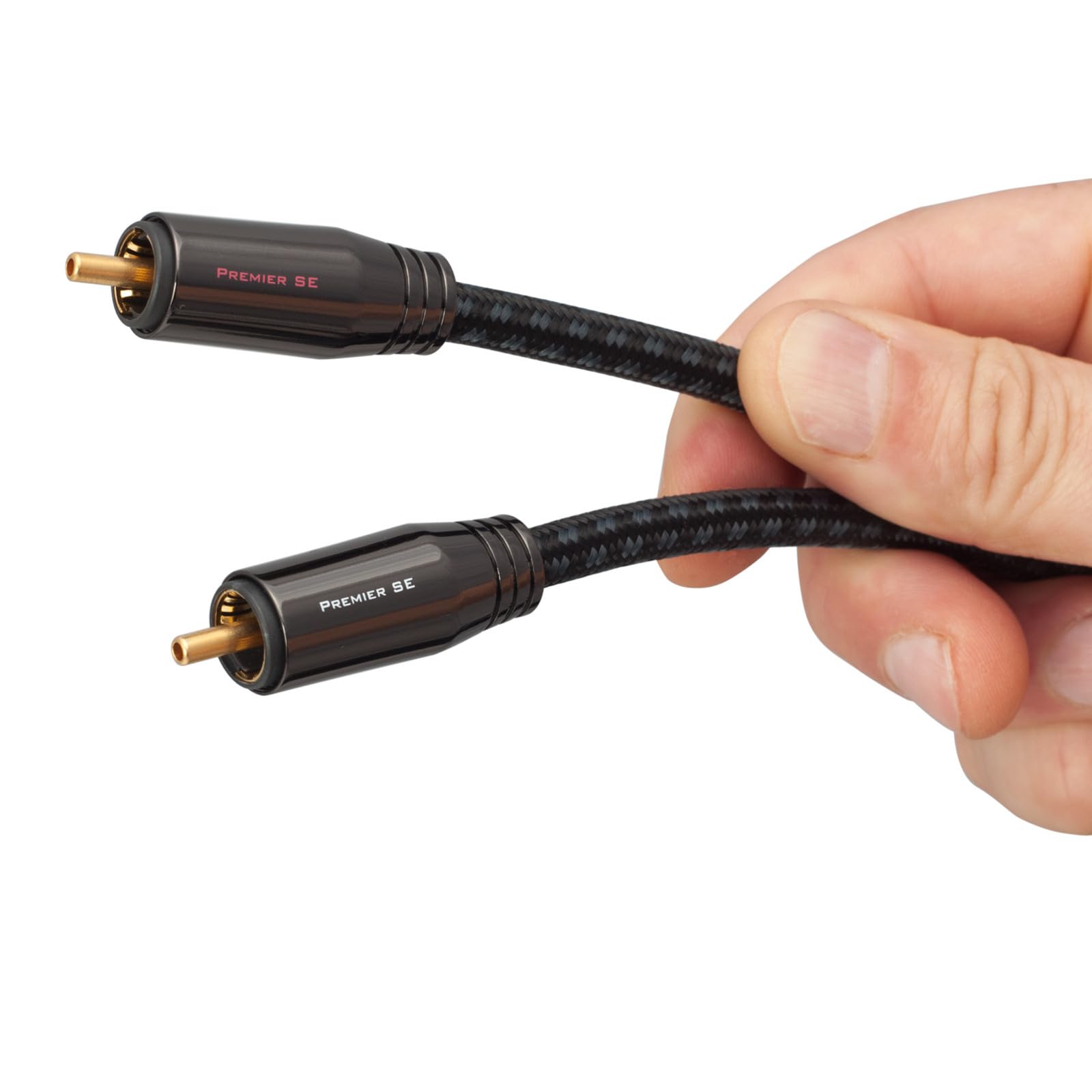
Pangea Audio Premier SE Interconnect Cable RCA to RCA - 0.6 Meter Pair
$69.95
by Pangea Audio



All audio conductors are made from premium Cardas Grade One Copper Premium PE air tube insulation Advanced thermoplastic rubber jacket is tough, yet very flexible Prime 750 RCA Termination Non-magnetic brass cover is treated with a tough-as-nails scratch-and-chip-resistant black chrome pl Pangea's Premier SE interconnect takes full advantage of the latest materials in a highly evolved cable design. Premier SE provides a nice step up in quality from the already excellent standard Premier interconnect. All of the SE's audio conductors are made from premium Cardas Grade One Copper, which many experts consider to be the best copper on the planet. The raw material for George Cardas' copper is mined in the USA, then shipped to a New England plant where it is s-l-o-w-l-y drawn in a pure Argon-gas-filled chamber into high purity long crystal copper strands. Both the signal and the return Cardas conductors are insulated with PE air tubes, which, until very recently, were previously found only on much more expensive audio cables. This manufacturing technology has improved, and Pangea is now able to use these advanced insulators in Premier SE cables while keeping the price tag affordable. Premier SE cables feature three layers of shielding from RFI and EMI noise. These include a silver-plated copper braided shield, an aluminum/mylar foil shield, and finally a carbon-filled PE shield. This last item, the carbon-filled PE shield, is a recent innovation and provides another layer of shielding for an even quieter cable without compromising cable flexibility. The outer jacket of Premier SE is made of an advanced thermoplastic (TP) rubber instead of the usual PVC cover. The thermoplastic jacket cover is rarely used in audio applications, but is preferred by Pangea designer Jay Victor. TP rubber is very tough, providing superb protection, but at the same time it is soft and pliable, allowing maximum cable flexibility. The Prime 750 RCA features a special ultra-low mass design that takes best advantage of the fine properties of exotic metals, while avoiding technical problems like eddy currents that are caused by using higher mass metal contacts.