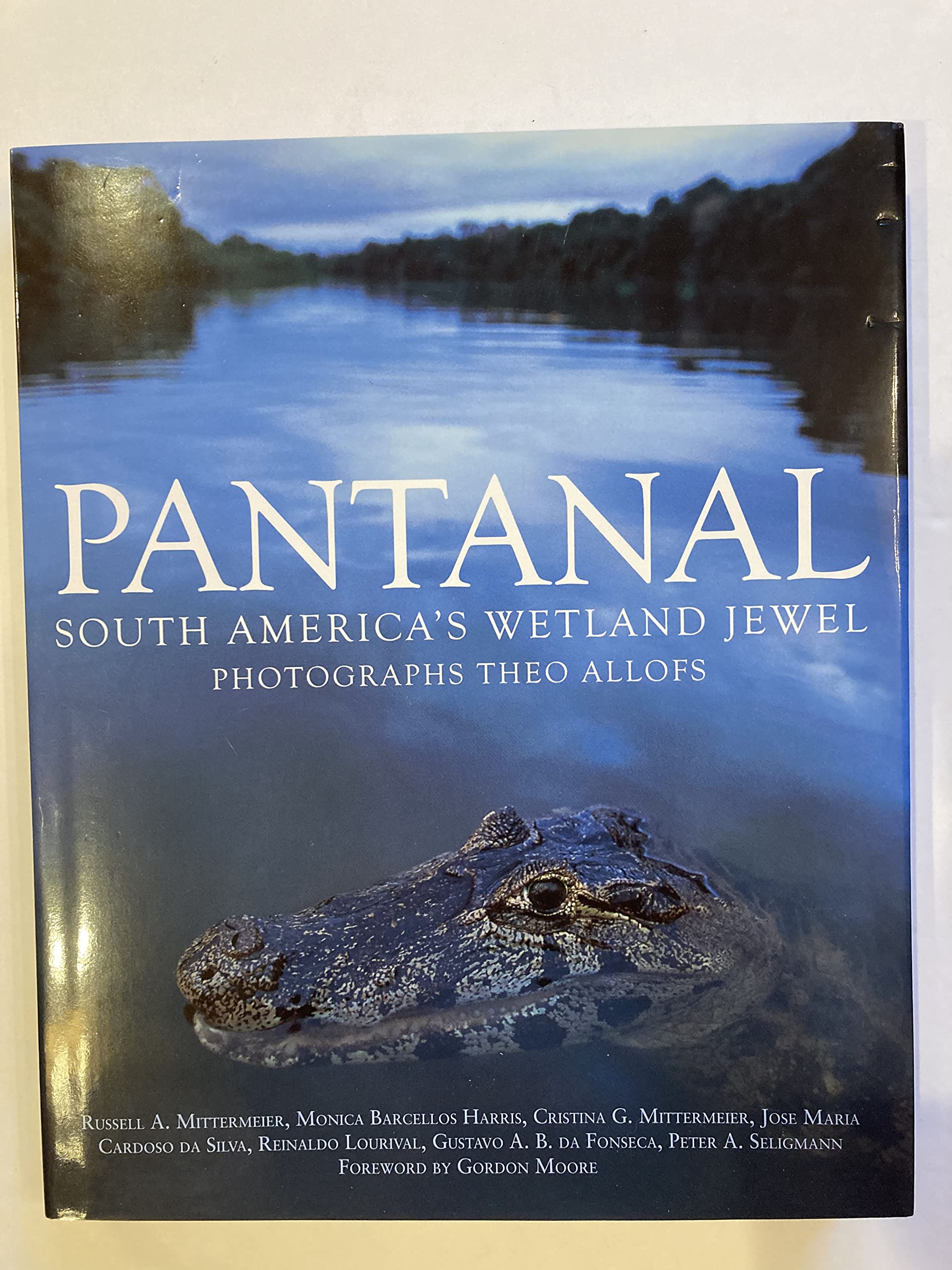



A spectacular tour of the world's largest wetland. The Pantanal covers 81,000 square miles in the middle of South America, extending over parts of Brazil, Bolivia and Paraguay. About half the size of California and 20 times the size of the Everglades, the Pantanal flood plain is the largest wetland network on Earth. Pantanal reveals the abundant wildlife and beauty of this remarkable eco-system, home to some of the most spectacular concentrations of flora and fauna on the planet. The text explains the Pantanal's ecology, its people, plants and animals, presented in five chapters: The Pantaneiro: People of the Pantanal - Wetlands - Grasslands - Forests of the Pantanal - Caiman: the comeback crocodile. The book also examines the impact of deforestation, overfishing and overhunting in the Pantanal and the efforts by conservationists to protect this magnificent region for future generations. Pantanal is a superbly photographed tour of one of the most memorable regions on the planet. The Pantanal is "the world's largest contiguous wetland on the planet" and a region of resplendent biodiversity. Crossing the borders of Brazil, Bolivia, and Paraguay, this vast, swampy floodplain is home to magnificent wildlife, spectacular plants, and dramatic seasonal transformations. So prized is it as a reservoir for threatened species, much of the wetland is now protected. An informative overview of the Pantanal's natural and human history is provided by scientists with Conservation International (CI), an organization instrumental to the preservation of the region. Although commentary by Mittermeier, president of CI, and his contributors is more suited for research than pleasure reading, the photographs by famed wildlife photographer Allofs are radiant works of art worthy of prolonged contemplation. Patient, reverent, lucky, and gifted, Allofs captures the glory of the landscape in all its jewel-like hues while homing in on the Pantanal jaguar, giant river otter, elegant birds, capybaras, caimans, a giant anteater, and black howler monkeys. In all, this is a superb and memorable introduction to a place of exceptional beauty and ecological significance. Donna Seaman Copyright © American Library Association. All rights reserved Photographer Theo Allofs captures the region's breathtaking beauty and diversity in this book, making every page a discovery, every page a jewel. ( Kitchener-Waterloo Record 2005-11-12) The photographs by famed wildlife photographer Allofs are radiant works of art worthy of prolonged contemplation. Patient, reverent, lucky, and gifted, Allofs captures the glory of the landscape in all its jewel-like hues... In all, this is a superb and memorable introduction to a place of exceptional beauty and ecological significance. (Donna Seaman Booklist 2005-10-01) Reveals the abundant wildlife and beauty of this remarkable eco-system... the efforts by conservationists to protect this magnificent region for future generations. ( Photo Life 2005-11-01) It's difficult to decide on a favorite image in this richly illustrated book. ( Wildlife Conservation ) Exceptional images from photographer Theo Allof... stunning photographs of caiman, tropical birds and indigenous people. (Leah Bence Outdoor Photographer ) The photography is superb, the subjects and landscapes captured under magical lighting conditions, and printed on a luxurious and durable paper stock. (Joy McDonell Canadian Camera ) [Theo Allofs] has earned international acclaim as a nature photographer. This book is graced with a collection of 146 of his lavish images. ( Shutterbug ) [Top Science Books of the Year listing] Allofs captures the beauty of this wildlife paradise with his arresting images. (Josie Glausiusz and Brad Lemley Discover ) Theo Allofs is an award-winning wildlife and nature photographer, whose images regularly appear in Smithsonian , National Geographic , Outdoor Photographer , GEO and American Photo . Russell A. Mittermeier is the president of Conservation International, of which all the authors are members. From the Introduction Home to some of the most spectacular concentrations of wildlife on Earth, the Pantanal region of Brazil, Bolivia and Paraguay is the world's largest contiguous wetland on the planet. Located between 16deg and 22deg South, and 55deg and 58deg West (see map page 7), it covers some 210,000 sq km. This area, about half the size of California, consists mainly of the low-altitude (average 80-180 m) floodplain of the Rio Paraguay and its tributaries, which drop off the Brazilian Cerrado, or planalto (central plateau). This huge, seasonally-flooded swampland is far more impressive and beautiful than any comparable region found elsewhere in the world. The Pantanal covers a vast expanse in the middle of South America. With an average width of 500 km, it stretches in a north-south direction some 950 km along the upper Rio Paraguay basin. It is bordered to the east by the savannahs and w