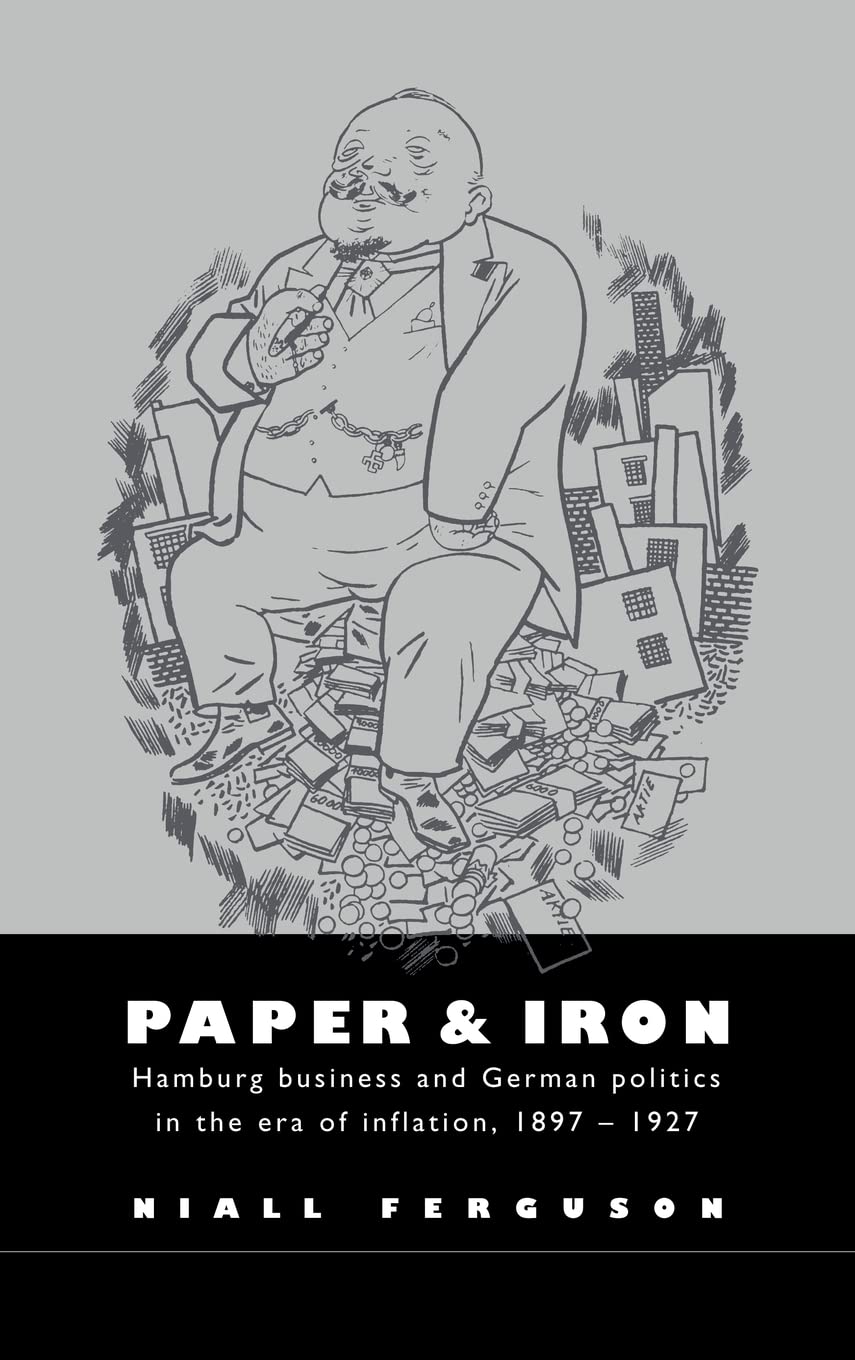
Paper and Iron: Hamburg Business and German Politics in the Era of Inflation, 1897–1927
$170.00
by Niall Ferguson



Few economic events have had the impact of German hyperinflation in 1923, still remembered as a root cause of Hitler's rise to power; yet in recent years historians have defended the inflationary policies adopted after 1918. Niall Ferguson takes a different view. He argues that inflation was an economic and political disaster, and that alternative economic policies could have stabilized the German currency in 1920. To explain why these were not adopted, he points to long-term defects in the political institutions of the Reich from the 1890s. The book therefore not only reveals the Wilhelmine origins of Weimar's failure: it also casts new light on the origins of the Third Reich. "...Ferguson makes a valuable contribution to the historiography of German inflation....a valuable reassessment of long-term inflationary pressures in German history." The Historian "This thoroughly researched and well-written study is a sophisticated substantiation of earlier analyses that pointed out the destructive effects of hyperinflation on Germany." Choice "This superb work offers revisions of a good deal of previous scholarship on Germany in the late Wilhelminian and the Weimar eras. Future studies of German history in this crucial period will have to take Paper and Iron into account." Michael Richards, German Life "Niall Ferguson makes a valuable contribution to the historiography of German inflation by recasting the history of the inflation of the early 1920s...This book serves as a useful model for analysis of the relationships between different levels of government. Moving between the world of Hamburg's upper bourgeoisie and the German central government, Paper and Iron provides a valuable reassessment of long-term inflationary pressures in German history." The Historian "This stimulating and elegantly conceived book skillfully links three major themes-the history of German finance, an analysis of the role of Hamburg in German ,political and economic life, and an examination of Max Warburg, the great Hamburg banker, and of his central role in German financial decision making in the early 1920's." Harold James, Journal of Interdisciplianry History "There is little doubt that for years to come Paper and Iron will remain one of the most important contributions to the existing body of literature on the economic and political history of the German inflation." Larry Eugene Jones,German Studies Review "Ferguson's counterfactual produces powerful insights that deserve careful consideration and further investigation..." Gerald D. Feldman, Central European History "This well-written, imaginative, and lively account, the author's first book, desrves scrutiny by every serious student of Weimar's business, political, and financial history." Elisabeth Glaser, Business History Review "...a new perpective on one of Germany's major economic centers during the pre-war and Weimar eras." Rebecca S. Fahrlander, The European Studies Journal This study presents a challenge to the prevailing view that there was no alternative to the inflationary economic policies of Weimar Germany. Few economic events have had a more profound or enduring impact than the German hyperinflation of 1923, still remembered popularly as a root cause of Hitler's rise to power. Yet in recent years many historians have argued that inflationary policies were, on balance, advantageous to post-1918 Germany, both boosting growth and helping to reduce reparations. The scholarly consensus is that there was no viable alternative to inflation. In Paper and iron Niall Ferguson takes a different view. Focusing on the influential Hamburg business community, he exposes the flaws in the contemporary justifications for inflationary policies. The inflation, he argues, did severe damage to the German economy by eroding the foundations of bourgeois society and discrediting Weimar's welfare state. Above all, it did nothing whatever to reduce reparations. Alternative policies might in fact have stabilised the German currency in 1920. To explain why such policies were not adopted, the author points to long-term defects in the political economy of the Reich. He suggests that there was a thirty-year 'era of inflation' after 1897 in which the inadequacy of the Reich's fiscal and monetary institutions allowed economic interest groups to wield excessive power. This internal imbalance of power was reversed only in the 1930s. Thus Paper and iron reveals not only the Wilhelmine origins of Weimar's failure; it also casts new light upon the origins of the Third Reich. Used Book in Good Condition