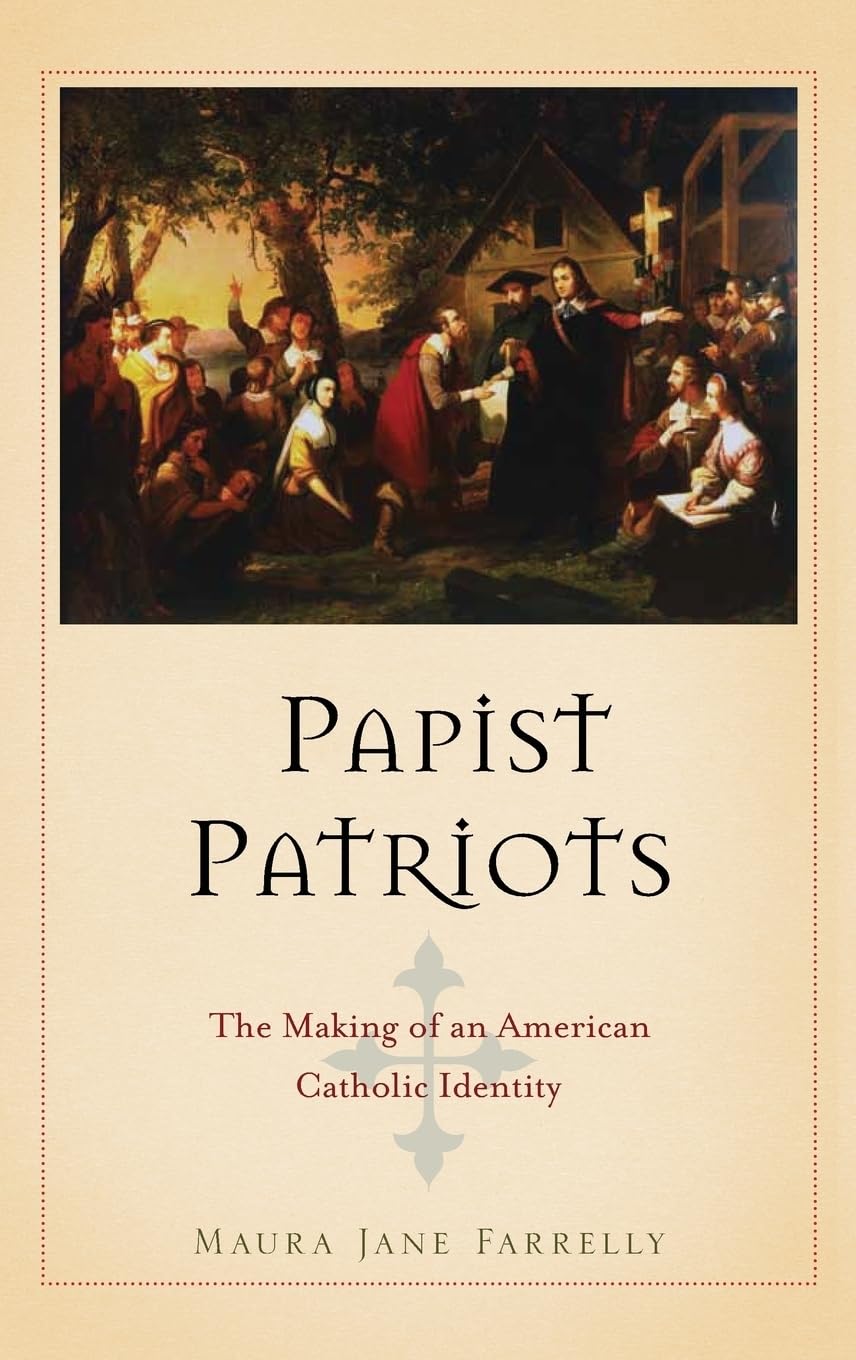



"The persons in America who were the most opposed to Great Britain had also, in general, distinguished themselves by being particularly hostile to Catholics." So wrote the minister, teacher, and sometime-historian Jonathan Boucher from his home in Surrey, England, in 1797. He blamed "old prejudices against papists" for the Revolution's popularity - especially in Maryland, where most of the non-Canadian Catholics in British North America lived. Many historians since Boucher have noted the role that anti-Catholicism played in stirring up animosity against the king and Parliament. Yet, in spite of the rhetoric, Maryland's Catholics supported the independence movement more enthusiastically than their Protestant neighbors. Not only did Maryland's Catholics embrace the idea of independence, they also embraced the individualistic, rights-oriented ideology that defined the Revolution, even though theirs was a communally oriented denomination that stressed the importance of hierarchy, order, and obligation. Catholic leaders in Europe made it clear that the war was a "sedition" worthy of damnation, even as they acknowledged that England had been no friend to the Catholic Church. So why, then, did "papists" become "patriots?" Maura Jane Farrelly finds that the answer has a long history, one that begins in England in the early seventeenth century and gains momentum during the nine decades preceding the American Revolution, when Maryland's Catholics lost a religious toleration that had been uniquely theirs in the English-speaking world and were forced to maintain their faith in an environment that was legally hostile and clerically poor. This experience made Maryland's Catholics the colonists who were most prepared in 1776 to accept the cultural, ideological, and psychological implications of a break from England. "Reads like a novel...Anyone interested in American history or in the Catholic presence in the United States will find this enlightening and fascinating reading."-- The Catholic Response "Farrelly offers a highly readable synthesis of early American Catholicism's origins with important nuances that elucidate the contours of Catholic identity formation that made it American." -- Journal of Southern History "A thoughtful and often surprising assessment of Catholicism and its fate in colonial Maryland, and how Catholic Marylanders became patriots in a deeply Protestant nation." --John T. McGreevy, author of Catholicism and American Freedom: A History "Farrelly's book is a tour de force in developing a new argument about the foundations of an American Catholic identity... [H]er lively style of writing... will make her text available to a wide reading audience." -- Church History "Maura Farrelly has a fresh and challenging perspective on the Americanization of Roman Catholicism, one that tracks its origins to early Maryland. Papist Patriots bears close reading by all students of American history and religion." -- Christine Leigh Heyrman, author of Southern Cross: The Beginnings of the Bible Belt "Distinguished by impressive research and a well-written, lively narrative, Farrelly's study will change the way historians think about Catholics in colonial America. The author argues that the foundation for the making of an American Catholic identity rests in Maryland's 1649 Act of Religious Toleration. Over time, Maryland's Catholics became more American than English so that by the 1770s these Papists had become ardent Patriots. By endorsing the republicanism and individualism of the independence movement they created an American Catholic identity that has endured into the twenty-first century." -- Jay P. Dolan, author of In Search of an American Catholicism: A History of Religion and Culture in Tension "Every so often a book comes along that presents a dramatically different interpretation of known historical facts in a way that is,well, convincing.This is one of those books...[this is] a book that will become a standard reference work on the history and historiography of American Catholicism." -- The Catholic Historical Review "A fresh look at Catholics in America...Well written, highly readable, and well researched."-- CHOICE "A lively account of the Catholic community in Maryland...The strength of the book lies in the author's ability to synthesize a vast array sources to recreate the political conditions that influenced the development of the Catholic community in Maryland...The author's original contribution lies in her thesis that Catholics began to view themselves as Marylandians instead of English in the period following the Glorious Revolution and in her potrayal of religious conditions in the community...A spirited debate will no doubt ensue."-- American Catholic Studies "Farrelly writes exceptionally well...Her readable style will make the book an apt choice for history courses. More generally, this now stands as one of the best books we have on colonial Maryland, and on earl