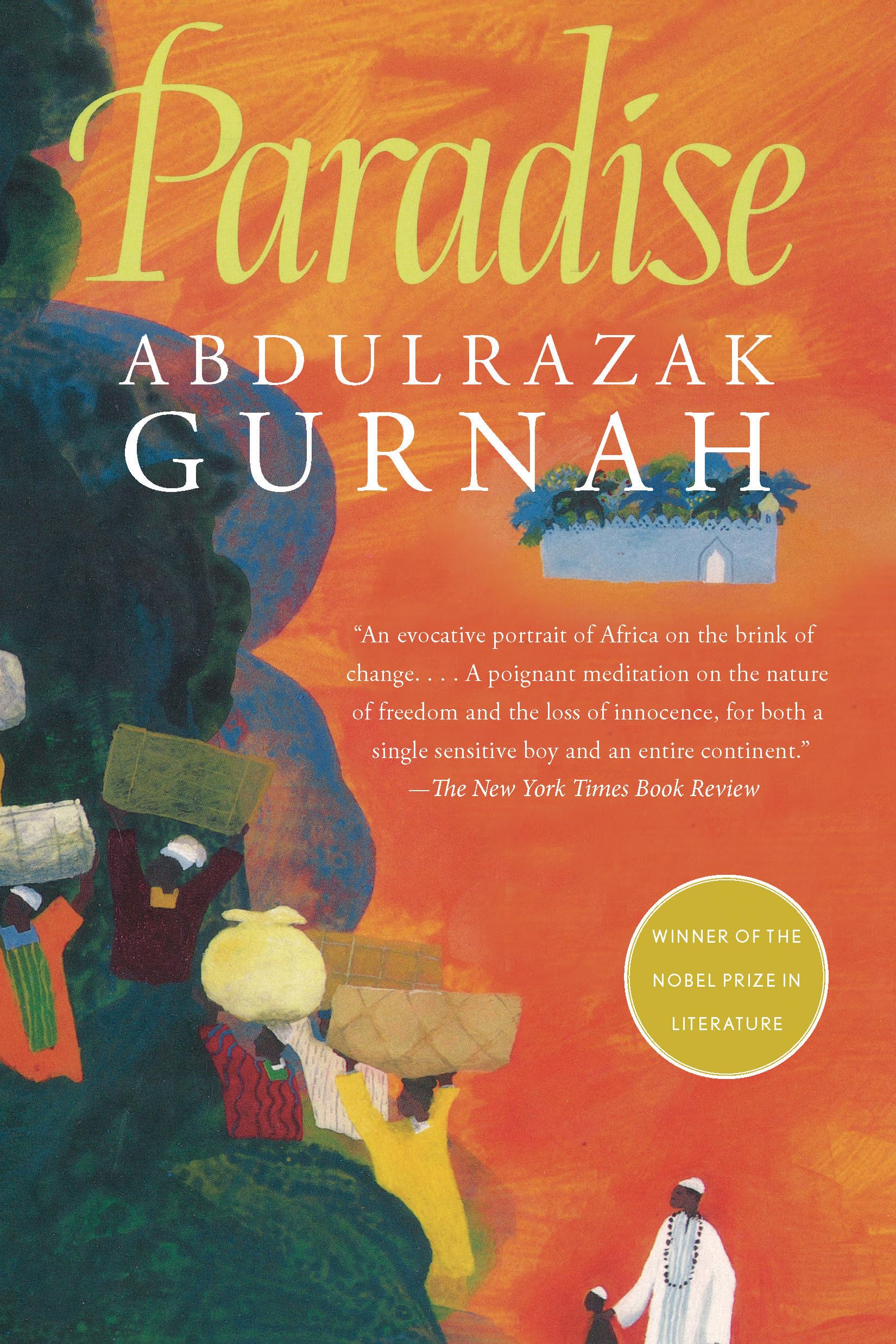



From the Nobel Prize winner, a coming-of-age story that illuminates the harshness and beauty of an Africa on the brink of colonization Shortlisted for the Booker Prize and the Whitbread Award, Paradise was characterized by the Nobel Prize committee as Abdulrazak Gurnah’s “breakthrough” work. It is at once the chronicle of an African boy’s coming-of-age, a tragic love story, and a tale of the corruption of African tradition by European colonialism. Sold by his father in repayment of a debt, twelve-year-old Yusuf is thrown from his simple rural life into complexities of pre-colonial urban East Africa. Through Yusuf’s eyes, Gurnah depicts communities at war, trading safaris gone awry, and the universal trials of adolescence. The result is what Publishers Weekly calls a “vibrant” and “powerful” work that “evokes the Edenic natural beauty of a continent on the verge of full-scale imperialist takeover.” Gurnah's second novel and first American release melds a fascinating coming-of-age story and an indictment of the European colonization of Africa, with side ventures into African social and religious dynamics and natural and human brutalities. Sent to live with his "uncle," merchant Aziz, young protagonist Yusuf has no idea that he has been sold into slavery. Yusuf's growing awareness of his situation causes him little alarm, for his honesty and beauty make him a favorite of Aziz, the local townspeople, and fellow rehani (indentured slave) Khalil. However, his uncertain relationship with Aziz's enigmatic wife and her servant Amina teach Yusuf of honor, shame, love, and true slavery, leading him to a decision that gives the book its stunning denouement. Warmly recommended for substantial fiction collections. - Janet Ingraham, Worthington P.L., Ohio Copyright 1994 Reed Business Information, Inc. This disappointing second novel from the author of Memory of Departure (1988) never quite gets off the ground, although the language is simple and appealing. The setting is precolonial north Africa. At the age of 12, Yusuf is taken away from his home by Aziz, a rich merchant, in payment for a debt of his father's. What follows is a series of events and episodes: Yusuf works in Aziz's shop alongside Khalil, a friendly and talkative young man who tells Yusuf he is also working to pay off his father's debts, although his father is dead; Yusuf is suddenly summoned to go on a journey ``to the interior''; Yusuf is left in the care of a couple who work him very hard; Yusuf is collected again by Aziz for a long and difficult journey. During their travels many men grow ill, and there are the expected hardships of life on the road with a caravan. There is much talk of the encroaching Europeans and a good deal of sexual teasing of Yusuf, whose physical beauty makes him an object of desire. But the whole adds up to less than the sum of its parts. Because Yusuf is young and naive, and the narrative--while in the third person--cleaves close to his impressions, it's never exactly clear what's happening. Larger cultural issues, and the setting itself, are difficult to see through the forest of minutiae. -- Copyright ©1994, Kirkus Associates, LP. All rights reserved. An evocative portrait of Africa on the brink of change. . . . A poignant meditation on the nature of freedom and the loss of innocence, for both a single sensitive boy and an entire continent.” The New York Times Book Review Gurnah masterfully interweaves Yusuf’s story with the larger historical forces transforming the continent, all in a lush, seductive language that revels in its powers of storytelling.” Los Angeles Times Vibrant. . . . Powerful. . . . Evokes the Edenic natural beauty of a continent on the verge of full-scale imperialist takeover by the European powers. . . . Gurnah conjures a cauldron of animosities among African Muslims, Indian merchants, European farmers, and native tribes.” Publishers Weekly A fascinating coming-of-age story and an indictment of the European colonization of Africa, with side ventures into African social and religious dynamics . . . warmly recommended.” Library Journal (starred review) Paradise is at once the story of an African boy's coming of age, a tragic love story, and a tale of the corruption of traditional African patterns by European colonialism. It presents a major African voice to American readers - a voice that prompted Peter Tinniswood to write in the London Times, reviewing Gurnah's previous novel, "Mr. Gurnah is a very fine writer. I am certain he will become a great one". Paradise is Abdulrazak Gurnah's great novel. At twelve, Yusuf, the protagonist of this twentieth-century odyssey, is sold by his father in repayment of a debt. From the simple life of rural Africa, Yusuf is thrown into the complexities of precolonial urban East Africa - a fascinating world in which Muslim black Africans, Christian missionaries, and Indians from the subcontinent coexist in a fragile, subtle social hierarchy. Th