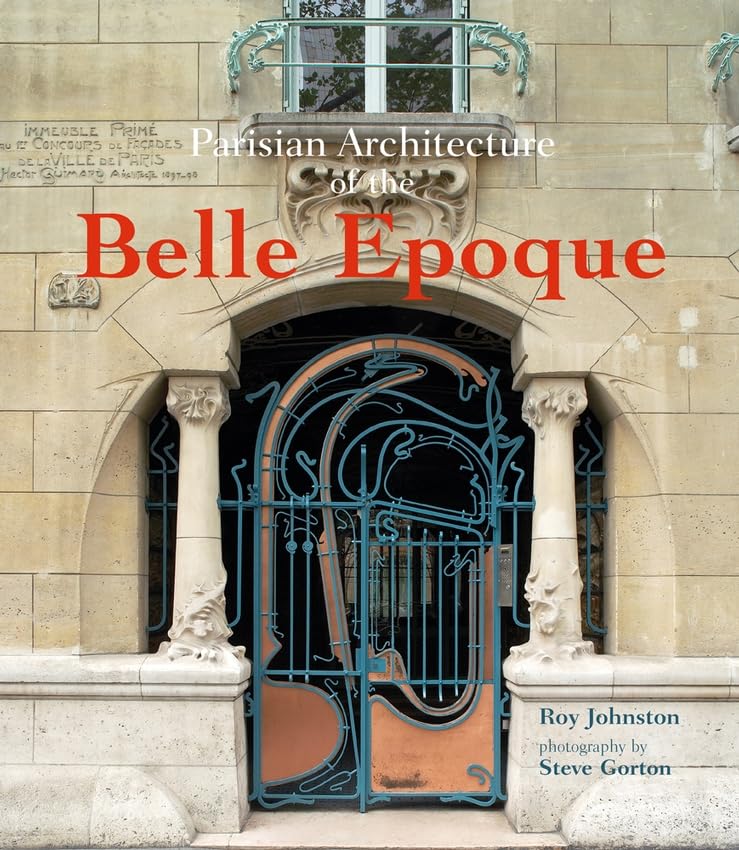



Turn of the century Paris is often referred to as the belle époque, a golden age of affluence and artistic creativity before the turmoil of the First World War. This was the Paris of artists such as Bonnard, Rodin, Seurat and Vuillard, as well as writers and musicians such as Debussy, Zola and Maupassant. The Eiffel Tower had just been built and the Moulin Rouge was in its heyday - Paris was the cosmopolitan capital of pleasure and culture. The architecture of the period, however, has generally been neglected known only for the Art Nouveau designs of Guimard's Metro entrances and restaurants such as Maxim's. This book, based on a thorough survey of Parisian buildings of the era, connects the medievalism of Viollet-le-Duc, the classical tradition of the Ecole des Beaux-Arts and early developments in metal and concrete construction with modern pioneers like Perret, de Baudot and Sauvage. Including the exuberant designs by architects working in the 'Ritz style', as well as the work of a multitude of architects whose names are at present unknown, Parisian Architecture of the Belle Epoque is a truly comprehensive and visually sumptuous study of this under exposed period of architecture. "…stunning photography and fascinating text, it’s an inspirational companion for a revisit to the city." (Bucks, January 2007) “… feels meaty without being ponderous. It slips easily into a weekend bag, and would enhance any visitor’s pleasure of discovery.” ( Building Design. February 2007) “...a real insight into this exciting time including social and economic issues and it is illustrated with well-chosen photographs.” ( France Magazine, May 2007) "A visual treat".( Destination France Magazine, Summer 2007) "…hugely enjoyable book…Johnston writes evocatively and succinctly about a city he knows intimately…this is a fine account of an entrancing epoch" ( The Architects' Journal (cover date Thu 21st June) “ With an enticing subject and an attractive price, this is one of the achievements of the decade in architectural history.” ( The Victorian , March 2008) The book features new photography by Steve Gorton of major buildings and monuments in Paris of the period including: The Eiffel Tower - Galeries Lafayette - Galerie de Paleontologie - Grand Palais - Hotel des Postes - metro entrances by Hector Guimard - Opera Comique - Petit Palais - Restaurant Chez Julien - Restaurant Bouillon Racine - Restaurant Le Train Bleu - La Sorbonne - Theatre des Champs-Elysees As Paris stood at the cusp of the 20 th century in the advent of the turmoils of the First World War, it entered a golden age of affluence and artistic creativity – the Belle Epoque. This was the Paris of artists such as Bonnard, Rodin, Seurat and Vuillard, as well as writers and musicians such as Debussy, Maupassant and Zola. It also became the home to well known cultural figures from abroad such as Henry James, Alice B Tolkas, Whistler and Picasso. The Eiffel Tower had just been built and the Moulin Rouge was in its heyday – Paris with its café life, fine restaurants, cabarets and its modern department stores was the cosmopolitan capital of pleasure and culture. Despite the continued celebration of Parisian art, architecture of the Belle Epoque has been largely neglected. It is now only known for the Art Nouveau designs of Guimard’s Metro entrances and restaurants such as Maxim’s. This book provides the first comprehensive overview of the period, connecting the medievalism of Viollet-le-Duc, the classical traditions of the Ecole des Beaux Arts and early developments in metal and concrete construction with modern pioneers like Auguste Perret, de Baudot and Sauvage. Including the exuberant designs of the ‘Ritz’ style alongside the work of many now little known architects, Parisian Architecture of the Belle Epoque is a thorough and visually sumptuous account of this under exposed period of architecture. Roy Johnston is a professional architect. He has worked as an assistant in public and private practice and more recently as a senior partner in Trehearne and Norman, divided between the design of large modern buildings (schools, hospitals and offices) and restoration and refurbishment of historic buildings. The last few years he has dedicated to the study of the architecture of the Belle Epoque in Paris. Steve Gorton is an established photographer, with over 20 years’ experience of working with publishers. He has photographed a vast range of subjects, though his quality of observation is particularly borne out in his observation of place and environment, whether natural or manmade. He is also the photographer of English Eccentric Interiors by Miranda Harrison (John Wiley & Sons, 2006).