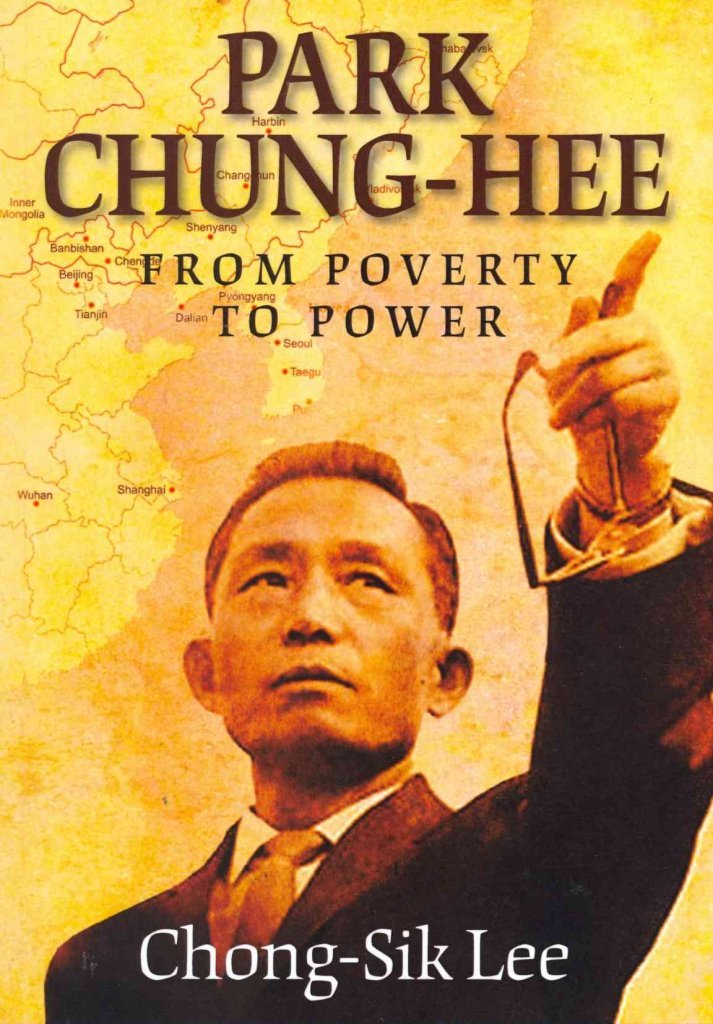



How do we explain Park Chung-Hee’s determination to push through the coup d’état in 1961 and the modernization programs afterward? How did his family’s poverty and his experiences in Manchuria, Japan, and China affect his later career as South Korea’s leader? How would he have answered his critics’ charge that he was a pro-Japanese collaborator and a Communist renegade? How can we explain his harsh suppression of domestic dissidents and opponents? In trying to answer these and other questions, Lee presents a kaleidoscopic history of modern Korea from the 1890s to the 1960s. Like Park, the author also grew up under Japanese rule and lived in Manchuria, where Park spent more than three years. This meticulously researched book uses Korean, Japanese, and English sources to put Park’s life into historical context. Review of Chong-Sik Lee, Park Chung-Hee: From Poverty to Power (Lee’s) book makes a unique and momentous contribution to broadening our factual knowledge not only about Park and his government but also the colonial and post-liberal historical periods in which he lived. In addition, the analysis provides a notable contribution to the expansion of our theoretical knowledge about how early socialization and adult learning shapes and reshapes our mindsets. In summary, Chong-Sik Lee’s book is the most captivating, enlightening, and stimulating study of the South Korean political leader. In addition to coherent and thoughtful reinterpretations of the most controversial of Park Chung-Hee’s activities, it offers a variety of alternative perspectives and challenging questions about Korean history and culture…. Intended for a general audience, it is clearly and engagingly written so that people from all walks of life can read it and comprehend what happened in Korea before Park Chung-Hee led a military coup in 1961 and why it occurred. Korea Review (Seoul), INDEPENDENCE (2) November 2012 Doh Chull Shin is Jack W. Peltason Scholar in Residence at the Center for the Study of Democracy in the University of California, Irvine Chong-Sik Lee's previous works include The Politics of Korean Nationalism (1963), Communism in Korea (coauthored with Robert A. Scalapino, 1973, and the winner of the Woodrow Wilson Foundation award of the American Political Science Association for the best book of the previous year on politics, government and international relations), Revolutionary Struggle in Manchuria (1983), and Japan and Korea: the Political Dimension (1985). He has also published four book-length biographies of Korean leaders. He is currently Professor of Political Science Emeritus, University of Pennsylvania, and Eminent Professor at Kyung Hee University in Seoul, Korea.