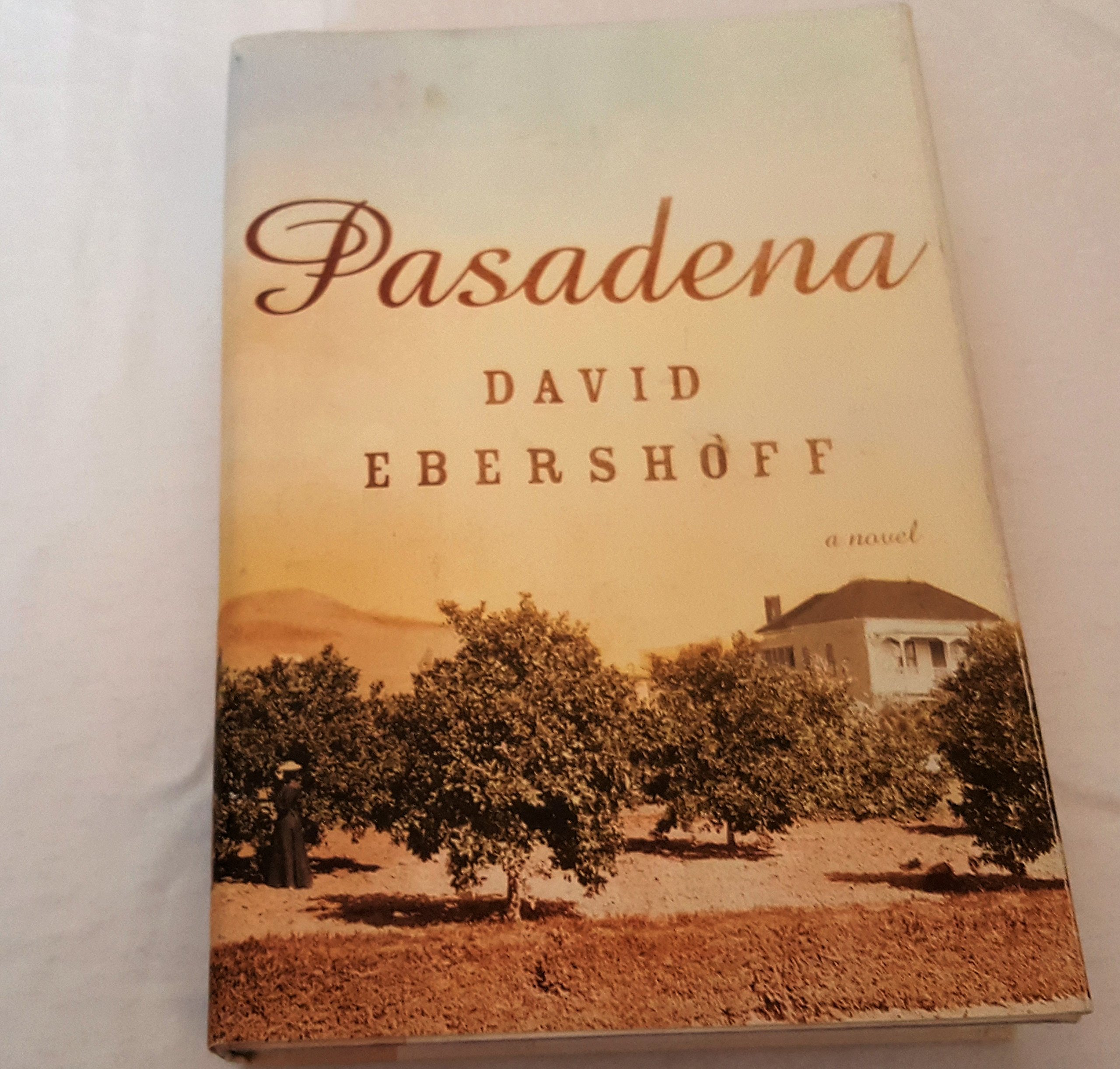



Pasadena , David Ebershoff’s sweeping, richly imagined novel, is set against the backdrop of Southern California during the first half of the twentieth century and charts its rapid transformation from frontier to suburb. At the story’s center is Linda Stamp, a fishergirl born in 1903 on a coastal onion farm in San Diego’s North County, and the three men who upend her life and vie for her affection: her pragmatic farming brother, Edmund; Captain Willis Poore, a Pasadena rancher with a heroic military past; and Bruder, the mysterious young man Linda’s father brings home from World War I. Pasadena spans Linda’s adventurous and romantic life, weaving the tales of her Mexican mother and her German-born father with those of the rural Pacific Coast of her youth and of the small, affluent city, Pasadena, that becomes her home. When Linda’s father returns from the war to the fishing hamlet of Baden-Baden-by-the-Sea with the darkly handsome Bruder, she glimpses love and a world beyond her own. Linda follows Bruder to the seemingly greener pastures of Pasadena, where he is the foreman of a flourishing orange ranch, the homestead and inheritance of the charming bachelor Willis Poore. As Willis begins to woo her with the promise of money and stature, Linda is torn between the two men, unable to differentiate truth from appearance. Linda’s fateful decision alters the course of many lives and harbingers a sea change just on the horizon, for Pasadena and its inhabitants. Infused with the rich sense of place for which Ebershoff’s work is known, Pasadena remembers a Southern California whose farms edged the Pacific, where citrus dominated the economy, and where America’s tycoons wintered in a vital city’s grand hotels. Recalling the California character of self-invention that informs the work of John Steinbeck and Joan Didion, Pasadena is a novel of passion and history about a woman and a place in perpetual transformation. David Ebershoff's second novel, Pasadena , is rich with exuberant details. But instead of overwhelming readers, Ebershoff ( The Danish Girl ) manages to deftly conduct the symphony found in everyday life. The historical novel opens with Andrew Jackson Blackwood, who has come from the east "with a small wad of money of questionable origin and a full, boyish smile." Blackwood's intent is to buy and develop Rancho Pasaden, and as he passes through the dying orange groves and elaborate halls of the mansion, the realtor tells him the entangled stories of its previous inhabitants. But if Blackwood's character is stretched thin by Ebershoff's drive to reveal the Pasadena that once was, the stories of other characters, such as Linda Stamp, Bruder, and Captain Willis Poore, prove difficult to put down. As driven as the plot may be, the writing does not suffer. Ebershoff has a luxuriant way with words, and through his beautiful prose he includes readers in the intrigue of a swiftly passing shop window, the refinement of a well-made lobster trap, and the coarseness of a saloon filled with whores and their clients. The many details bring us closer to each character's motives, and when the last page is read we may even realize that the book moved us to a different time and place--just like a good book should. --Karin Rosman This story of Linda Stamp, born on a coastal farm in 1903, is also the story of one city's rise. Ebershoff hails from Pasadena, though now he is publishing director of Modern Library in New York. Copyright 2002 Reed Business Information, Inc. Real-estate developer Andrew Blackwood has more than a passing interest in the cliff property by the sea--he has become hopelessly intrigued by the melancholic story of Bruder and Linda Stamp. Their tale has lured him from the beaches of Condor's Nest to the orange groves of Rancho Pasadena, where decay has settled in the orchards and an enormous house sits empty like a ghost waiting for history to be told. Beautiful and fearless, the fiery Linda Stamp fell in love with Bruder, a stranger who returned with her father from the war. Bruder is an enigma, but there is a chemistry between Linda and him that fills the air with the scent of restraint. Continually separated by the winds of change and decisions that serve to tear them apart, Linda and Bruder are soulfully reminiscent of Emily Bronte's ill-fated Cathy and Heathcliff and their tragic depiction of unfulfilled romantic passion in Wuthering Heights . This is a rich blend of California history in a well-mastered plot that maintains an enduring element of surprise. Elsa Gaztambide Copyright © American Library Association. All rights reserved “A meticulously researched narrative that combines elements of gothic fairy tale, nineteenth-century romance, and the rise and decline of an enchanted American city, Pasadena is a traditional family saga in the very best sense.” —Carolyn See, author of The Handyman “ Pasadena is not merely a wondrous novel about California. It is a breathtakingly