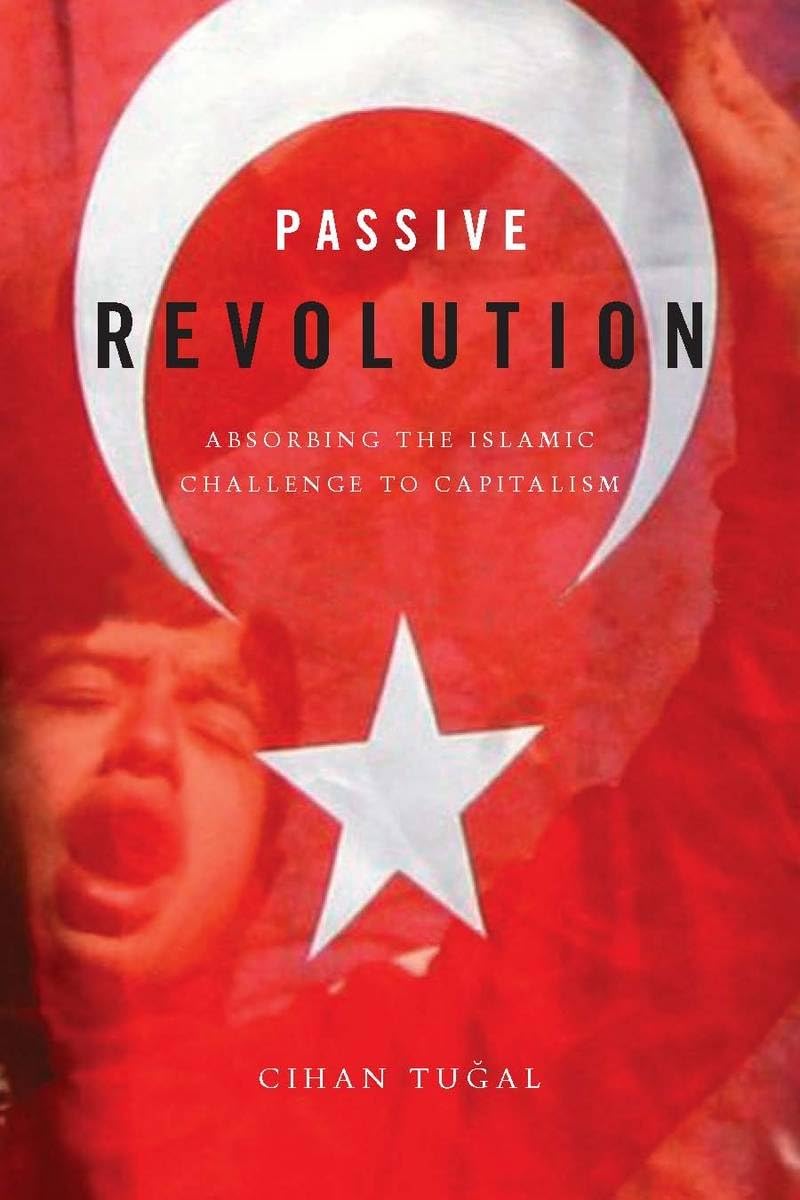



Over the last decade, pious Muslims all over the world have gone through contradictory transformations. Though public attention commonly rests on the turn toward violence, this book's stories of transformation to "moderate Islam" in a previously radical district in Istanbul exemplify another experience. In a shift away from distrust of the state to partial secularization, Islamists in Turkey transitioned through a process of absorption into existing power structures. With rich descriptions of life in the district of Sultanbeyli, this unique work investigates how religious activists organized, how authorities defeated them, and how the emergent pro-state Justice and Development Party incorporated them. As Tuğal reveals, the absorption of a radical movement was not simply the foregone conclusion of an inevitable world-historical trend but an outcome of contingent struggles. With a closing comparative look at Egypt and Iran, the book situates the Turkish case in a broad historical context and discusses why Islamic politics have not been similarly integrated into secular capitalism elsewhere. "Cihan Tuğal's Passive Revolution provides a rich and detailed account of the transformations of the Islamist movement in Turkey over the last three decades. It presents a sophisticated and original conceptual framework that guides the analysis of these transformations... Passive Revolution is an excellent contribution to the study of counterhegemonic projects and the alternative paths they follow. It brings the study of radicalization and deradicalization of Islamist activism into the broader eld of political sociology and demonstrates the unique contributions that critical ethnographic methods make to the study of politics." -- Salwa Ismail ― University of London, American Journal of Sociology "With breathtaking access to religious activists―even some revolutionaries―and demonstrations of how the now-dominant party mobilized the urban poor on behalf of a neo-liberal, capitalist project, Tuğal accomplishes a rare feat. Nobody will mistake this with any other work on contemporary Islamic movements." -- Charles Kurzman ― University of North Carolina "Tuğal has thus written an ambitious study that seeks to reconstruct the theoretical understanding of Islamism ... Highly recommended." -- A. Paczynska "Tuğal's fresh look at the shifting relations between radical and mainstream Islamists, Kurds, and rigid secularists in Turkey provides an alternative look at Islamic politics. Undertaken at the right time and in the right place, this nuanced account of the multi-faceted struggles of the absorption of radical Islamists into the capitalist system will definitely lead to exciting, constructive debates." -- Berna Turam Cihan Tuğal is Assistant Professor of Sociology at the University of California, Berkeley. Passive Revolution ABSORBING THE ISLAMIC CHALLENGE TO CAPITALISM By Cihan Tugal Stanford University Press Copyright © 2009 Board of Trustees of the Leland Stanford Junior University All right reserved. ISBN: 978-0-8047-6145-1 Contents Acknowledgments.............................................................ixAbbreviations...............................................................xiIntroduction................................................................11 Toward a Theory of Hegemonic Politics.....................................192 Islamization in Turkey as Constitution of Hegemony........................363 Vicissitudes of Integral Political Society................................594 The Making and Unmaking of Integral Civil Society.........................1025 The Emergence of Modern Islamic Political Society.........................1476 Modern Islamic Civil Society Triumphant...................................192Conclusion: Islamic Hegemony in Comparative Perspective.....................235Notes.......................................................................267References..................................................................283Index.......................................................................301 Chapter One TOWARD A THEORY OF HEGEMONIC POLITICS THE CRISIS of the analysis of Islamic politics is the crisis of the paradigms that have been used to study Islamic politics. This chapter will situate the problems of the scholarship on Islamism within general sociological problems. The objective is not only to develop an alternative account of Islamic politics but to use the case of Islamism to revise the sociological theory of politics. A hegemonic perspective provides a more complete account of how politics work when compared to existing analyses of politics and society. MODELS IN THE STUDY OF ISLAMIC POLITICS This section illustrates why each conventional explanation in the study of Islamic politics is either problematic or only partially valid. Orientalism and Modernization Theory Culture-based explanations of Islamism point out the significan