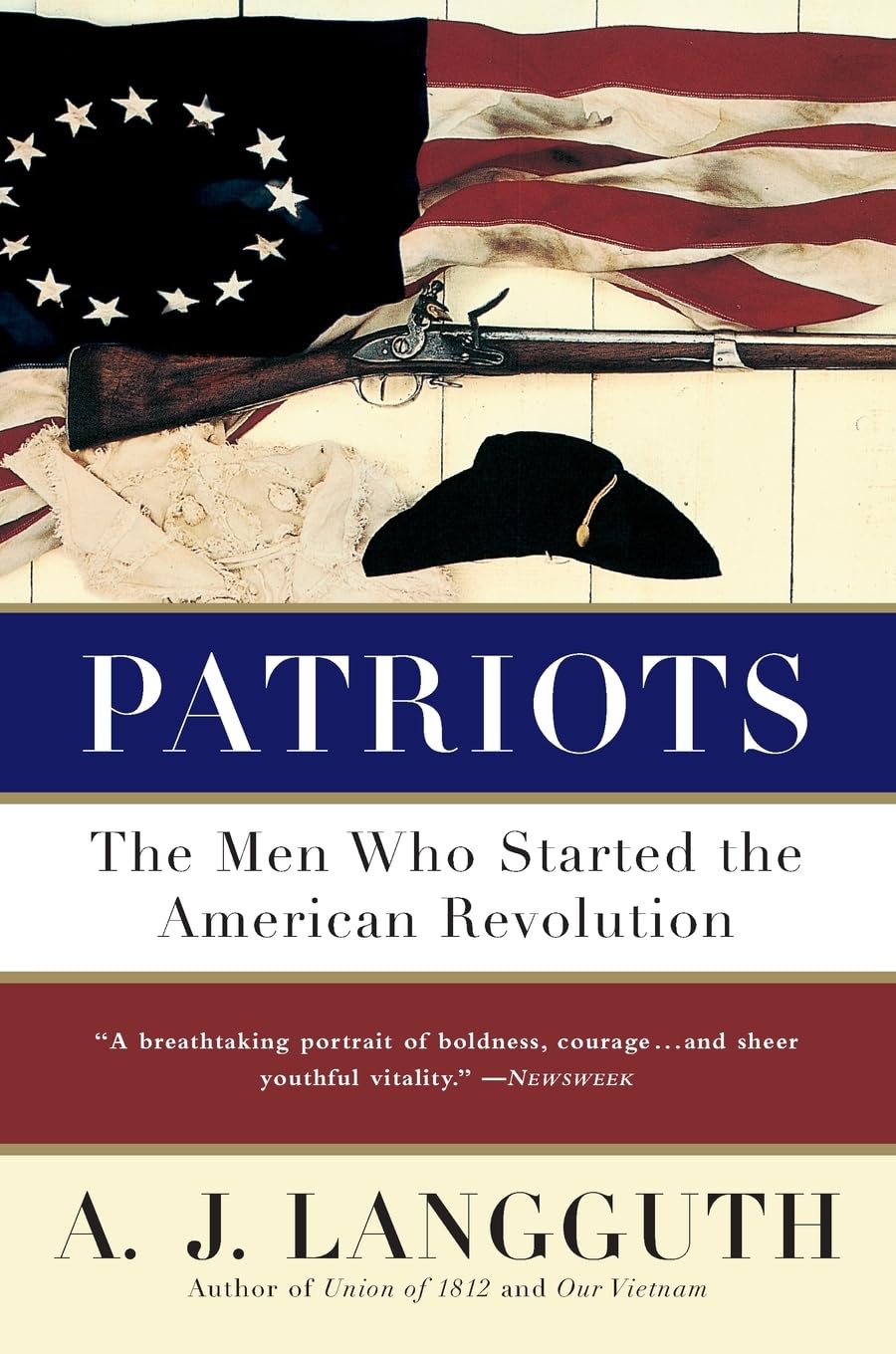



With meticulous research and page-turning suspense, Patriots brings to life the American Revolution—the battles, the treacheries, and the dynamic personalities of the men who forged our freedom. George Washington, John Adams, Samuel Adams, Ben Franklin, Thomas Jefferson, Patrick Henry—these heroes were men of intellect, passion, and ambition. From the secret meetings of the Sons of Liberty to the final victory at Yorktown and the new Congress, Patriots vividly re-creates one of history's great eras. "A breathtaking portrait of boldness, courage...and sheer youthful vitality." ― Time "Brilliantly illuminating." ― The Philadelphia Inquirer "A grand, irresistible book." ― The Washington Post Book World "The winning of the American Revolution in all its glory, gore, and mortal frailty" ― Los Angeles Times "History as it should be written -- with illuminating insight into character, a sweeping narration of events, and a splendid eye for detail." -- Doris Kearns Goodwin, author of Team of Rivals "With bold colors and unremitting pace, Patriots recaptures the drama and vital importance of the American Revolution and the towering figures who waged it." -- Michael Beschloss, author of Kennedy and Roosevelt A. J. Langguth (1933–2014) was the author of eight books of nonfiction and three novels. After Lincoln marks his fourth book in a series that began in 1988 with Patriots: The Men Who Started the American Revolution . He served as a Saigon bureau chief for the New York Times , after covering the Civil Rights movement for the newspaper. Langguth taught for three decades at the University of Southern California and retired in 2003 as emeritus professor in the Annenberg School for Communication and Journalism. Excerpt Chapter 1 Otis 1761-62 John Adams, a twenty-five-year-old lawyer from the country, looked around Boston's Town House and was dazzled by its splendor. Adams had never been to London, but he was sure that nothing in the House of Commons could be more imposing than the sight of five judges in scarlet robes and luminous white wigs, seated in front of a marble fireplace. On the wall were portraits of two former British kings, Charles II and James II, which had been sent from London years before. They had been stored in an attic until a recently installed governor of Massachusetts, Francis Bernard, had discovered them and had them cleaned and mounted in magnificent gold frames. Adams was aware that both kings were autocrats and he suspected that giving them such a place of honor showed Bernard's political bias. But he thought them beautiful, worthy of Rubens or Vandyke. Adams had come on this overcast morning in February 1761 to see the climax to a political drama that had been unfolding for months. Normally, the day's proceedings would have been routine: a new king had recently taken the throne in England, and a document called the writ of assistance had to be approved once again by the colony's Superior Court. But the writ was in fact a general search warrant, and it represented a serious economic threat around Boston Harbor. When ships sailed past the islands in the channel and came to anchor at one of Boston's long wooden wharves, they were often smuggling illegal goods along with their legitimate cargo. Molasses was especially popular, since it could be shipped legally only from British ports. Some sixty distillers around Massachusetts turned the molasses into millions of gallons of rum each year, and the traders who supplied them bought a better quality at French and Dutch ports in the West Indies and avoided the British taxes. Over the past twenty years, Bostonians had suffered economic depressions, and they were worried now that London's attempt to enforce the customs law might set off more hard times. That would affect not only the merchants but also the men who built the ships and sailed them, the distillers and shopkeepers, the artisans who supplied silver buckles and candlesticks, even the town's hundreds of teenage apprentices in their leather aprons. The persistent war between England and the French and their Indian allies had provided an economic boom for a few profiteers, but the peace that now seemed assured might bring inflation and greater debt. Boston's wealthiest merchants enjoyed a cushion against a depression; five hundred of the sixteen thousand residents owned nearly fifty percent of the town's assets. But one out of three adult men had no property or even a regular job, and they hung about the wharves taking whatever work they found or signing on as sailors. Some were forced to leave the capital altogether for one of the smaller communities - Salem, Gloucester, Marble-head. British law already gave the crown's tax collectors permission to search a ship while it lay at anchor in the bay, although few had ever been zealous about making the effort. Some of those appointed were Londoners who never bothered to come to America. Others could be bribed. Brit