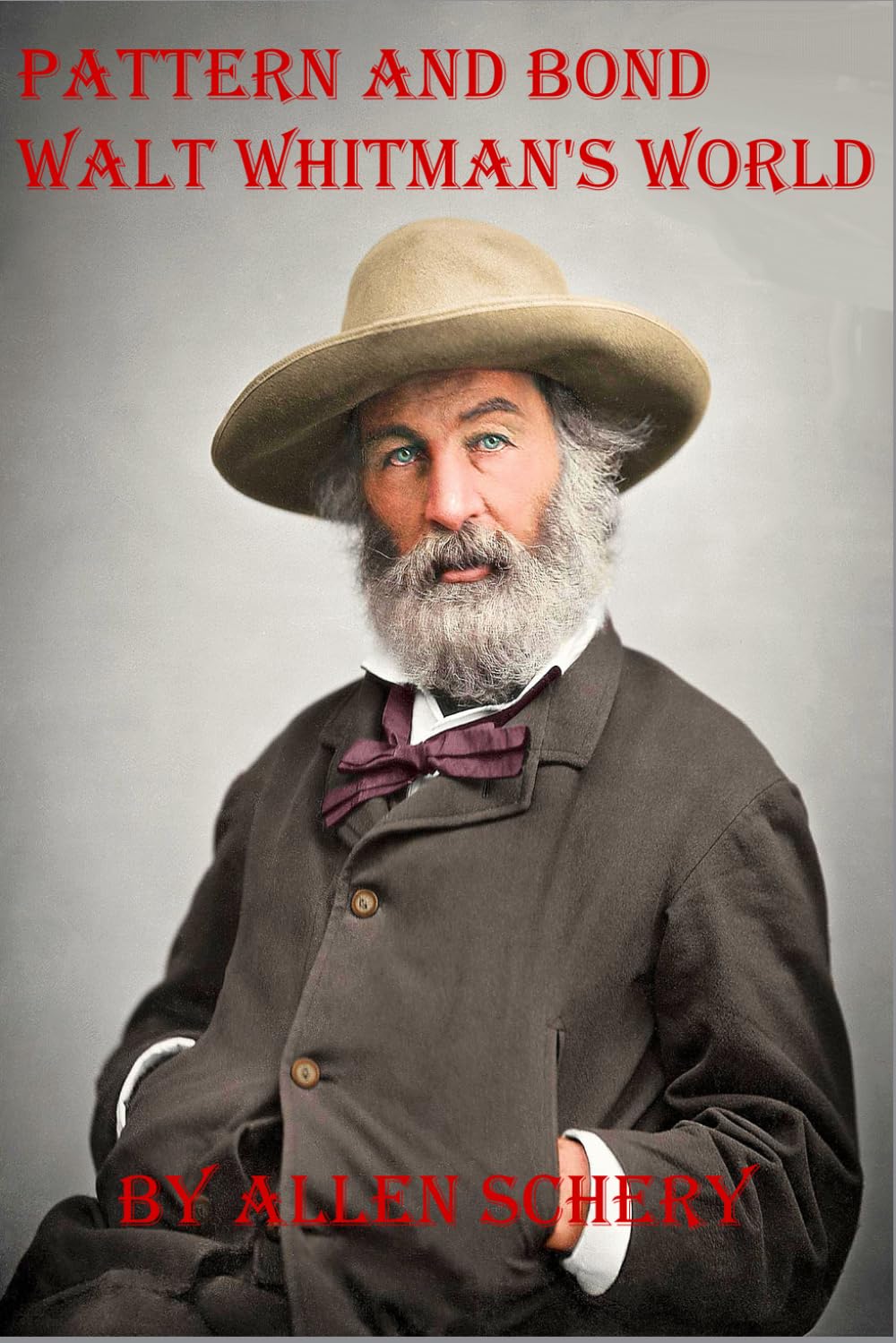



This interdisciplinary volume offers an expansive exploration of Walt Whitman as a perpetually generative subject at the intersection of democratic poetics, cultural anthropology, and global literary history. Spanning Whitman’s life, poetry, death rituals, and worldwide afterlives, the book reveals how his poetic vision has continuously been reimagined across multiple cultural, linguistic, and technological contexts from the nineteenth century to the present day. Grounded in rigorous field research, archival excavation, and innovative theoretical frameworks, the study unfolds through three interlocking methodological pillars: material-symbolic analysis, bibliometric and intertextual mapping, and relational democratic ontology. Material-symbolic analysis uncovers the role of ritual, artifact, and performance in sustaining Whitman’s democratic ideals, with detailed case studies of his Harleigh Cemetery burial rites, annual pilgrimages, and commemorative festivals highlighting embodied practices of remembrance. Bibliometric and intertextual mapping trace the global dissemination and transformation of Whitman’s texts across linguistic and national boundaries, employing digital humanities tools to chart evolving centers of reception—ranging from early Japanese and Arabic translations to African liberation poetry and Pacific Island oral traditions. Relational democratic ontology situates Whitman’s selfhood as fundamentally embedded in social, ecological, and material networks, anticipating twenty-first century posthumanist and ecocritical perspectives that challenge rigid boundaries between human and nonhuman, self and environment. The book’s global case studies emphasize Whitman’s often overlooked receptions in non-Western contexts—including Southeast Asia, Latin America, Africa, and the Pacific—demonstrating how marginalized and diasporic communities have indigenized his verse and deployed his democratic poetics as tools for anti-colonial assertion, cultural renewal, and political mobilization. The volume challenges traditional Euro-American canons and promotes a pluralistic, inclusive approach to Whitman scholarship, underscoring how his poem remains an open, living archive—never fixed but perpetually open to new voices, readings, and forms. Moreover, the study engages with contemporary digital phenomena, examining how online memorials, digital rituals, and hashtag activism reanimate Whitmanian practices of collective song and democratic belonging in virtual public spheres. These analyses reveal continuity and innovation in the enactment of ritual, community, and protest—themes central to Whitman’s democratic vision. Ultimately, the volume offers a manifesto for future Whitman scholarship, calling on scholars to embrace interpretive complexity, center marginalized voices, apply interdisciplinary methods, and enact democratic practices in research collaboration and public humanities. It situates Whitman not only as a poet of his era but as an inexhaustible case study of democracy itself—one whose “song of myself” continues to inspire, challenge, and invite collective imagination in an ever-changing global context. Essential for scholars and students in American literature, cultural anthropology, political philosophy, translation studies, and digital humanities, this groundbreaking work redefines Whitman’s place in global cultural history and democratic theory, offering a rich and expansive map for engaging his enduring legacy.